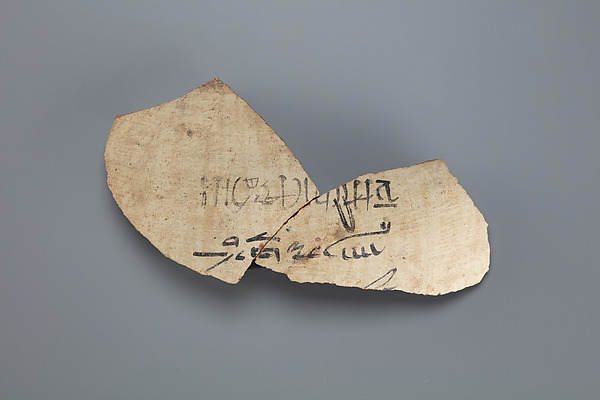
Fragement from a jar with a label identifying contents as honey
Unrecorded maker
ca. 1386–1347 BCE · Pottery, ink
Cleared · Public Domain
liveThe MetSimilar
Rights clearance desk for images
Museums publish two different things about the same artwork: whether the work is in copyright, and whether their picture of it is. OpenPlate reads both, does the arithmetic on the published term, and shows you the sentence behind every point of the score.
Where this page got its records
188 ms. The Metropolitan Museum of Art, Collection API (Open Access)
327 ms. The Cleveland Museum of Art, Open Access API
2 of 2 providers answered live. 456 matching records exist across the two collections.
Institutions answered newest-first by record, interleaved
Fragement from a jar with a label identifying contents as honey
Unrecorded maker
ca. 1386–1347 BCE · Pottery, ink
Cleared · Public Domain
live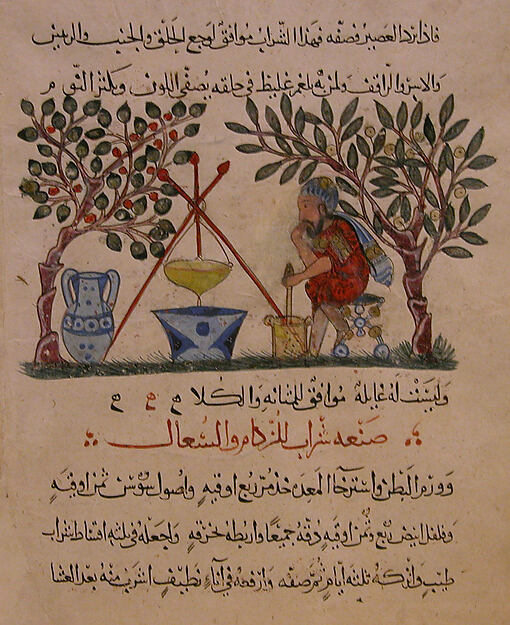
"Physician Preparing an Elixir", Folio from a Materia Medica of Dioscorides
'Abdullah ibn al-Fadl
dated 621 AH/1224 CE · Ink, opaque watercolor, and gold on paper
Cleared · Public Domain
live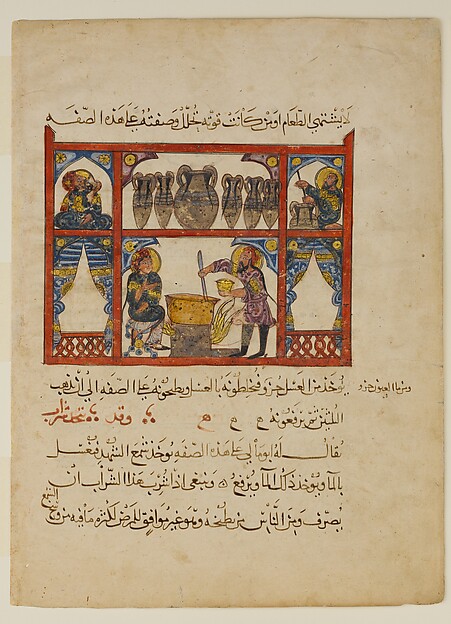
"Preparing Medicine from Honey", from a Dispersed Manuscript of an Arabic Translation of De Materia Medica of Dioscorides
'Abdullah ibn al-Fadl
dated 621 AH/1224 CE · Ink, opaque watercolor, and gold on paper
Cleared · Public Domain
live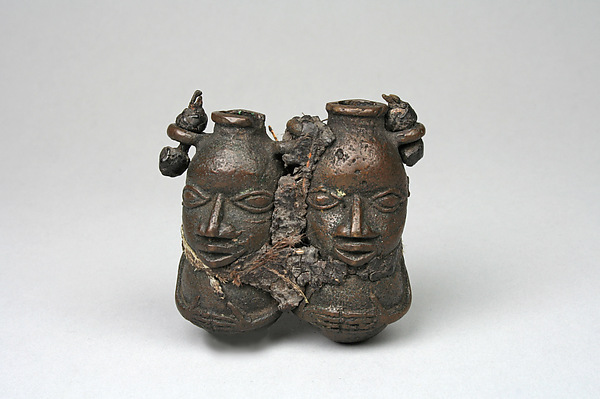
Medicine Vessel with Two Figures
Ìgùn Ẹ́rọ̀nwwọ̀n (brass-casting guild) artists and obo (ritual specialist)
18th–19th century · Brass, hide, feathers, sacrifcial materials
Cleared · Public Domain
live
Medicine Vessel: Figure
Ìgùn Ẹ́rọ̀nwwọ̀n (brass-casting guild) artists and obo (ritual specialist)
18th–19th century · Brass, stone bead, cord
Cleared · Public Domain
liveNo open reproduction
The institution withholds the image for this record, which is itself the answer: the picture on their page is not theirs to give away.
Anatomical frontal view of a man, from Icones Anatomicae (New York Academy of Medicine and Munich, University Library, 1934)
John of Calcar (John Stephen Calcar) (d. 1550)
1543 (printed 1934) · Woodcut
In copyright
liveNo open reproduction
The institution withholds the image for this record, which is itself the answer: the picture on their page is not theirs to give away.
Anatomical study of a man seen from Behind, from Icones Anatomicae (New York Academy of Medicine and Munich, University Library, 1934)
John of Calcar (John Stephen Calcar) (d. 1550)
1543 (printed 1934) · Woodcut
In copyright
liveNo open reproduction
The institution withholds the image for this record, which is itself the answer: the picture on their page is not theirs to give away.
Skeleton and musculature of a man viewed from behind, from Icones Anatomicae (New York Academy of Medicine and Munich, University Library, 1934)
John of Calcar (John Stephen Calcar) (d. 1550)
1543 (printed 1934) · Woodcut
In copyright
liveNo open reproduction
The institution withholds the image for this record, which is itself the answer: the picture on their page is not theirs to give away.
Skeleton of a man viewed from behind, from Icones Anatomicae (New York Academy of Medicine and Munich, University Library, 1934)
John of Calcar (John Stephen Calcar) (d. 1550)
1543 (printed 1934) · Woodcut
In copyright
liveNo open reproduction
The institution withholds the image for this record, which is itself the answer: the picture on their page is not theirs to give away.
A Dog Receiving Medicine, from Figuren von Iag und Weidtwerck, Frankfurt
Jost Amman (d. 1591)
1582 · Woodcut
In copyright
liveNo open reproduction
The institution withholds the image for this record, which is itself the answer: the picture on their page is not theirs to give away.
Preparing for Market
Louis Maurer (d. 1932)
1856 · Hand-colored lithograph
In copyright
live1. Pin the work
Choose the record and say what you are actually going to do with it. The product re-reads the work live and stores a snapshot, so your docket records what the institution said today.
2. Read the arithmetic
Six weighted factors: the institution's own claim, the creator's term, the publication-age rule, the restrictions in their statement, your use, and whether a credit line is even possible.
3. Seal and export
Record the decision into a SHA-384 chain, then export a dated docket as JSON, CSV or Markdown with the credit line and the seal a colleague can re-verify.