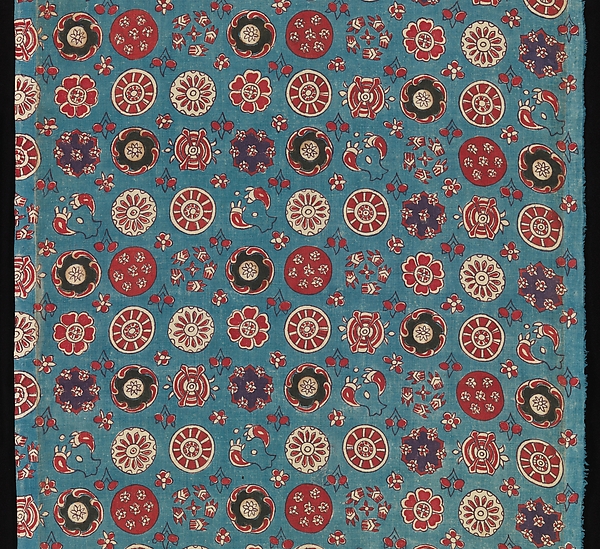
Sarasa with Small Rosettes
Unrecorded maker
18th century · Cotton (painted resist and mordant, dyed)
Cleared · Public Domain
liveThe MetSimilar
Rights clearance desk for images
Museums publish two different things about the same artwork: whether the work is in copyright, and whether their picture of it is. OpenPlate reads both, does the arithmetic on the published term, and shows you the sentence behind every point of the score.
Where this page got its records
219 ms. The Metropolitan Museum of Art, Collection API (Open Access)
449 ms. The Cleveland Museum of Art, Open Access API
2 of 2 providers answered live. 489 matching records exist across the two collections.
Institutions answered newest-first by record, interleaved
Sarasa with Small Rosettes
Unrecorded maker
18th century · Cotton (painted resist and mordant, dyed)
Cleared · Public Domain
live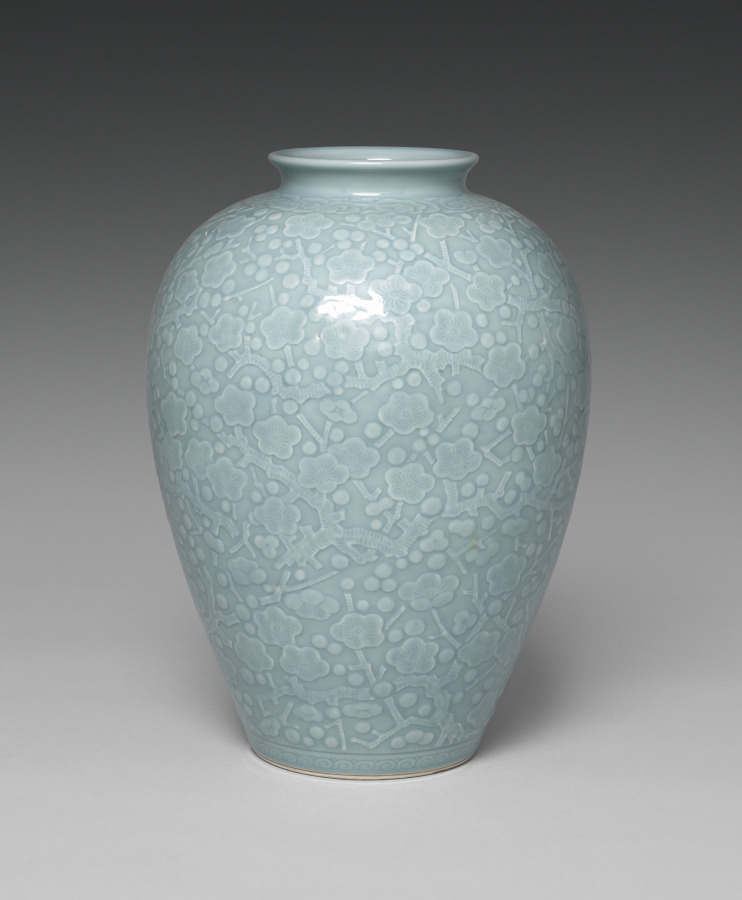
Vase with Plum Blossoms
Seifū Yohei IV (d. 1951)
1914–46 · Ceramic, Glazed porcelain with molded and carved design
Cleared · CC0
live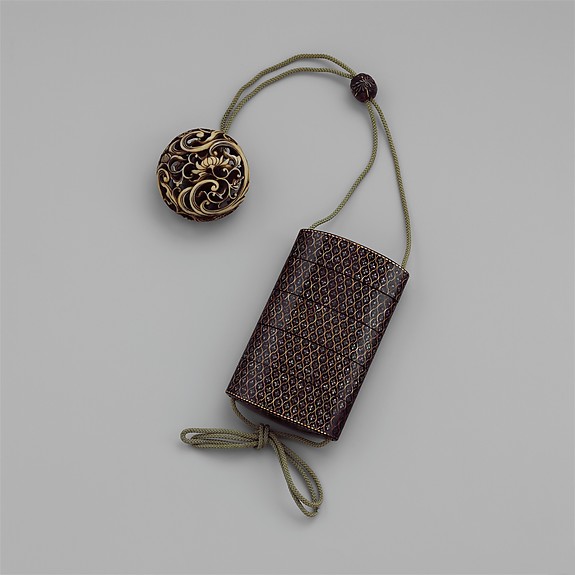
Inrō with Geometric Pattern
Unrecorded maker
first half of the19th century · Four cases; lacquered wood with metal and mother-of-pearl inlay on black lacquer ground; Netsuke: ryūsa type carved ivory; floral design; Ojime: metal bead with chrysanthemum
Cleared · Public Domain
live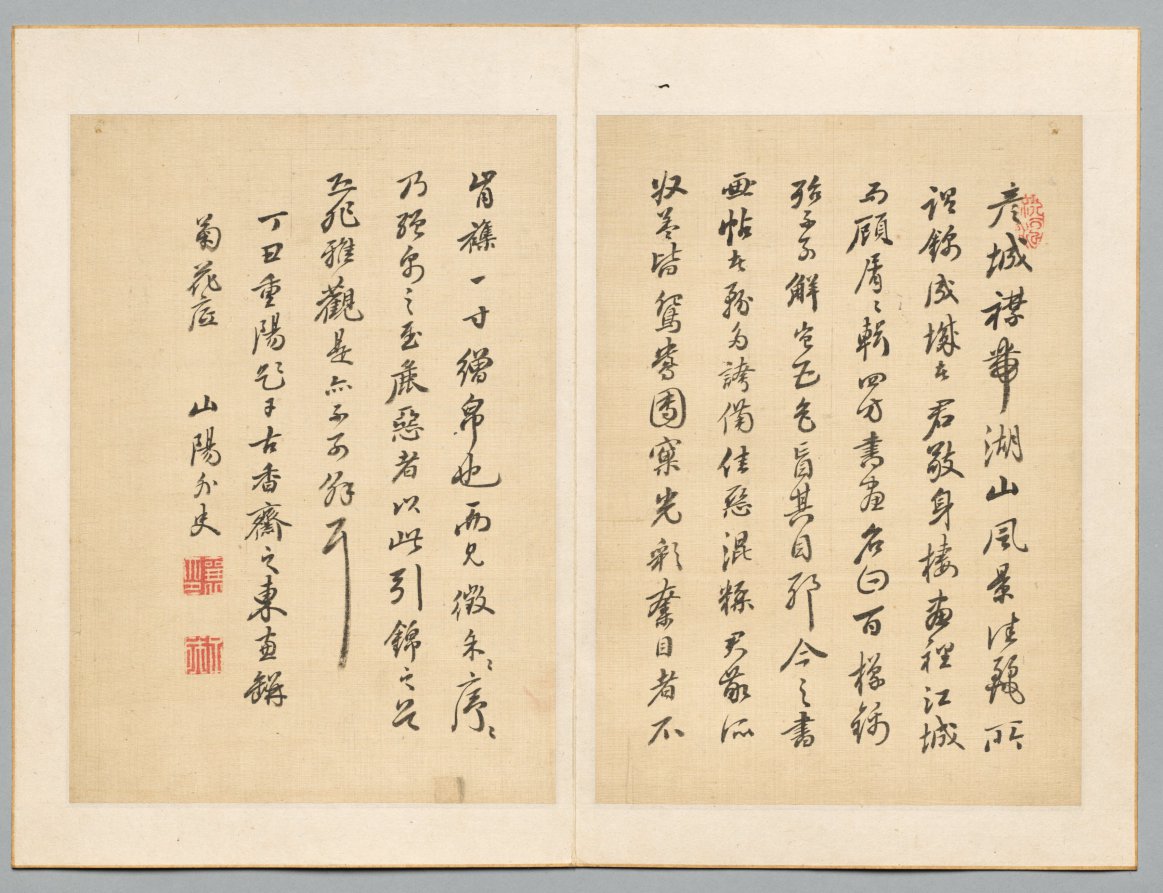
Preface
Rai Sanyō (d. 1832)
1817 · Portfolio, Double-leaf from a pair of folding albums; ink on silk
Cleared · CC0
live
Length of woven wool and silk
Christopher Dresser (d. 1904)
1870s · Wool, silk
Cleared · Public Domain
live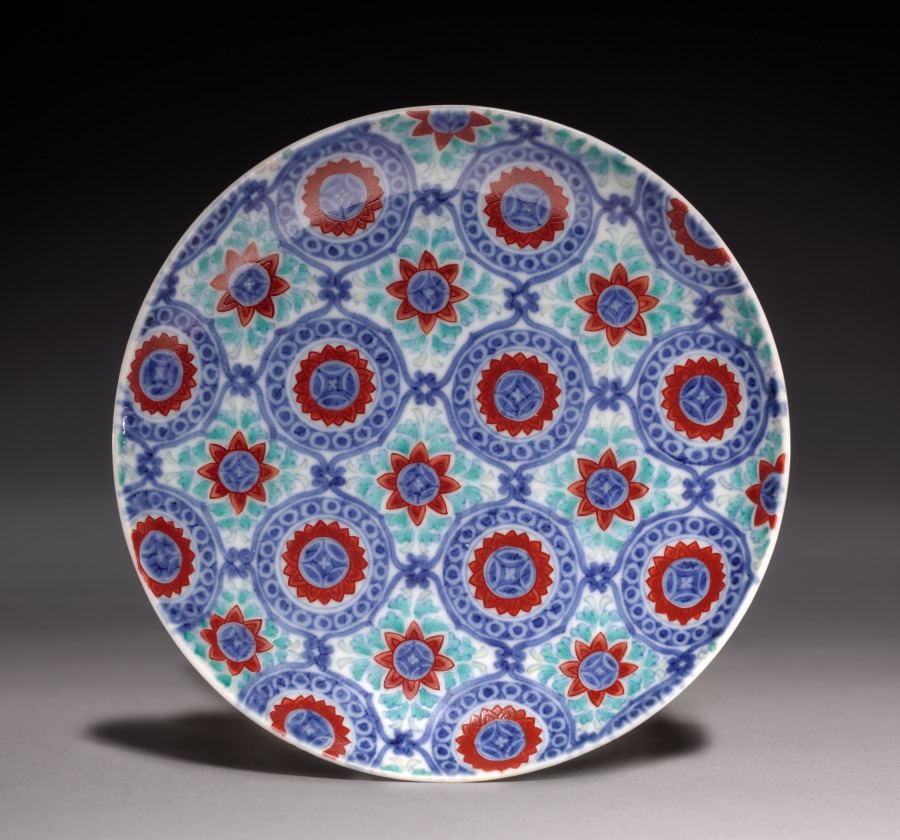
Dish with Brocade
Unrecorded maker
late 1600s · Ceramic, Porcelain with underglaze blue and overglaze enamel (Hizen ware, Nabeshima type)
Cleared · CC0
live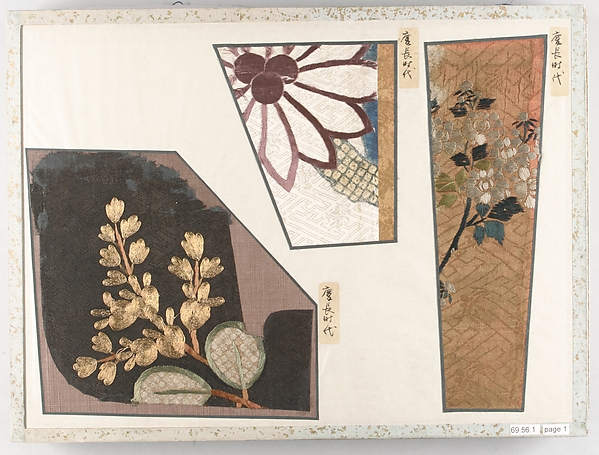
Connoisseur’s Album of Edo-Period Silk Fragments
Unrecorded maker
19th century · Accordion album of fourteen pages with textile fragments
Cleared · Public Domain
live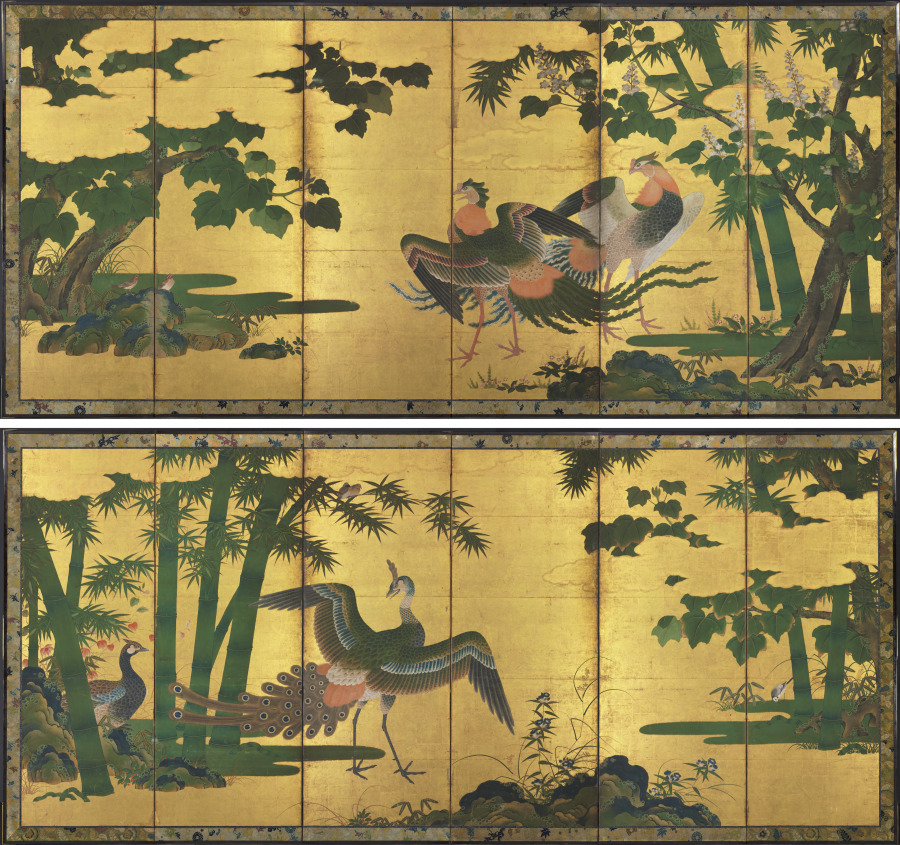
Peafowl and Phoenixes
Tosa Mitsuyoshi (d. 1613)
late 1500s · Painting, Pair of six-panel screens; ink, color, and gold on gilded paper
Cleared · CC0
live![[Japanese textiles] by an unrecorded maker, The Metropolitan Museum of Art](https://images.metmuseum.org/CRDImages/li/web-large/b1706529_001.jpg)
[Japanese textiles]
Unrecorded maker
1920s
Cleared · Public Domain
live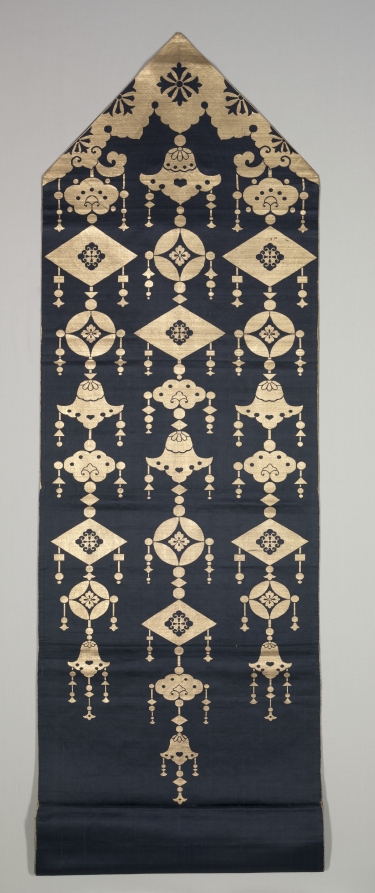
Sumibōshi
Unrecorded maker
1800–1850 · Garment, silksatin weave; metal thread weft
Cleared · CC0
live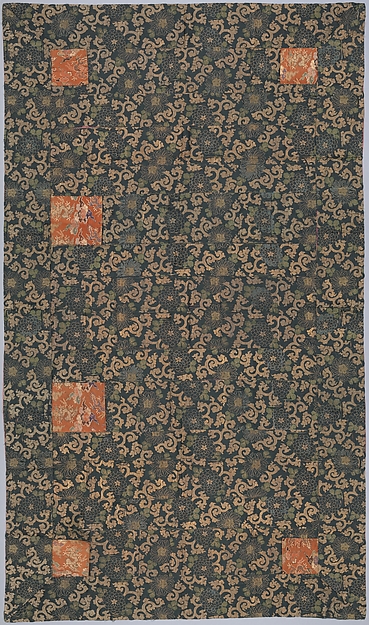
Kesa (Buddhist priest's robe)
Japanese
late 19th to early 20th century · Silk, gold leaf on lacquered paper strip, and gold leaf on lacquered paper-strip-wrapped cotton, warp-float-faced 4/1 satin weave with weft-float-faced 1/2 "z" twill interlacings of secondary binding warps and supplementary patterning wefts.
Cleared · Public Domain
live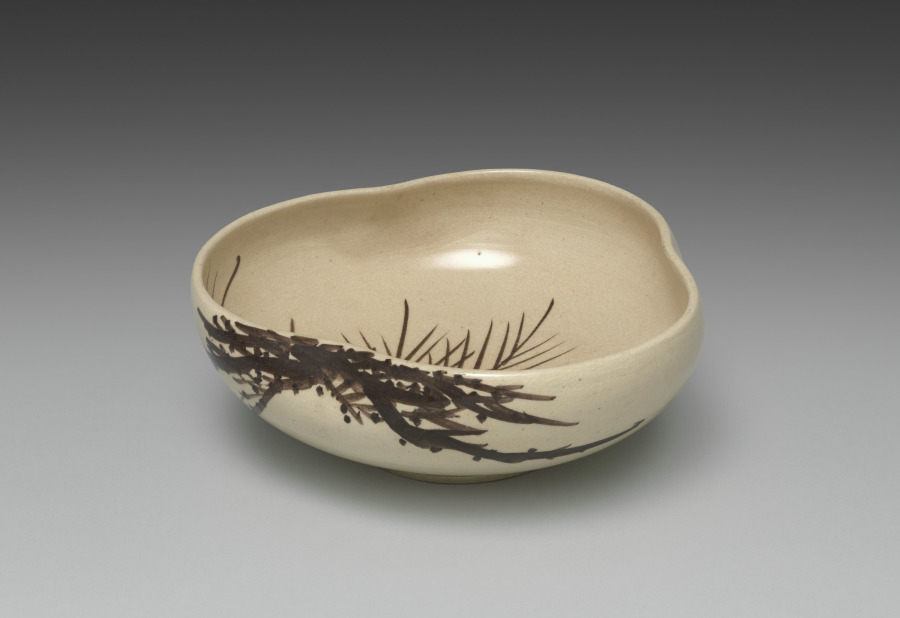
Pine-shaped Dish
Seifū Yohei III (d. 1914)
1893–1914 · Ceramic, Stoneware with underglaze iron oxide and crackled glaze
Cleared · CC0
live1. Pin the work
Choose the record and say what you are actually going to do with it. The product re-reads the work live and stores a snapshot, so your docket records what the institution said today.
2. Read the arithmetic
Six weighted factors: the institution's own claim, the creator's term, the publication-age rule, the restrictions in their statement, your use, and whether a credit line is even possible.
3. Seal and export
Record the decision into a SHA-384 chain, then export a dated docket as JSON, CSV or Markdown with the credit line and the seal a colleague can re-verify.