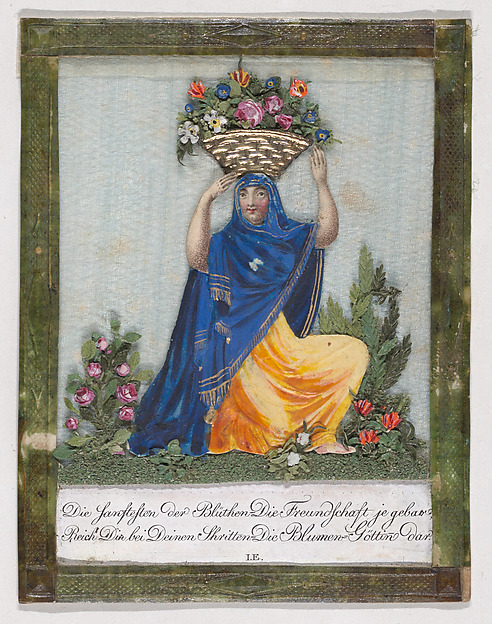
Greeting Card
Johannes Endletzberger (d. 1850)
1810 · Gouache, metallic paint, metallic foil, hand-colored stipple engraving, and embossed and punched paper on silk
Cleared · Public Domain
liveThe MetSimilar
Rights clearance desk for images
Museums publish two different things about the same artwork: whether the work is in copyright, and whether their picture of it is. OpenPlate reads both, does the arithmetic on the published term, and shows you the sentence behind every point of the score.
Where this page got its records
174 ms. The Metropolitan Museum of Art, Collection API (Open Access)
313 ms. The Cleveland Museum of Art, Open Access API
2 of 2 providers answered live. 83 matching records exist across the two collections.
Institutions answered newest-first by record, interleaved
Greeting Card
Johannes Endletzberger (d. 1850)
1810 · Gouache, metallic paint, metallic foil, hand-colored stipple engraving, and embossed and punched paper on silk
Cleared · Public Domain
live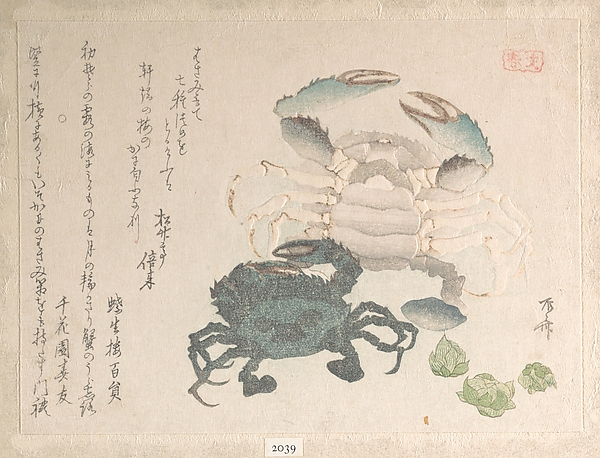
Spring Rain Collection (Harusame shū), vol. 1: Crabs and Lotus Blossoms
Ryūryūkyo Shinsai (d. 1823)
ca. 1805–10 · Privately published woodblock prints (surimono) mounted in an album; ink and color on paper
Cleared · Public Domain
live
Spring Rain Collection (Harusame shū), vol. 1: Plum Tree in Bloom
Ryūryūkyo Shinsai (d. 1823)
ca. 1805–10 · Privately published woodblock prints (surimono) mounted in an album; ink and color on paper
Cleared · Public Domain
live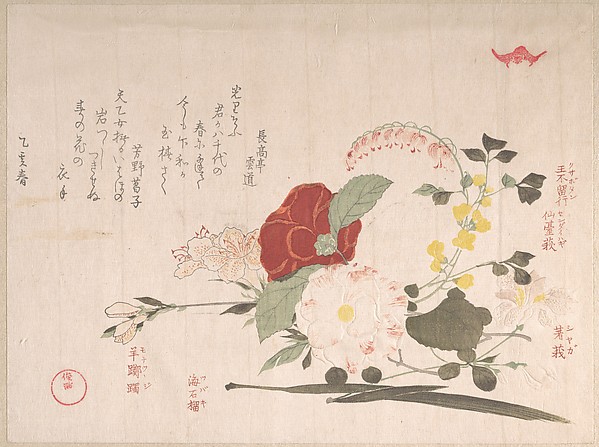
Spring Rain Collection (Harusame shū), vol. 2: Cut Flowers: Clematis, Bush Clover, Iris, Camellia, and Azalea
Kubo Shunman (d. 1820)
1815 (Year of the Ox) · Privately published woodblock prints (surimono) mounted in an album; ink and color on paper
Cleared · Public Domain
live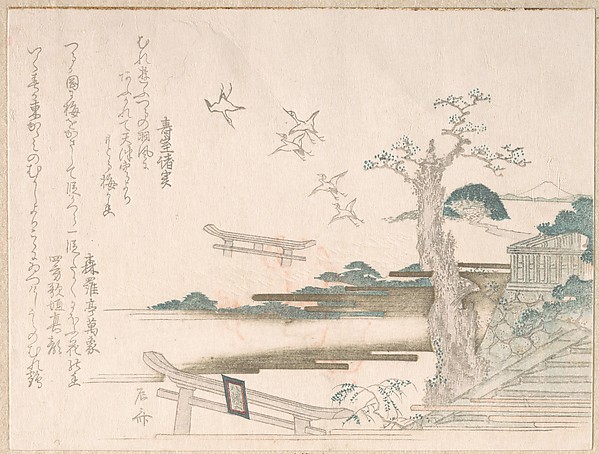
Spring Rain Collection (Harusame shū), vol. 2: Cranes at Tsurugaoka Hachimangō Shrine in Kamakura
Ryūryūkyo Shinsai (d. 1823)
1810s · Privately published woodblock prints (surimono) mounted in an album; ink and color on paper
Cleared · Public Domain
live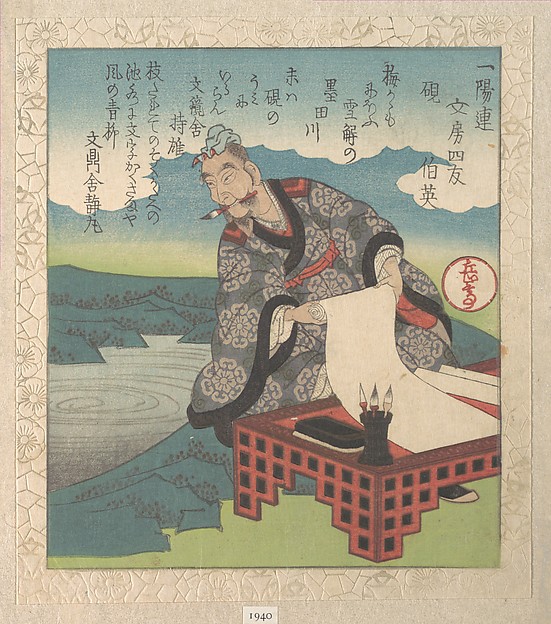
The Chinese Calligrapher Boying (Japanese: Hakuei; also known as the “Sage of Cursive Script”); “Inkstone” (Suzuri), from Four Friends of the Writing Table for the Ichiyō Poetry Circle (Ichiyō-ren Bunbō shiyū) From the Spring Rain Collection (Harusame shū), vol. 1
Yashima Gakutei (d. 1868)
ca. 1827 · Woodblock print (surimono); ink and color on paper
Cleared · Public Domain
live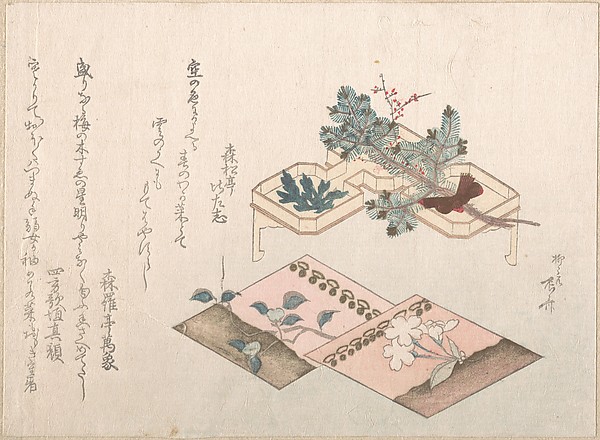
Spring Rain Collection (Harusame shū), vol. 2: Pine Shoots and Accoutrements for New Year’s Celebrations
Ryūryūkyo Shinsai (d. 1823)
19th century · Privately published woodblock prints (surimono) mounted in an album; ink and color on paper
Cleared · Public Domain
liveNo open reproduction
The institution withholds the image for this record, which is itself the answer: the picture on their page is not theirs to give away.
“A Woven Greeting” calendar
Warner Woven Label Co.
ca. 1960 · Silk, woven
In copyright
liveNo open reproduction
The institution withholds the image for this record, which is itself the answer: the picture on their page is not theirs to give away.
“A Woven Greeting” calendar featuring the silk portrait of Senora Sabasa Garcia
Warner Woven Label Co.
ca. 1962 · Silk, woven
In copyright
liveNo open reproduction
The institution withholds the image for this record, which is itself the answer: the picture on their page is not theirs to give away.
“A Woven Greeting” calendar
Warner Woven Label Co.
ca. 1963 · Silk, woven
In copyright
liveNo open reproduction
The institution withholds the image for this record, which is itself the answer: the picture on their page is not theirs to give away.
“A Woven Greeting” calendar featuring the portrait of Henry VIII
Warner Woven Label Co.
ca. 1963 · Silk, woven
In copyright
liveNo open reproduction
The institution withholds the image for this record, which is itself the answer: the picture on their page is not theirs to give away.
“A Woven Greeting” calendar
Warner Woven Label Co.
ca. 1964 · Silk, woven
In copyright
live1. Pin the work
Choose the record and say what you are actually going to do with it. The product re-reads the work live and stores a snapshot, so your docket records what the institution said today.
2. Read the arithmetic
Six weighted factors: the institution's own claim, the creator's term, the publication-age rule, the restrictions in their statement, your use, and whether a credit line is even possible.
3. Seal and export
Record the decision into a SHA-384 chain, then export a dated docket as JSON, CSV or Markdown with the credit line and the seal a colleague can re-verify.