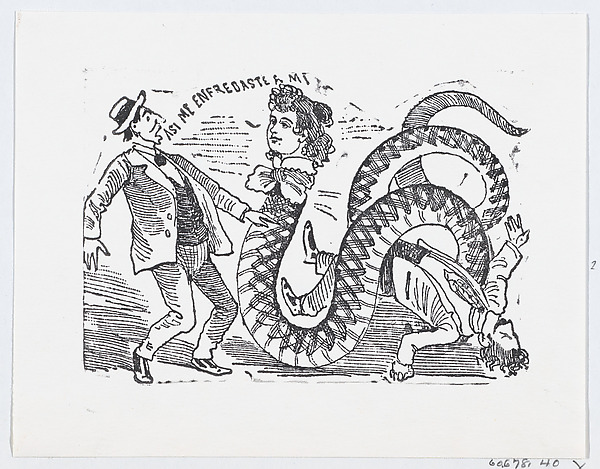
A snake with a woman's head slithering towards a scared man, an illustration from 'The Ballad of the Snake Woman' (reprinted 1930)
José Guadalupe Posada (d. 1913)
ca. 1899 (a later impression) · Zincograph
Cleared · Public Domain
liveThe MetSimilar
Rights clearance desk for images
Museums publish two different things about the same artwork: whether the work is in copyright, and whether their picture of it is. OpenPlate reads both, does the arithmetic on the published term, and shows you the sentence behind every point of the score.
Where this page got its records
446 ms. The Metropolitan Museum of Art, Collection API (Open Access)
483 ms. The Cleveland Museum of Art, Open Access API
2 of 2 providers answered live. 80 matching records exist across the two collections.
Institutions answered newest-first by record, interleaved
A snake with a woman's head slithering towards a scared man, an illustration from 'The Ballad of the Snake Woman' (reprinted 1930)
José Guadalupe Posada (d. 1913)
ca. 1899 (a later impression) · Zincograph
Cleared · Public Domain
live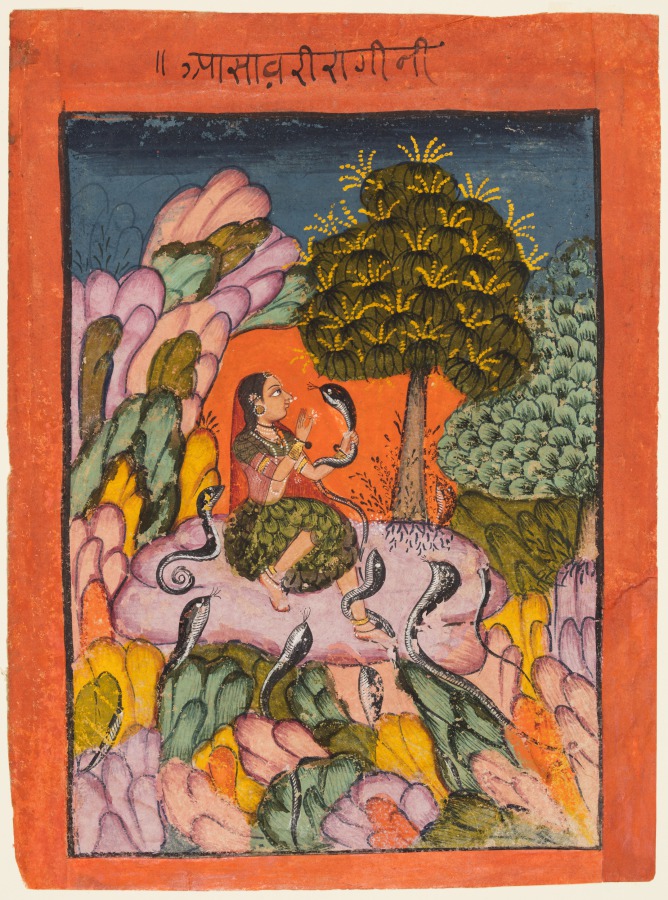
A Woman Charms Snakes in the Wilderness: Asavari Ragini, from a Ragamala
Unrecorded maker
early 1700s · Painting, gum tempera and gold on paper
Cleared · CC0
live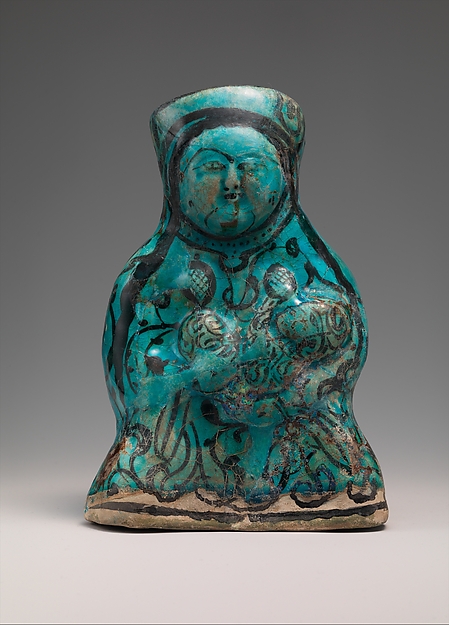
Molded Vessel in the Form of a Mother and Child
Unrecorded maker
12th–13th century · Stonepaste; molded, painted under transparent turquoise glaze
Cleared · Public Domain
live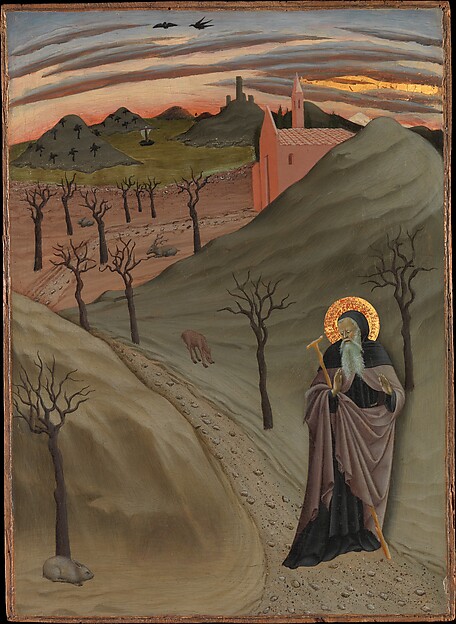
Saint Anthony the Abbot in the Wilderness
Sano di Pietro (Ansano di Pietro di Mencio) (d. 1481)
ca. 1440 · Tempera and gold on wood
Cleared · Public Domain
live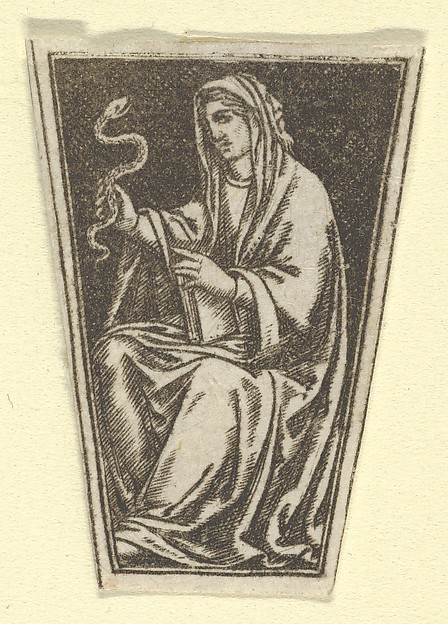
The cardinal virtue of Prudence represented by a seated woman holding a snake in her right hand (possibly a modern impression)
Anonymous
ca. 1480–1520 · Engraving, printed from a plate engraved in the niello manner
Cleared · Public Domain
live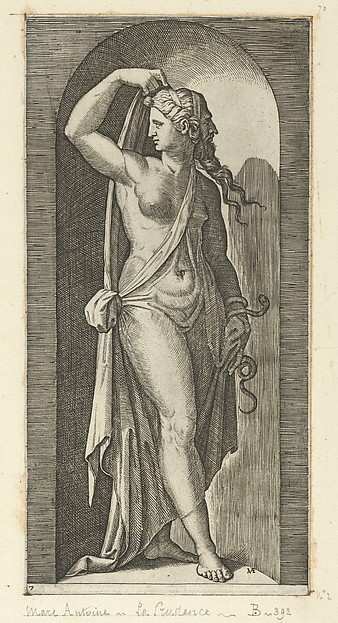
Prudence personified by a woman standing in a niche, holding a shawl in her right hand, a snake coiled around her left, from "The Virtues"
Marcantonio Raimondi (d. 1534)
ca. 1515–25 · Engraving
Cleared · Public Domain
live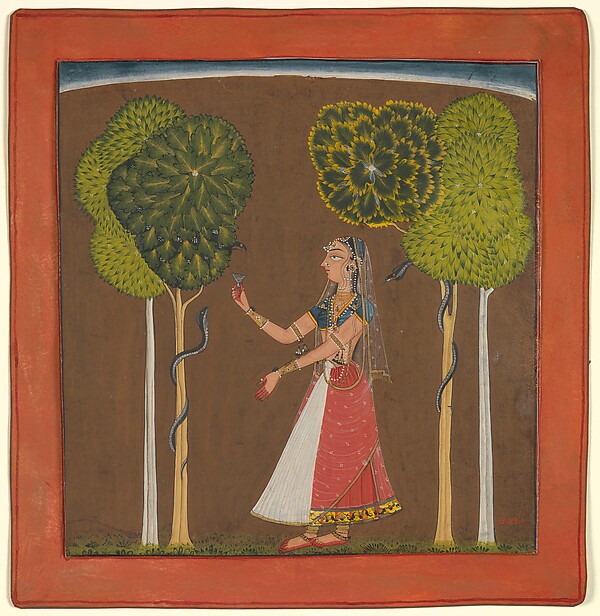
Ragini, possibly Asavari: Folio from a Ragamala Series
Unrecorded maker
ca. 1700–1710 · Ink and opaque watercolor on paper
Cleared · Public Domain
live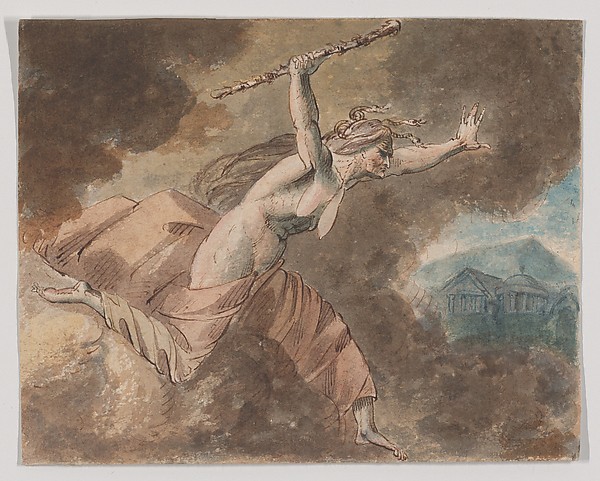
Envy from Ovid's "House of Envy" (Book II, lines 760-796) (recto); A naked woman (verso)
William Hamilton (d. 1801)
1770–80 · Recto: pen and black ink, brush and brown wash and watercolor, over graphite Verso: pen and brown ink and graphite
Cleared · Public Domain
live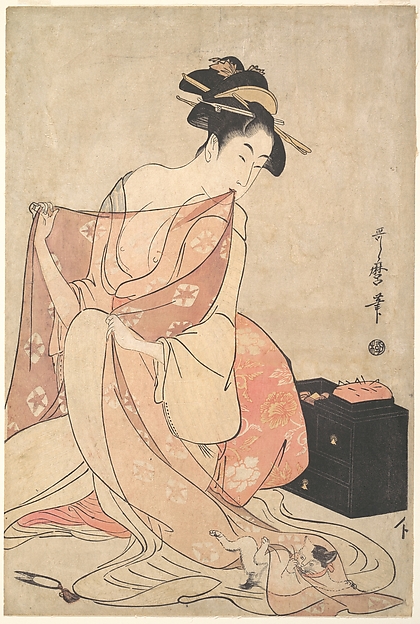
A Woman and a Cat
Kitagawa Utamaro (d. 1806)
ca. 1793–94 · One sheet of a triptych of woodblock prints; ink and color on paper
Cleared · Public Domain
live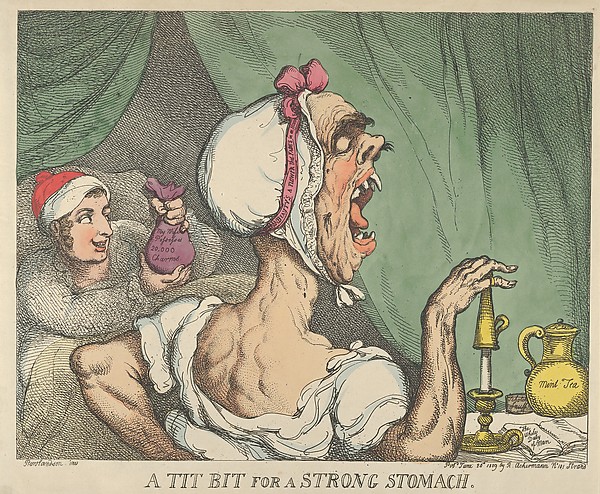
A Tit Bit for a Strong Stomach
Thomas Rowlandson (d. 1827)
June 20, 1809 · Hand-colored etching
Cleared · Public Domain
liveNo open reproduction
The institution withholds the image for this record, which is itself the answer: the picture on their page is not theirs to give away.
Death surprising a woman
Monogrammist M (d. 1580)
1530–1560 · Engraving
In copyright
liveNo open reproduction
The institution withholds the image for this record, which is itself the answer: the picture on their page is not theirs to give away.
The Girl of the Period Lost in the Wilderness (published in "Harper's Bazar," May 28, 1870)
Thomas Nast (d. 1902)
originally published 1870 · Relief print and electrotype
In copyright
live1. Pin the work
Choose the record and say what you are actually going to do with it. The product re-reads the work live and stores a snapshot, so your docket records what the institution said today.
2. Read the arithmetic
Six weighted factors: the institution's own claim, the creator's term, the publication-age rule, the restrictions in their statement, your use, and whether a credit line is even possible.
3. Seal and export
Record the decision into a SHA-384 chain, then export a dated docket as JSON, CSV or Markdown with the credit line and the seal a colleague can re-verify.