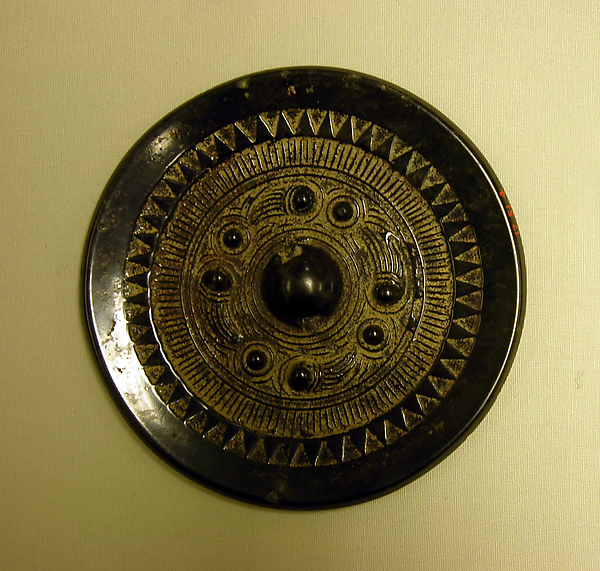
Mirror with knobs and swirls
Unrecorded maker
2nd to 1st century BCE · Bronze with black patina
Cleared · Public Domain
liveThe MetSimilar
Rights clearance desk for images
Museums publish two different things about the same artwork: whether the work is in copyright, and whether their picture of it is. OpenPlate reads both, does the arithmetic on the published term, and shows you the sentence behind every point of the score.
Where this page got its records
420 ms. The Metropolitan Museum of Art, Collection API (Open Access)
255 ms. The Cleveland Museum of Art, Open Access API
2 of 2 providers answered live. 164 matching records exist across the two collections.
Institutions answered newest-first by record, interleaved
Mirror with knobs and swirls
Unrecorded maker
2nd to 1st century BCE · Bronze with black patina
Cleared · Public Domain
live
Quadrangular vase in the shape of a Neolithic cong
Unrecorded maker
13th century · Stoneware with celadon glaze (Longquan ware)
Cleared · Public Domain
live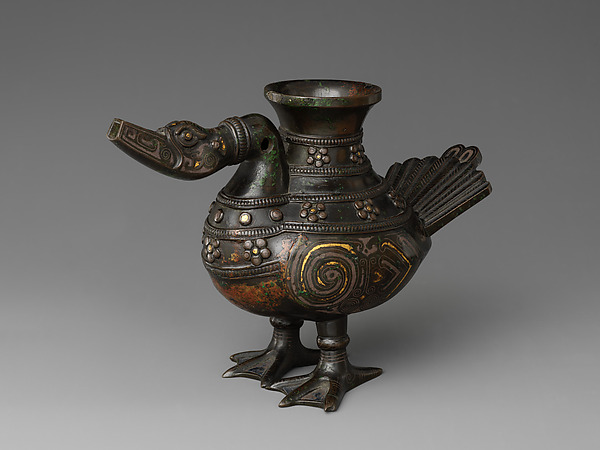
Vessel in the shape of a waterfowl (fuzun)
Unrecorded maker
15th–16th century · Copper alloy, gold and silver inlay
Cleared · Public Domain
live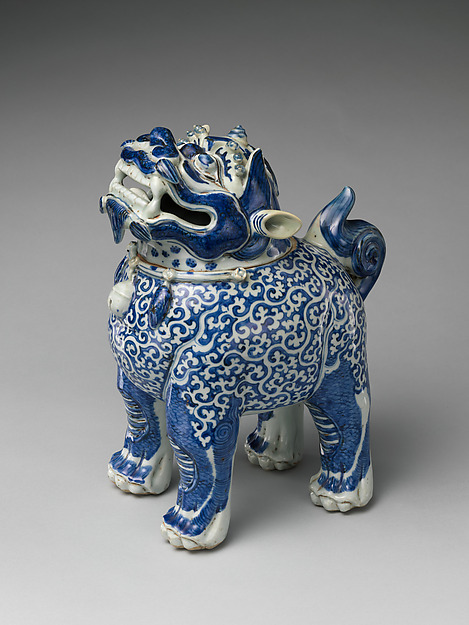
Censer in the form of a mythical beast
Unrecorded maker
early 17th century · Porcelain painted in underglaze blue (Jingdezhen ware)
Cleared · Public Domain
live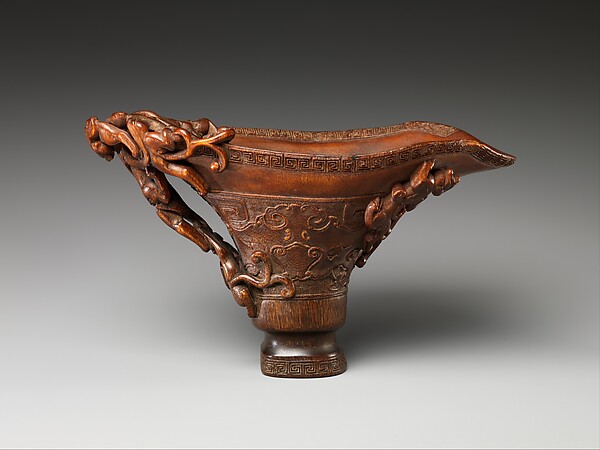
Cup in the shape of an archaic vessel with feline dragons
Unrecorded maker
17th century · Rhinoceros horn
Cleared · Public Domain
live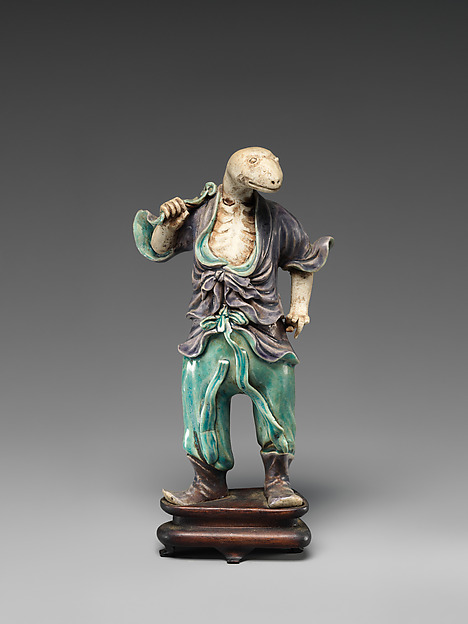
Zodiac figure: snake
Unrecorded maker
late 17th–early 18th century · Porcelain painted in enamels on the biscuit (Jingdezhen ware)
Cleared · Public Domain
live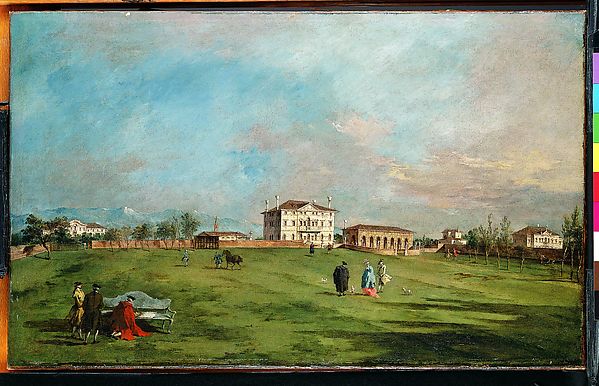
The Villa Loredan, Paese
Francesco Guardi (d. 1793)
early 1780s · Oil on canvas
Cleared · Public Domain
live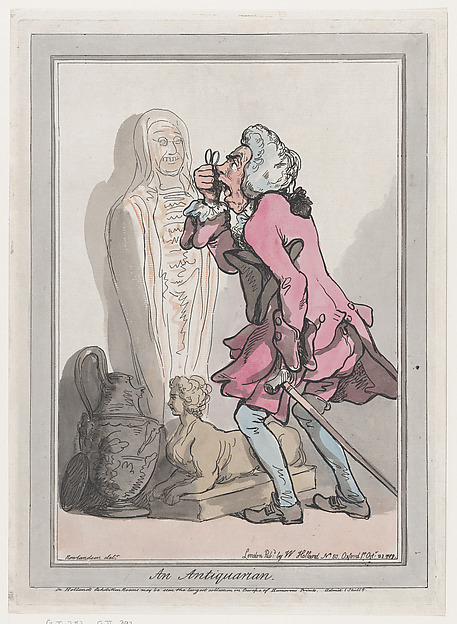
An Antiquarian
Frederick George Byron (d. 1792)
October 23, 1789 · Hand-colored etching and aquatint
Cleared · Public Domain
live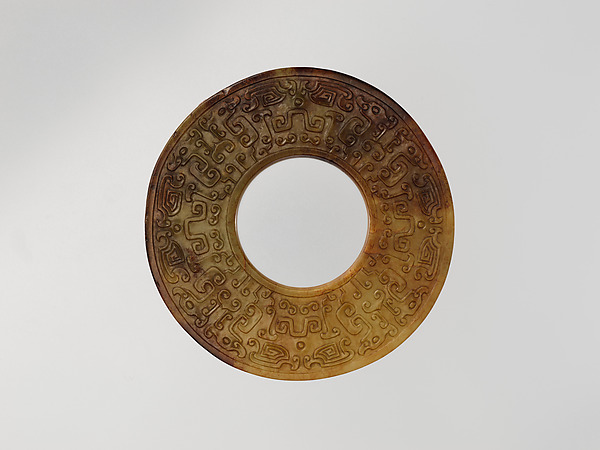
Annular disk with antiquarian decorations (bi)
Unrecorded maker
18th century · Jade (nephrite)
Cleared · Public Domain
live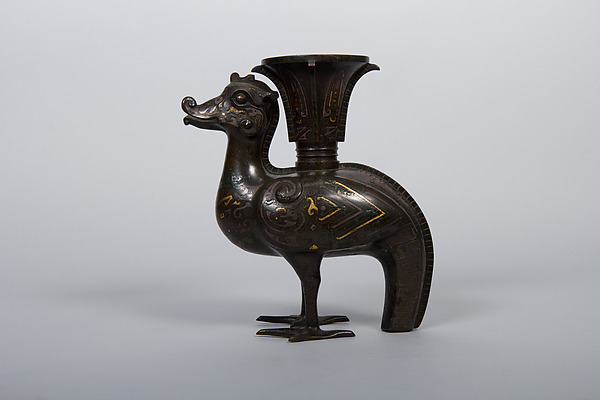
Vessel in the Form of a Heavenly Rooster
Unrecorded maker
19th century · Bronze inlaid with gold and silver
Cleared · Public Domain
liveNo open reproduction
The institution withholds the image for this record, which is itself the answer: the picture on their page is not theirs to give away.
Portrait of an Antiquarian, volume 2, plate 117 from "Monuments des Arts du Dessin"
Jean Antoine Laurent (d. 1832)
1829 · Lithograph
In copyright
live1. Pin the work
Choose the record and say what you are actually going to do with it. The product re-reads the work live and stores a snapshot, so your docket records what the institution said today.
2. Read the arithmetic
Six weighted factors: the institution's own claim, the creator's term, the publication-age rule, the restrictions in their statement, your use, and whether a credit line is even possible.
3. Seal and export
Record the decision into a SHA-384 chain, then export a dated docket as JSON, CSV or Markdown with the credit line and the seal a colleague can re-verify.