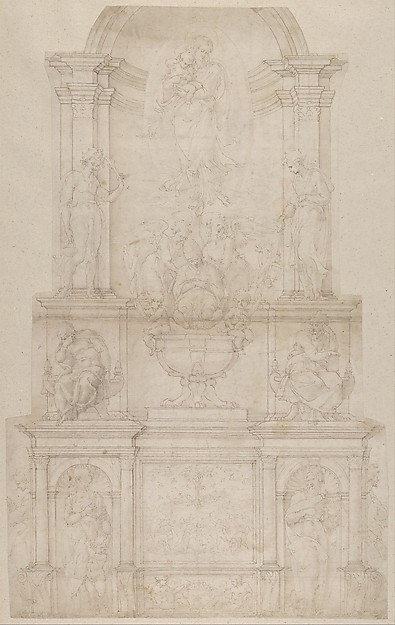
Design for the Tomb of Pope Julius II della Rovere
Michelangelo Buonarroti (d. 1564)
1505–6 · Pen and brown ink, brush and brown wash, over stylus ruling and leadpoint
Cleared · Public Domain
liveThe MetSimilar
Rights clearance desk for images
Museums publish two different things about the same artwork: whether the work is in copyright, and whether their picture of it is. OpenPlate reads both, does the arithmetic on the published term, and shows you the sentence behind every point of the score.
Where this page got its records
247 ms. The Metropolitan Museum of Art, Collection API (Open Access)
312 ms. The Cleveland Museum of Art, Open Access API
2 of 2 providers answered live. 8 matching records exist across the two collections.
Institutions answered newest-first by record, interleaved
Design for the Tomb of Pope Julius II della Rovere
Michelangelo Buonarroti (d. 1564)
1505–6 · Pen and brown ink, brush and brown wash, over stylus ruling and leadpoint
Cleared · Public Domain
live
Studies for the Libyan Sibyl (recto); Studies for the Libyan Sibyl and a small Sketch for a Seated Figure (verso)
Michelangelo Buonarroti (d. 1564)
ca. 1510–11 · Red chalk, with small accents of white chalk on the left shoulder of the figure in the main study (recto); soft black chalk, or less probably charcoal (verso)
Cleared · Public Domain
live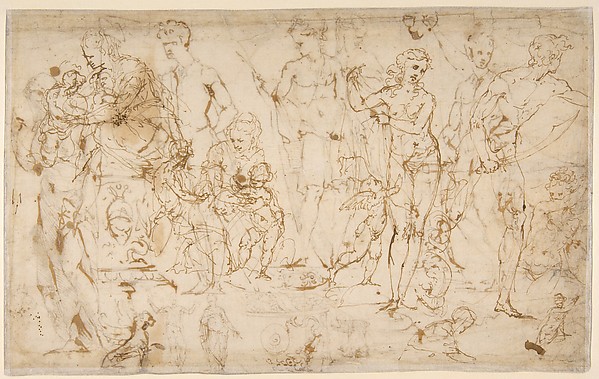
Sheet of Figure Studies and Ornamental Motifs (recto and verso)
Vincenzo Tamagni (d. 1530)
1520–30 · Pen and brown ink over leadpoint
Cleared · Public Domain
live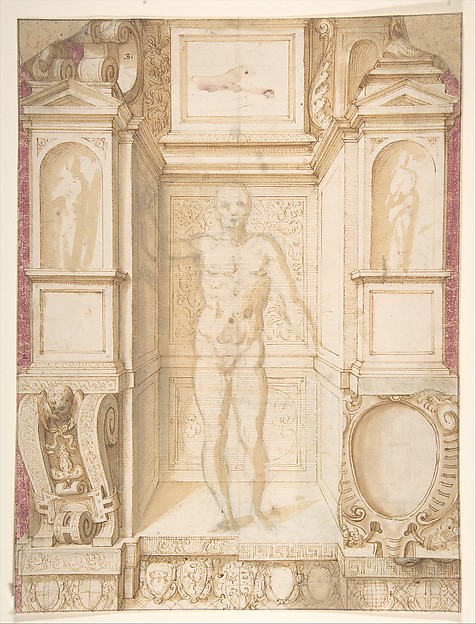
Study of a Figure in a Niche (Saint Ambrose; recto); Architectural Studies: Four Alternative Designs for Fictive Niches and an Unrelated Design with Garlands (verso), ca. 1560-67
Giuseppe Arcimboldo (d. 1593)
1564–65 · Pen and brown ink, brush with pale brown and purple wash, over soft black chalk (recto); pen and brown ink, some sketches over black chalk (verso)
Cleared · Public Domain
live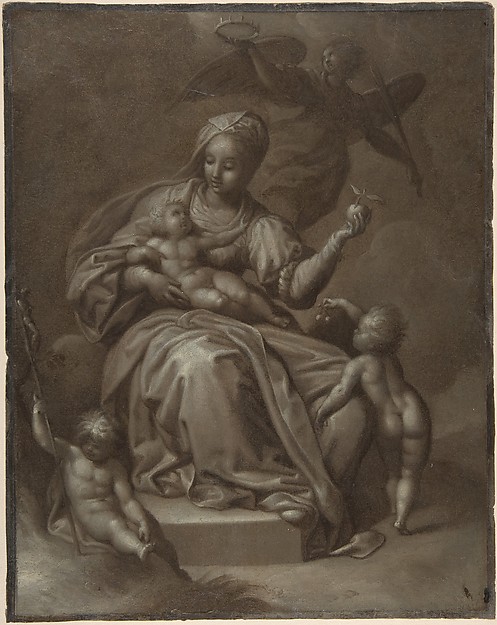
Virgin and Child, and Saint John the Baptist (recto); Summary sketches, possibly the Virgin and Child (verso)
Jacob de Backer (d. 1600)
ca. 1580–90 · Brown and black oil with white heightening (recto); black chalk (verso)
Cleared · Public Domain
live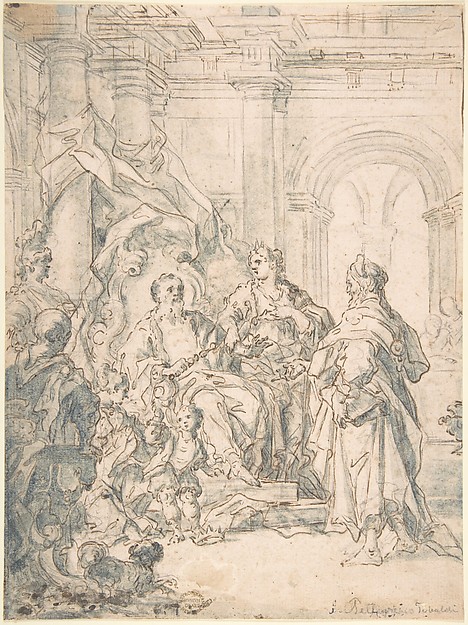
An Audience (recto); Sketch of a nude woman (verso)
Ercole Procaccini The Younger (d. 1680)
17th century · Pen and brown ink, brush with blue-green wash, over black chalk? on light tan paper. Fragments of brown ink framing outlines at left, top, right edges
Cleared · Public Domain
live
Study for the Prophet Jeremiah (recto); Studies of a Horse Seen from Below and of a Man Seated on a Chair, Probably a Self-Portrait and an Off-Print in Brown Ink of a Nude Female Abdomen and Legs (verso)
Henry Fuseli (d. 1825)
1764–70 · Pen and brown ink over graphite on paper; verso, pen and brown ink; framing lines in graphite
Cleared · Public Domain
liveNo open reproduction
The institution withholds the image for this record, which is itself the answer: the picture on their page is not theirs to give away.
Studies for Hercules Holding a Club Seen in Frontal View, Male Nude Unsheathing a Sword, and the Movements of Water (recto); Study for Hercules Holding a Club Seen in Rear View (verso)
Leonardo da Vinci (d. 1519)
ca. 1506–8 · Pen and brown ink; soft black chalk or charcoal (recto); soft black chalk or charcoal (verso)
In copyright
live1. Pin the work
Choose the record and say what you are actually going to do with it. The product re-reads the work live and stores a snapshot, so your docket records what the institution said today.
2. Read the arithmetic
Six weighted factors: the institution's own claim, the creator's term, the publication-age rule, the restrictions in their statement, your use, and whether a credit line is even possible.
3. Seal and export
Record the decision into a SHA-384 chain, then export a dated docket as JSON, CSV or Markdown with the credit line and the seal a colleague can re-verify.