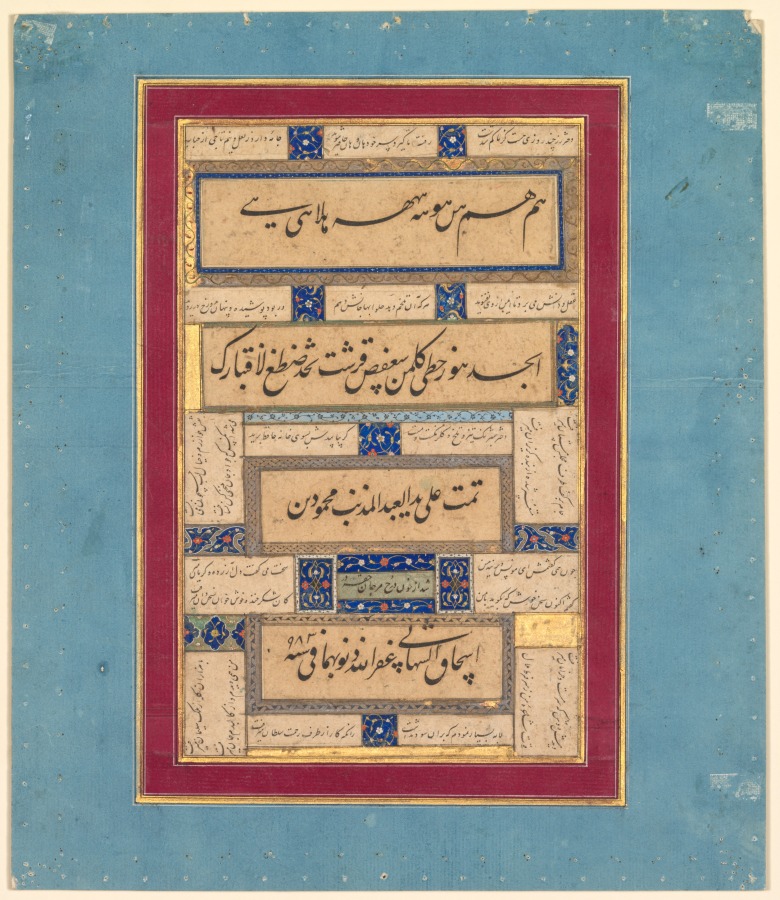
Calligraphic exercises and verses of Hafiz (Persian, about 1325–1389) (verso)
Mahmud ibn Ishaq al-Shahabi
1575–76 · Calligraphy, Gum tempera, ink, and gold on paper
Cleared · CC0
liveCleveland Museum of ArtSimilar
Rights clearance desk for images
Museums publish two different things about the same artwork: whether the work is in copyright, and whether their picture of it is. OpenPlate reads both, does the arithmetic on the published term, and shows you the sentence behind every point of the score.
Where this page got its records
The Metropolitan Museum of Art did not answer: met answered HTTP 403
593 ms. The Cleveland Museum of Art, Open Access API
1 of 2 providers answered live. 18 matching records exist across the two collections.
Institutions answered newest-first by record, interleaved
Calligraphic exercises and verses of Hafiz (Persian, about 1325–1389) (verso)
Mahmud ibn Ishaq al-Shahabi
1575–76 · Calligraphy, Gum tempera, ink, and gold on paper
Cleared · CC0
live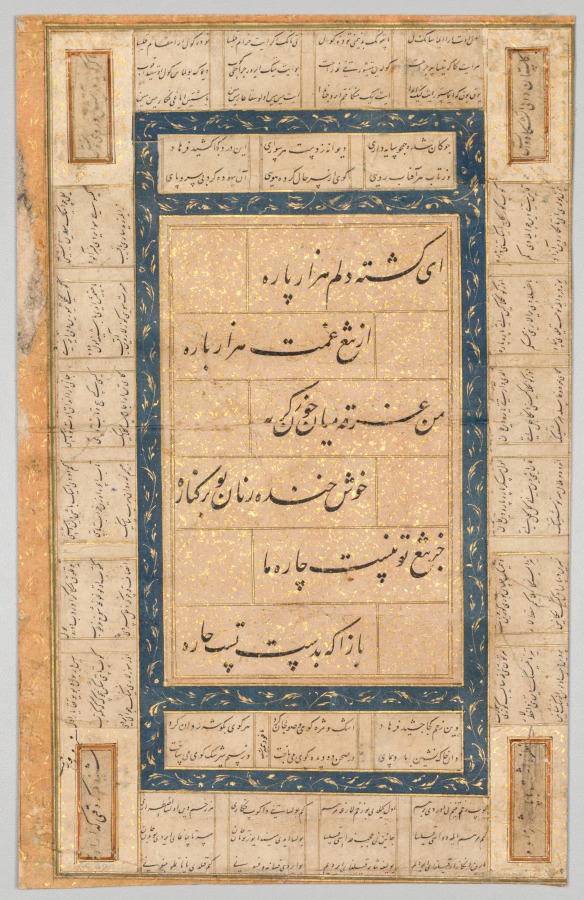
Calligraphy, Persian Verses (verso)
Unrecorded maker
1400s · Manuscript, Opaque watercolor, ink, and gold on paper
Cleared · CC0
live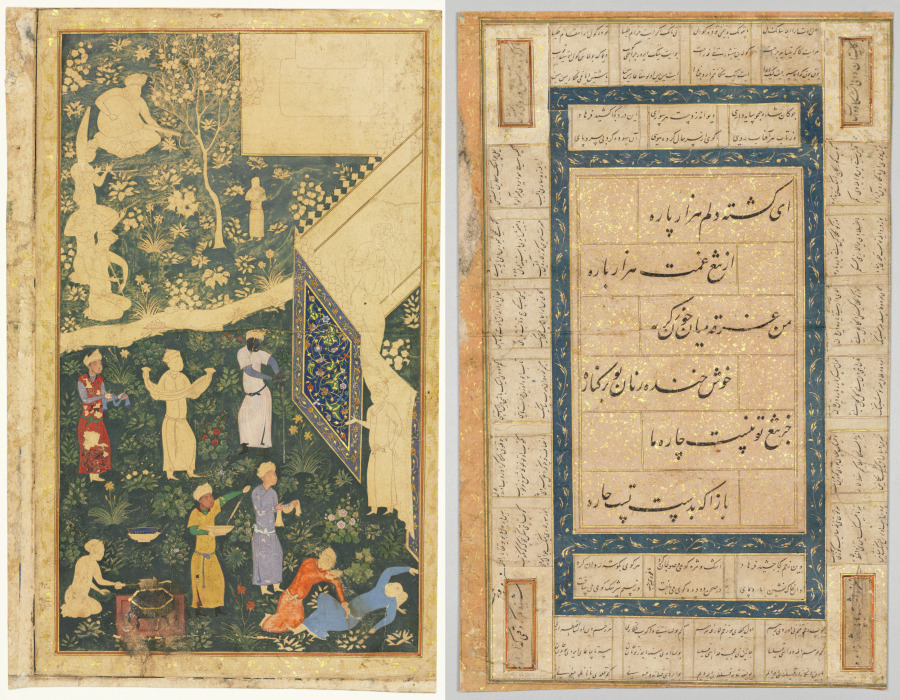
Left side of a double-page album folio: Outside a Royal Encampment (recto) and Calligraphy, Persian Verses (verso)
Bihzad (d. 1506)
c. 1485 · Manuscript, opaque watercolor, ink, and gold on paper
Cleared · CC0
live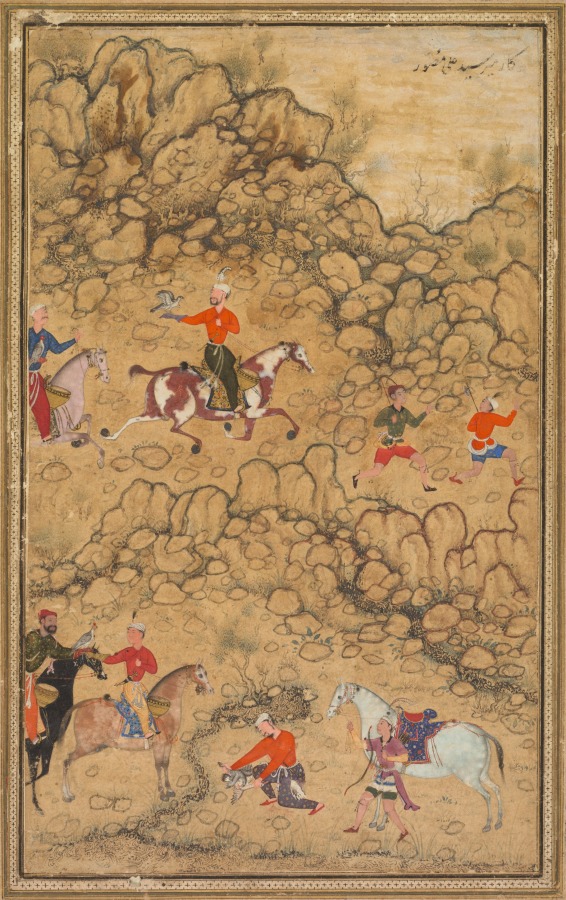
Hunting with falcons in a landscape; verso: Calligraphy of Chaghatai Turkish poems in praise of wine, Sultan Muhammad Nur (Persian, c. 1472–1536) and Mirza Muhammad (probably Persian, active c. 1520s)
Abd al-Samad (d. 1600)
c. 1558–60; borders added probably 1700s · Painting, Gum tempera, ink, and gold on paper
Cleared · CC0
live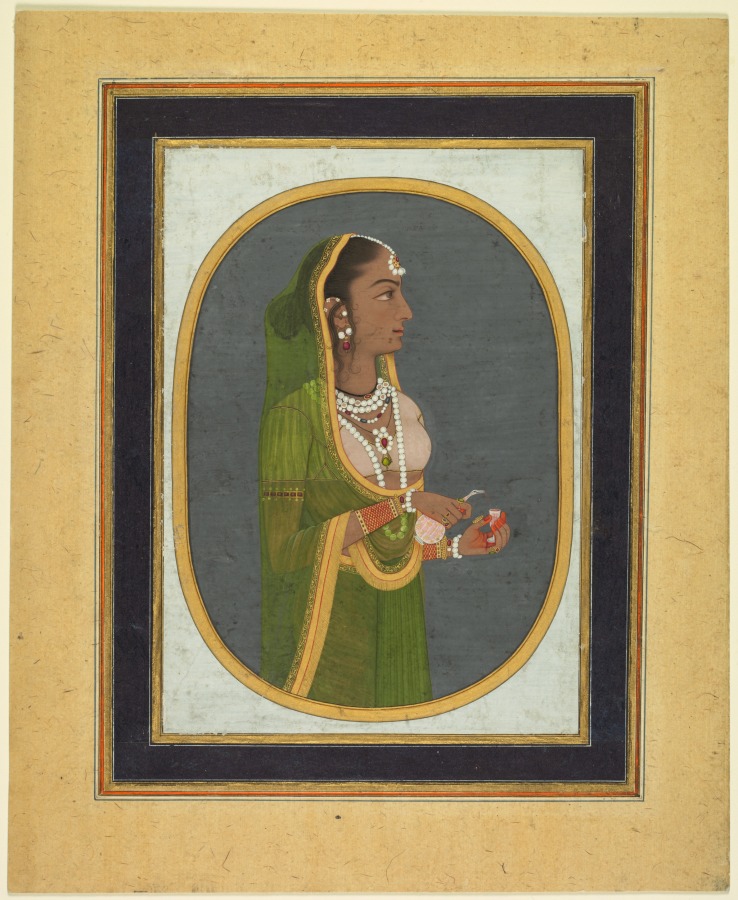
Court Lady Pouring Wine (recto); Calligraphy of Lyrical Quatrains (verso)
Unrecorded maker
c. 1760; borders mid-1700s · Painting, Gum tempera, ink, and gold on paper
Cleared · CC0
live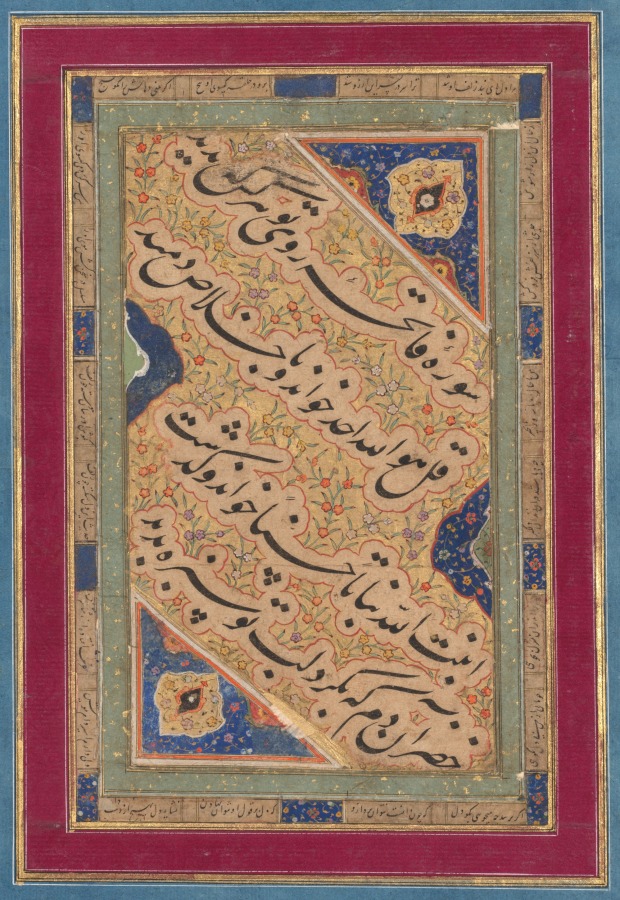
Calligraphy of Lyrical Quatrains (verso)
Unrecorded maker
mid-1700s · Calligraphy, Gum tempera, ink, and gold on paper
Cleared · CC0
live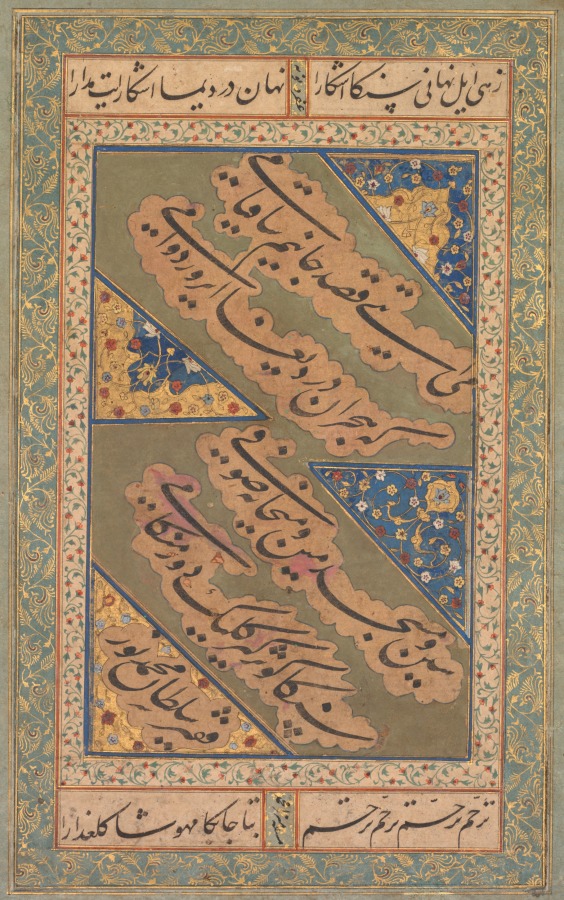
Calligraphy of Chaghatai Turkish Poems in Praise of Wine (verso)
Mirza Muhammad
c. 1500–1520 · Painting, Gum tempera, ink, and gold on paper
Cleared · CC0
live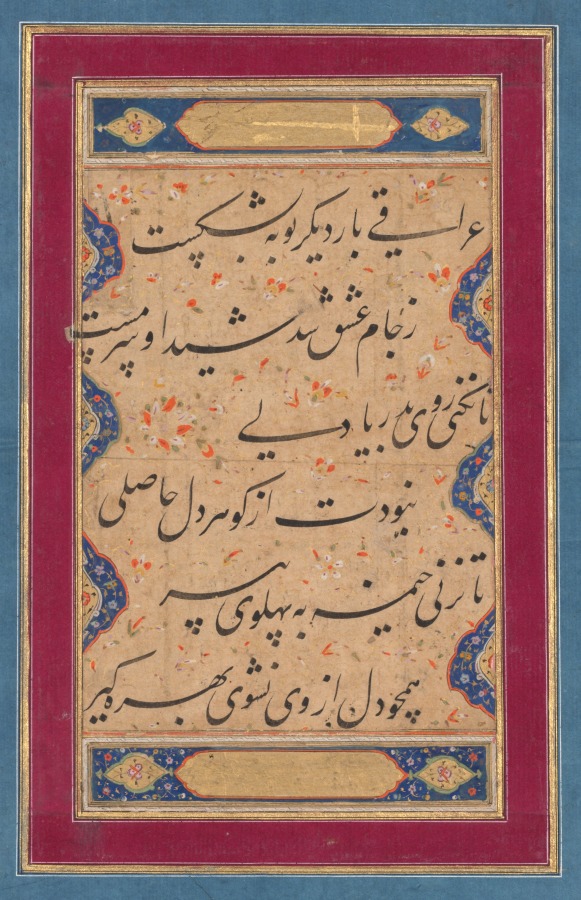
Calligraphy from a ghazal of Fakhr al-Din Iraqi (Persian, 1213–1289) and a verse from the Tuhfat al-ahrar (The Gift of the Free) of Abd al-Rahman Jami (verso)
Muhammad Rizavi Hindi
c. 1760 · Calligraphy, Gum tempera, ink, and gold on paper
Cleared · CC0
live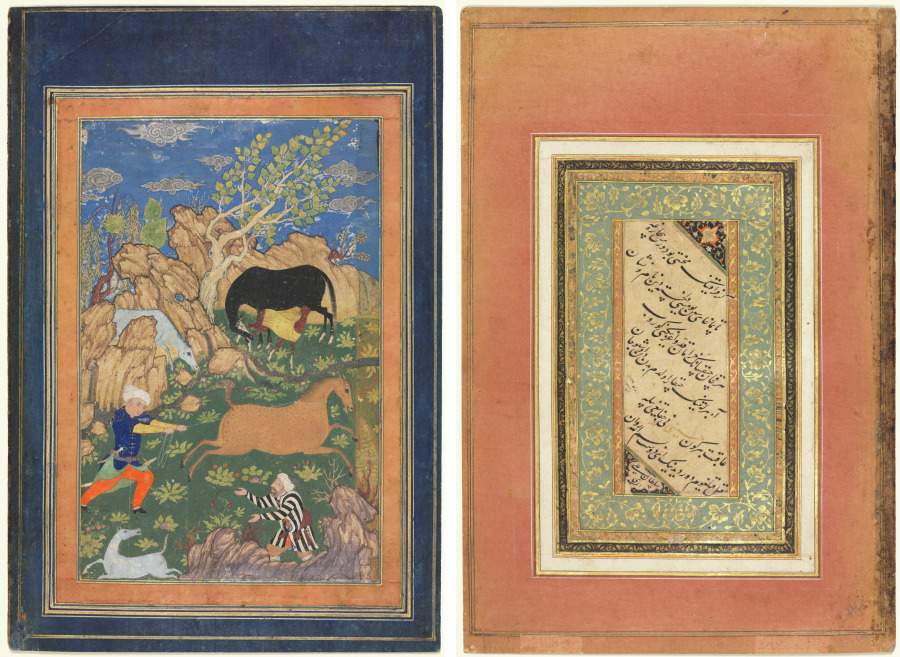
Rustam Lassoing his Horse, Rakhsh, in a Landscape (recto); Calligraphy, Persian Verses (verso)
Unrecorded maker
late 1500s · Manuscript, opaque watercolor, ink, gold and silver on paper
Cleared · CC0
live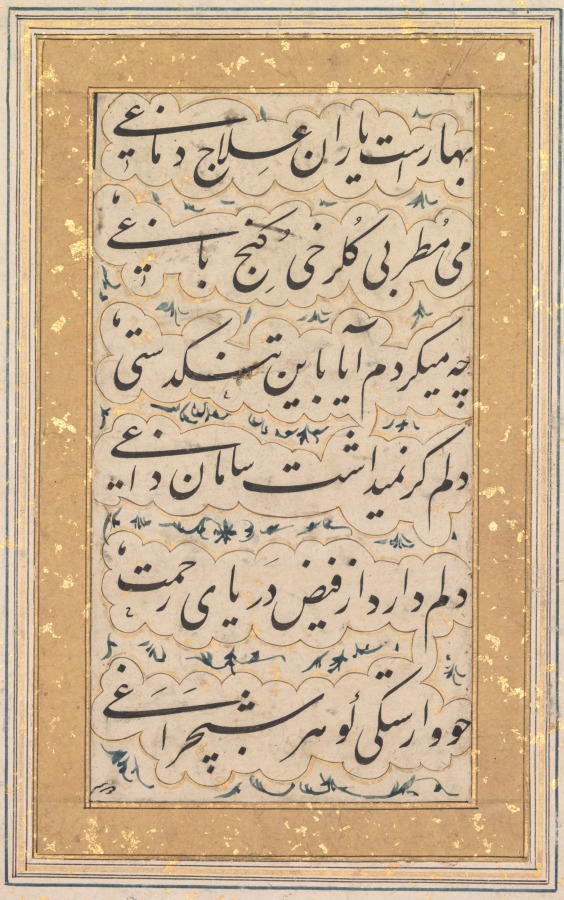
Calligraphy (verso)
Unrecorded maker
c. 1640–60 · Painting, Gum tempera, ink, and gold on paper
Cleared · CC0
live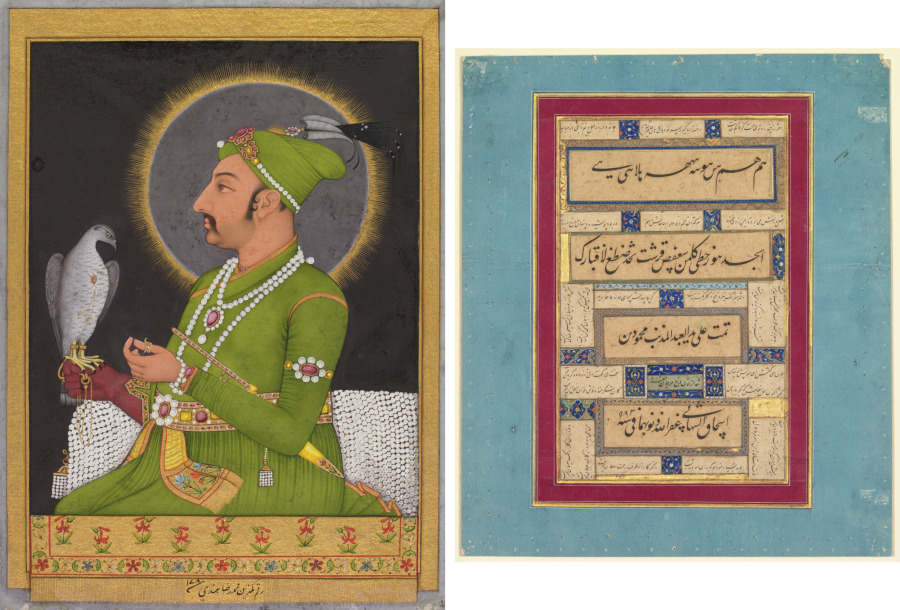
Posthumous portrait of the Mughal emperor Muhammad Shah (reigned 1719–1748) holding a falcon (recto); Calligraphy (verso)
Muhammad Rizavi Hindi
1764 · Painting, Gum tempera, ink, and gold on paper
Cleared · CC0
live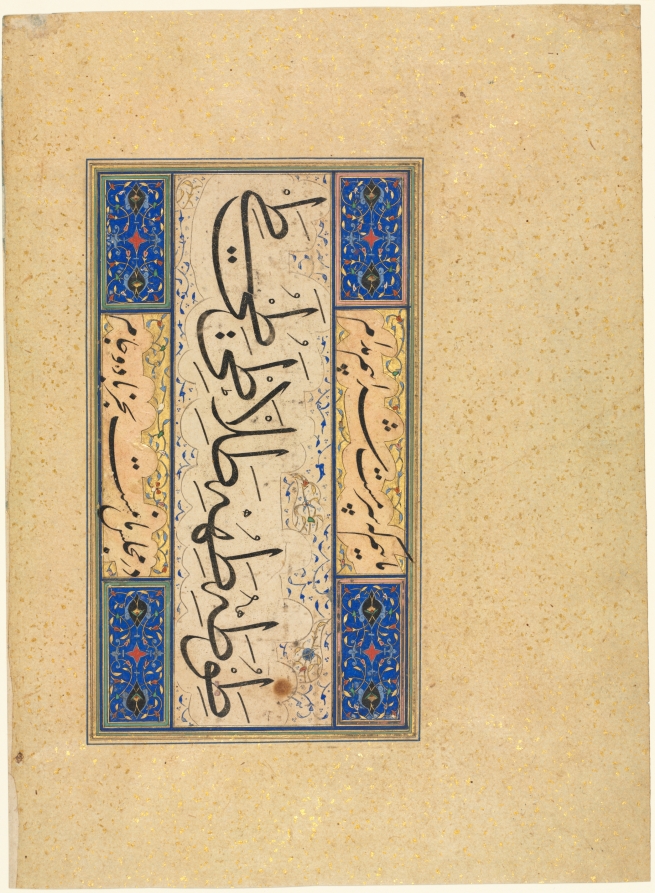
Persian Verse (khamriyya) (verso)
Unrecorded maker
c. 1509–59 · Manuscript, ink, gold, and opaque watercolor on paper
Cleared · CC0
live1. Pin the work
Choose the record and say what you are actually going to do with it. The product re-reads the work live and stores a snapshot, so your docket records what the institution said today.
2. Read the arithmetic
Six weighted factors: the institution's own claim, the creator's term, the publication-age rule, the restrictions in their statement, your use, and whether a credit line is even possible.
3. Seal and export
Record the decision into a SHA-384 chain, then export a dated docket as JSON, CSV or Markdown with the credit line and the seal a colleague can re-verify.