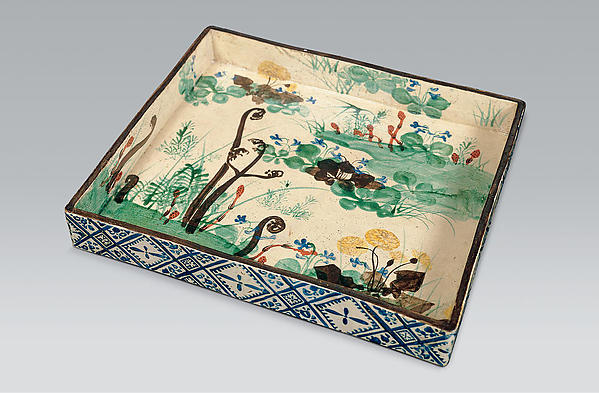
Square Dish with Spring Flowers and Grasses
Ogata Kenzan (d. 1743)
18th century · Stoneware with polychrome enamels under transparent glaze (Kyoto ware)
Cleared · Public Domain
liveThe MetSimilar
Rights clearance desk for images
Museums publish two different things about the same artwork: whether the work is in copyright, and whether their picture of it is. OpenPlate reads both, does the arithmetic on the published term, and shows you the sentence behind every point of the score.
Where this page got its records
1043 ms. The Metropolitan Museum of Art, Collection API (Open Access)
406 ms. The Cleveland Museum of Art, Open Access API
2 of 2 providers answered live. 8 matching records exist across the two collections.
Institutions answered newest-first by record, interleaved
Square Dish with Spring Flowers and Grasses
Ogata Kenzan (d. 1743)
18th century · Stoneware with polychrome enamels under transparent glaze (Kyoto ware)
Cleared · Public Domain
live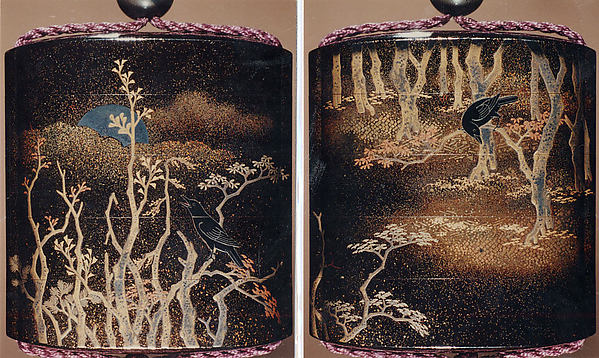
Case (Inrō) with Design of Trees, Crow, and Moon
Unrecorded maker
18th century · Takamaki-e with nashiji, gold and silver foil, and silver inlay on black lacquer; Interior: nashiji and fundame; Ojime: bead of inlaid metals and alloys; Netsuke: flowers, moon, and poem in gold lacquer on dark wood (signed: Designed by Hoitsu)
Cleared · Public Domain
live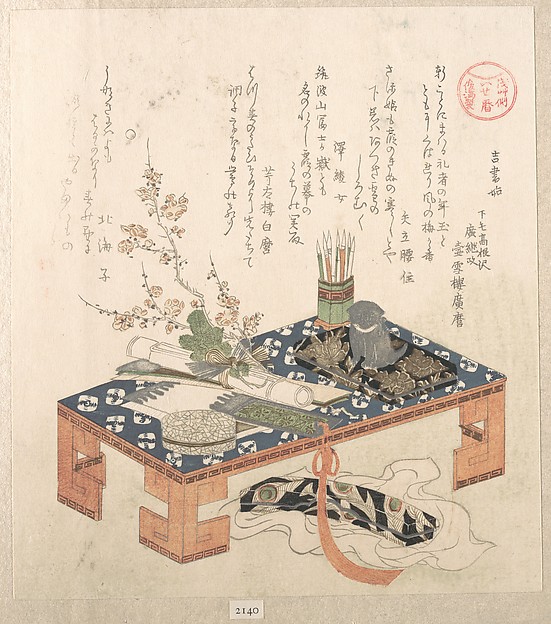
“Desk with Writing Set and Plum Flowers,” from the series Ise Calendars for the Asakusa Group (Asakusa-gawa Ise goyomi) From the Spring Rain Collection (Harusame shū), vol. 2
Kubo Shunman (d. 1820)
probably 1814 (Year of the Dog) · Woodblock print (surimono); ink and color on paper
Cleared · Public Domain
live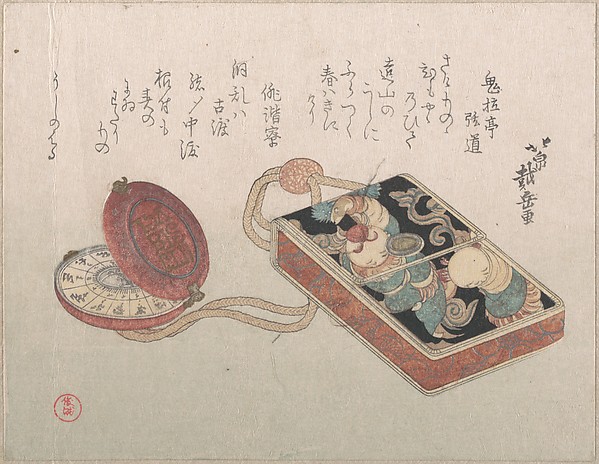
Dōran (Square Leather Box Used as an Inrō) with a Watch as a Netsuke From the Spring Rain Collection (Harusame shū), vol. 3
Hokusen Taigaku (d. 1825)
probably 1817 · Part of an album of woodblock prints (surimono); ink and color on paper
Cleared · Public Domain
live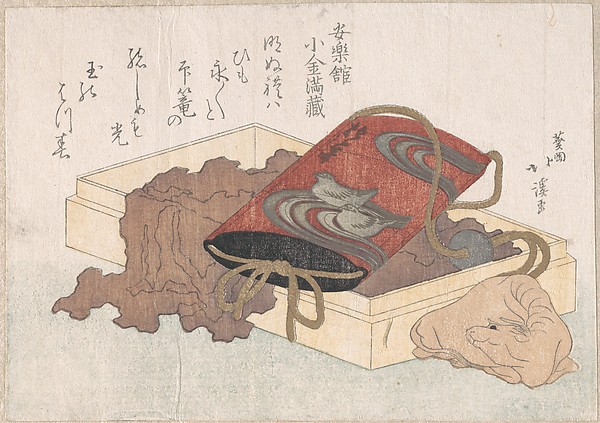
Lacquer Inrō with Waterbirds and Ox-shaped Netsuke in a Box From the Spring Rain Collection (Harusame shū), vol. 3
Totoya Hokkei (d. 1850)
probably 1817 · Part of an album of woodblock prints (surimono); ink and color on paper
Cleared · Public Domain
live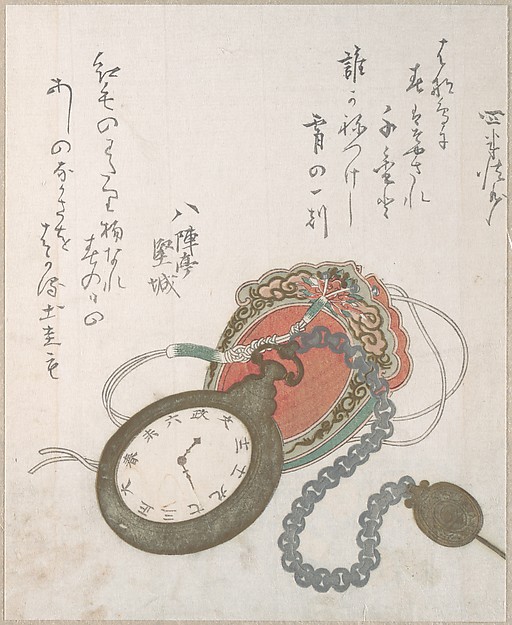
Western Pocket Watch From the Spring Rain Collection (Harusame shū), vol. 3
Utagawa Hiroshige (d. 1858)
dated 1823 · Part of an album of woodblock prints (surimono); ink and color on paper
Cleared · Public Domain
live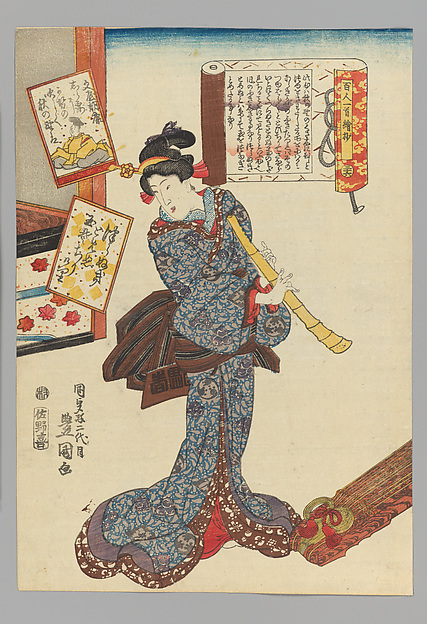
Bun’ya no Asayasu (no. 36), from the series A Pictorial Commentary on One Hundred Poems by One Hundred Poets (Hyakunin isshu eshō: Bun'ya no Asayasu)
Utagawa Kunisada (d. 1864)
ca. 1844 · Woodblock print (nishiki-e); vertical ōban; ink and color on paper
Cleared · Public Domain
live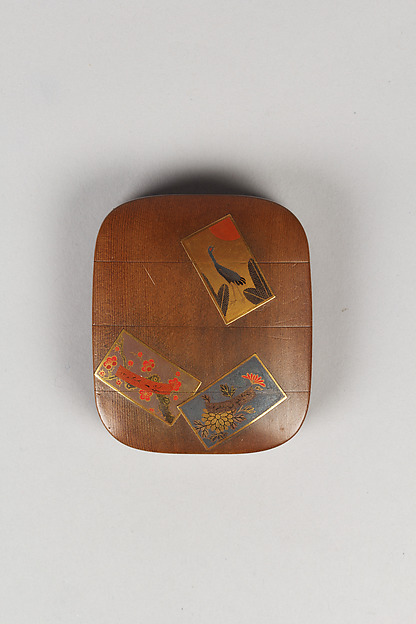
Case (Inrō) with Design of Poem Cards with Crane and Pine, Plum, Cherry, Chrysanthemum
Unrecorded maker
late 19th century · Wood, polished wood, gold and colored hiramakie, togidashi; Interior: plain
Cleared · Public Domain
live1. Pin the work
Choose the record and say what you are actually going to do with it. The product re-reads the work live and stores a snapshot, so your docket records what the institution said today.
2. Read the arithmetic
Six weighted factors: the institution's own claim, the creator's term, the publication-age rule, the restrictions in their statement, your use, and whether a credit line is even possible.
3. Seal and export
Record the decision into a SHA-384 chain, then export a dated docket as JSON, CSV or Markdown with the credit line and the seal a colleague can re-verify.