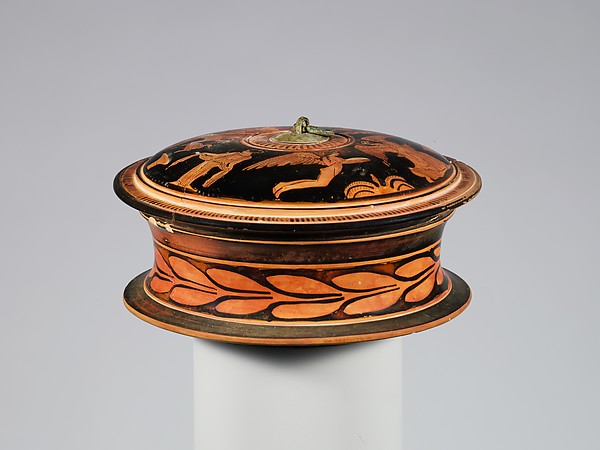
Terracotta pyxis (box)
Unrecorded maker
late 5th century BCE · Terracotta
Cleared · Public Domain
liveThe MetSimilar
Rights clearance desk for images
Museums publish two different things about the same artwork: whether the work is in copyright, and whether their picture of it is. OpenPlate reads both, does the arithmetic on the published term, and shows you the sentence behind every point of the score.
Where this page got its records
156 ms. The Metropolitan Museum of Art, Collection API (Open Access)
6 ms. The Cleveland Museum of Art, Open Access API
2 of 2 providers answered live. 62 matching records exist across the two collections.
Institutions answered newest-first by record, interleaved
Terracotta pyxis (box)
Unrecorded maker
late 5th century BCE · Terracotta
Cleared · Public Domain
live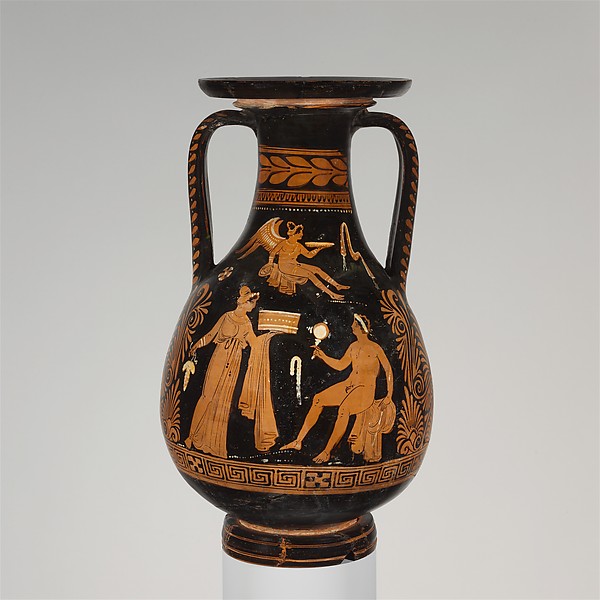
Terracotta pelike (jar)
Underworld Painter
ca. 330–310 BCE · Terracotta
Cleared · Public Domain
live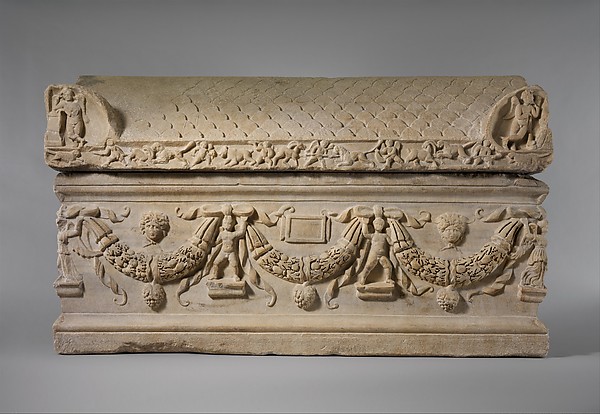
Marble sarcophagus with garlands
Unrecorded maker
ca. 200–225 CE · Marble, Proconnesian
Cleared · Public Domain
live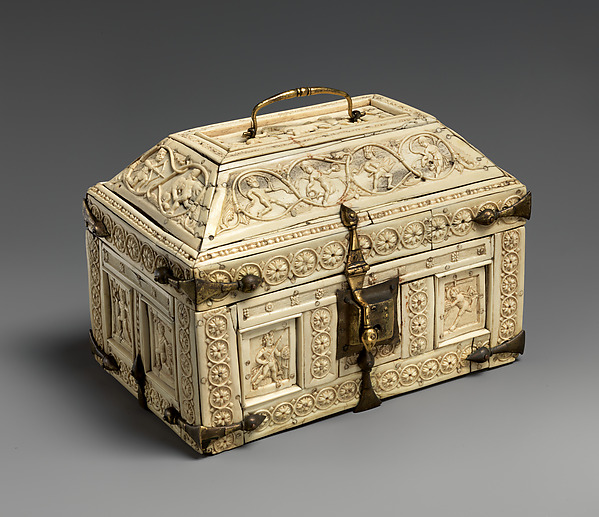
Casket with Warriors and Dancers
Unrecorded maker
11th century · Elephant ivory and bone; gilded copper mounts
Cleared · Public Domain
live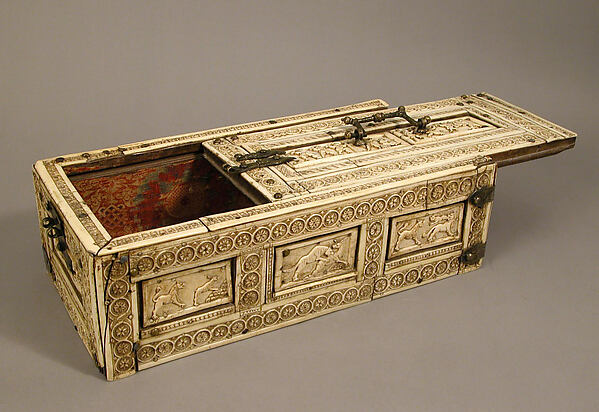
Casket with Erotes and Animals
Unrecorded maker
12th century · Bone plaques and ornamental strips over wooden casket with silk lining; copper handle, clasps, lock plate, and nails
Cleared · Public Domain
live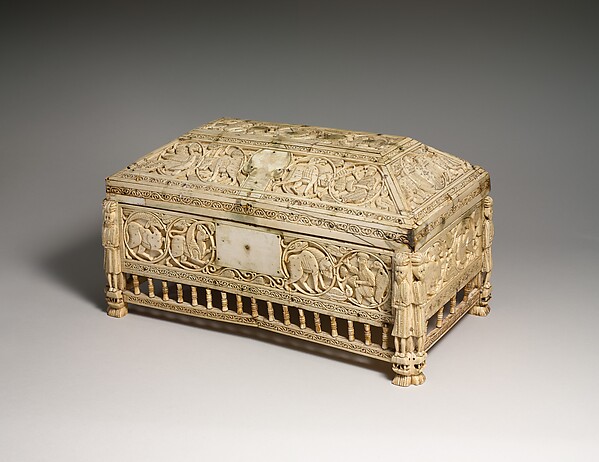
Morgan Casket
Unrecorded maker
11th–12th century · Ivory; carved
Cleared · Public Domain
live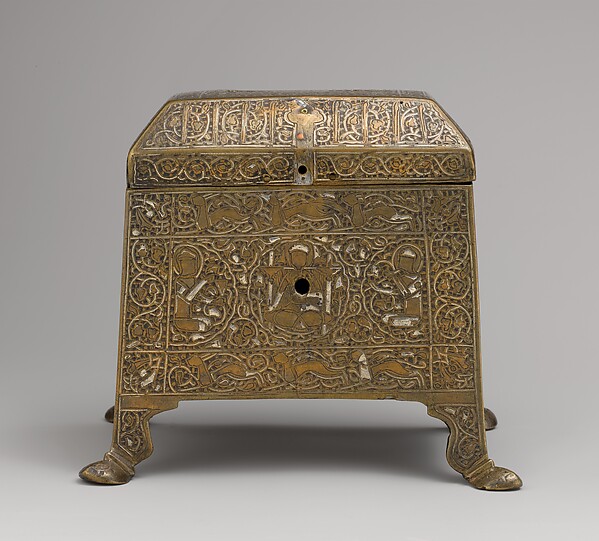
Casket with Figural Imagery
Unrecorded maker
mid-13th century · Brass; worked metal sheet inlaid with silver
Cleared · Public Domain
live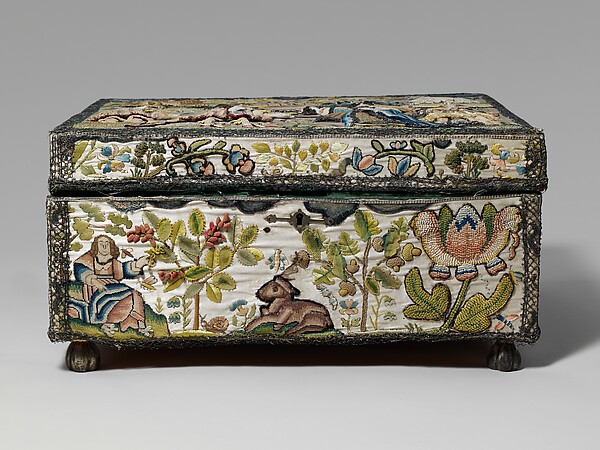
Casket with scenes from the Story of Solomon and the Queen of Sheba
Unrecorded maker
1670s · Satin worked with silk and metal thread, seed pearls; tent, satin, couching, Ceylon, detached needlepoint variations, knotted pile, knots, and crochet stitches; needle lace, metal bobbin lace; wood frame, silk lining, carved wooden feet
Cleared · Public Domain
live
Toilet casket
Unrecorded maker
1700–1715 · Wood veneered with marquetry of tortoiseshell and brass (première partie Boulle work), rosewood; gilt bronze, steel
Cleared · Public Domain
live
Toilet casket
Unrecorded maker
1700–1715 · Wood veneered with brass, tortoiseshell, tinted horn, pewter, copper and mother-of-pearl, rosewood contre partie Boulle work); gilt bronze and steel
Cleared · Public Domain
live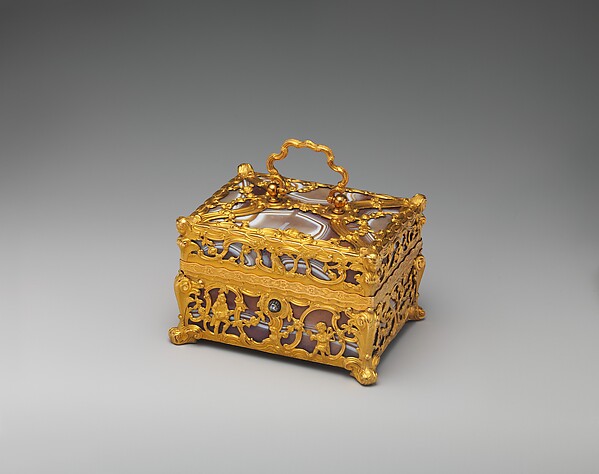
Jewel casket
Unrecorded maker
mid-18th century · Gold, agate, diamond, mirror glass
Cleared · Public Domain
live
Jewelry casket
Pietro Giusti (d. 1878)
1857 · Carved walnut, ebony, lined with red velvet
Cleared · Public Domain
live1. Pin the work
Choose the record and say what you are actually going to do with it. The product re-reads the work live and stores a snapshot, so your docket records what the institution said today.
2. Read the arithmetic
Six weighted factors: the institution's own claim, the creator's term, the publication-age rule, the restrictions in their statement, your use, and whether a credit line is even possible.
3. Seal and export
Record the decision into a SHA-384 chain, then export a dated docket as JSON, CSV or Markdown with the credit line and the seal a colleague can re-verify.