
Clasp
Unrecorded maker
ca. 1200 · Copper alloy, gilding
Cleared · Public Domain
liveThe MetSimilar
Rights clearance desk for images
Museums publish two different things about the same artwork: whether the work is in copyright, and whether their picture of it is. OpenPlate reads both, does the arithmetic on the published term, and shows you the sentence behind every point of the score.
Where this page got its records
534 ms. The Metropolitan Museum of Art, Collection API (Open Access)
334 ms. The Cleveland Museum of Art, Open Access API
2 of 2 providers answered live. 21 matching records exist across the two collections.
Institutions answered newest-first by record, interleaved
Clasp
Unrecorded maker
ca. 1200 · Copper alloy, gilding
Cleared · Public Domain
live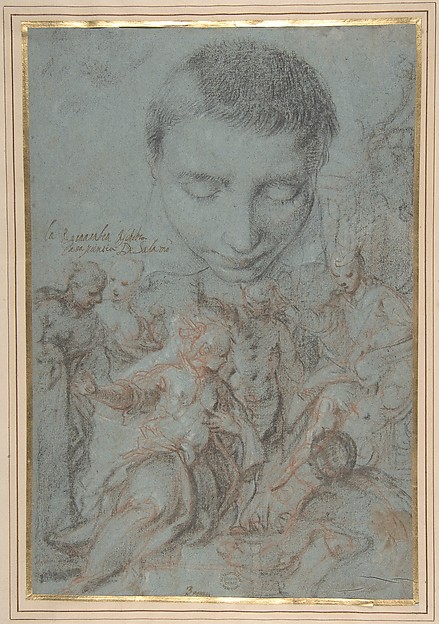
Study of Boy's Head; the Queen of Sheba Before Solomon
Antonio Vassilacchi (called "Il Aliense") (d. 1629)
1580–94 · Black and red chalk, partly highlighted with white chalk, on blue paper
Cleared · Public Domain
live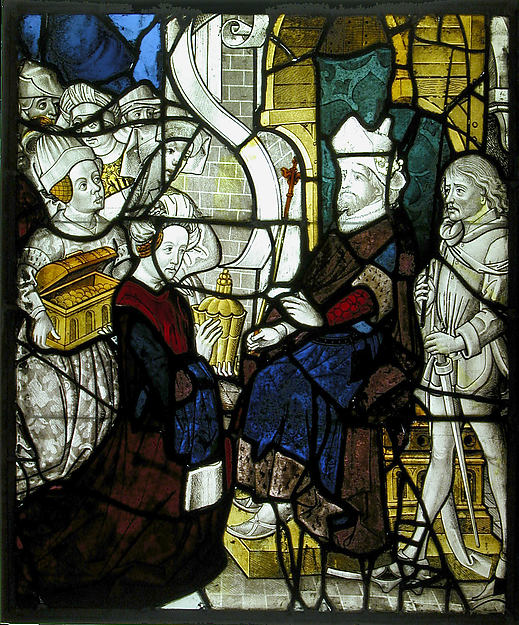
Glass Panel with Solomon Receiving The Queen of Sheba
Unrecorded maker
15th–16th century · Pot metal and colorless glass, vitreous paint, and silver stain, lead
Cleared · Public Domain
live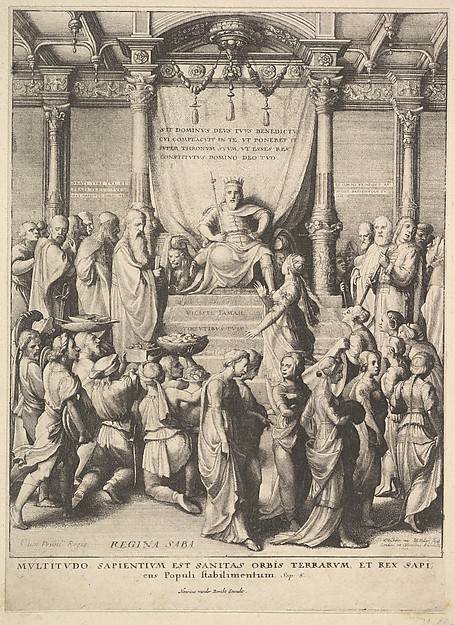
Solomon and the Queen of Sheba
Wenceslaus Hollar (d. 1677)
1642 · Etching; third state of three
Cleared · Public Domain
live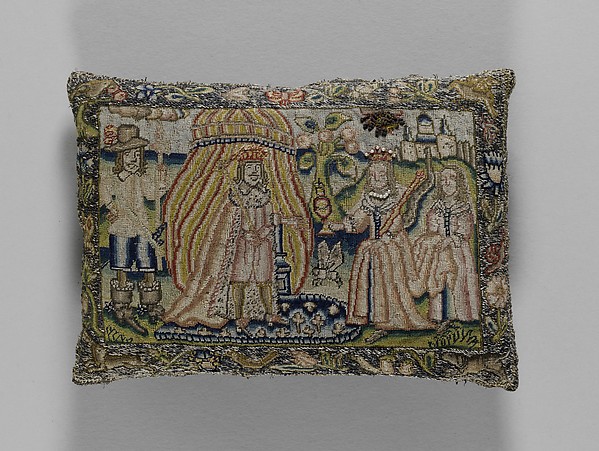
Cushion with Solomon and Sheba
Unrecorded maker
mid-17th century · Canvas worked with silk and metal thread, seed pearls; tent, Gobelin, and couching stitches
Cleared · Public Domain
live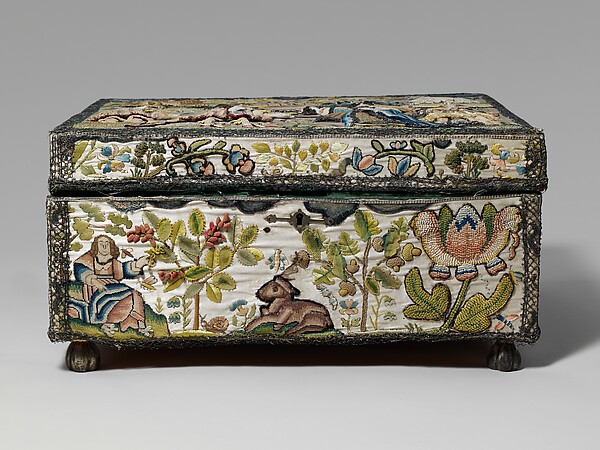
Casket with scenes from the Story of Solomon and the Queen of Sheba
Unrecorded maker
1670s · Satin worked with silk and metal thread, seed pearls; tent, satin, couching, Ceylon, detached needlepoint variations, knotted pile, knots, and crochet stitches; needle lace, metal bobbin lace; wood frame, silk lining, carved wooden feet
Cleared · Public Domain
live
The Meeting of King Solomon and the Queen of Sheba, with the Four Elements
Unrecorded maker
ca. 1700 · Canvas worked with silk and wool thread, mica; tent, cross, and couching stitches
Cleared · Public Domain
live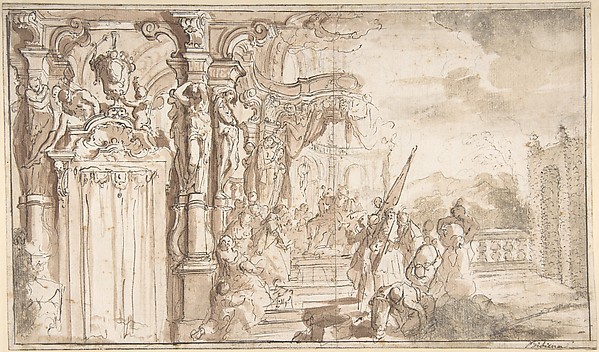
Design for a Stage Set: Solomon Receiving the Queen of Sheba under a Baldacchino, with Fantastical Architecture and a Gardenscape
Carlo Galli Bibiena (d. 1778)
1728–78 · Pen and brown ink, brush and brown wash over graphite
Cleared · Public Domain
liveNo open reproduction
The institution withholds the image for this record, which is itself the answer: the picture on their page is not theirs to give away.
The Story of the Queen of Sheba
Unrecorded maker
20th century · Tempera on canvas
In copyright
liveNo open reproduction
The institution withholds the image for this record, which is itself the answer: the picture on their page is not theirs to give away.
Solomon and the Queen of Sheba
Wenceslaus Hollar (d. 1677)
1642 · Etching; second state of three
In copyright
liveNo open reproduction
The institution withholds the image for this record, which is itself the answer: the picture on their page is not theirs to give away.
The Queen of Sheba Enthroned
Unrecorded maker
late 19th–early 20th century · Ink, opaque watercolor, gold, and silver on paper
In copyright
liveNo open reproduction
The institution withholds the image for this record, which is itself the answer: the picture on their page is not theirs to give away.
Proof plate: The Challenge, the Queen of Sheba and Solomon, from "Rebel Women from the Apocrypha"
Marcelle Hanselaar (d. 9999)
2023–24 · Etching and aquatint with charcoal
In copyright
live1. Pin the work
Choose the record and say what you are actually going to do with it. The product re-reads the work live and stores a snapshot, so your docket records what the institution said today.
2. Read the arithmetic
Six weighted factors: the institution's own claim, the creator's term, the publication-age rule, the restrictions in their statement, your use, and whether a credit line is even possible.
3. Seal and export
Record the decision into a SHA-384 chain, then export a dated docket as JSON, CSV or Markdown with the credit line and the seal a colleague can re-verify.