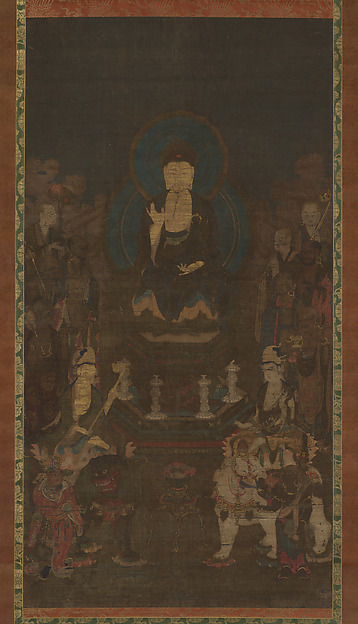
Shaka (Shakyamuni), the Historical Buddha, with Two Attendant Bodhisattvas and the Ten Great Disciples
Unrecorded maker
early 14th century · Hanging scroll; ink, color, and gold on silk
Cleared · Public Domain
liveThe MetSimilar
Rights clearance desk for images
Museums publish two different things about the same artwork: whether the work is in copyright, and whether their picture of it is. OpenPlate reads both, does the arithmetic on the published term, and shows you the sentence behind every point of the score.
Where this page got its records
214 ms. The Metropolitan Museum of Art, Collection API (Open Access)
297 ms. The Cleveland Museum of Art, Open Access API
2 of 2 providers answered live. 14 matching records exist across the two collections.
Institutions answered newest-first by record, interleaved
Shaka (Shakyamuni), the Historical Buddha, with Two Attendant Bodhisattvas and the Ten Great Disciples
Unrecorded maker
early 14th century · Hanging scroll; ink, color, and gold on silk
Cleared · Public Domain
live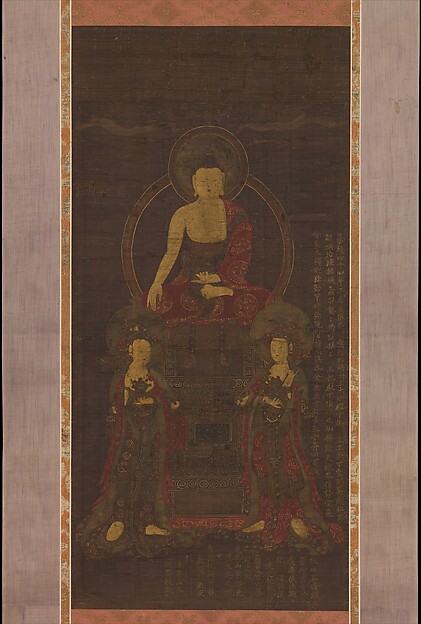
Shakyamuni triad
Unidentified artist
1565 · Hanging scroll; color and gold on silk
Cleared · Public Domain
live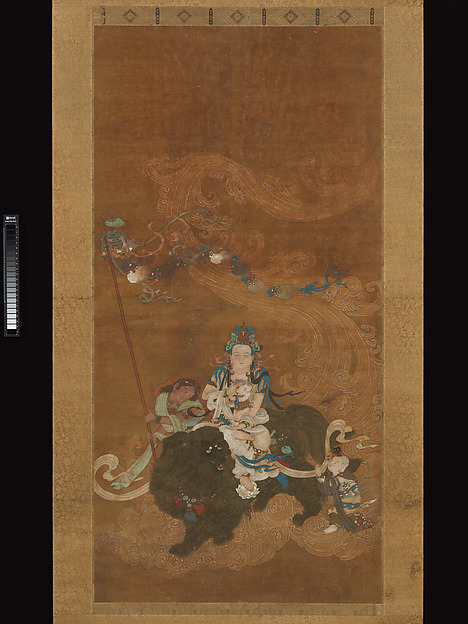
Guanyin the Bringer of Sons
Unidentified artist
late 16th century · Hanging scroll; ink, color, and gold on silk
Cleared · Public Domain
live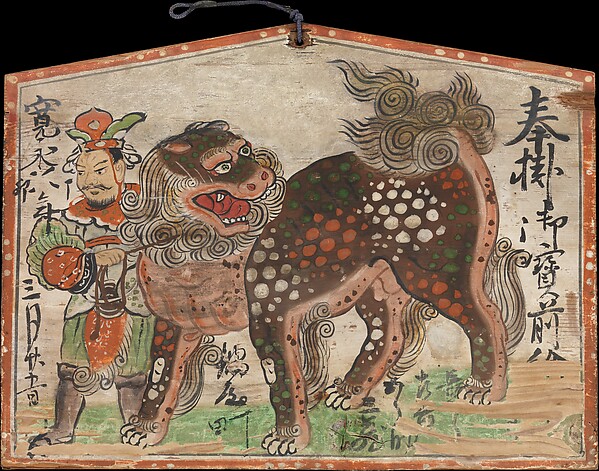
Ema (Votive Painting) of a Chinese Lion Led by King Uten (Utennō)
Unrecorded maker
1627 · Ink and color on wood
Cleared · Public Domain
live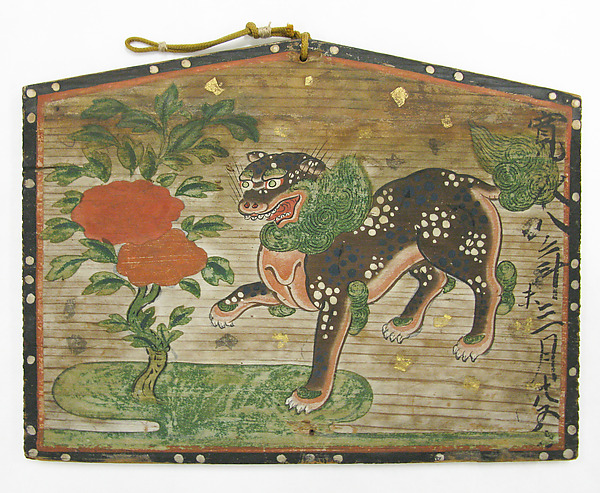
Ema (Votive Painting) of a Chinese Lion and Peony Tree
Unrecorded maker
1631 · Ink, color, and gold leaf on wood
Cleared · Public Domain
live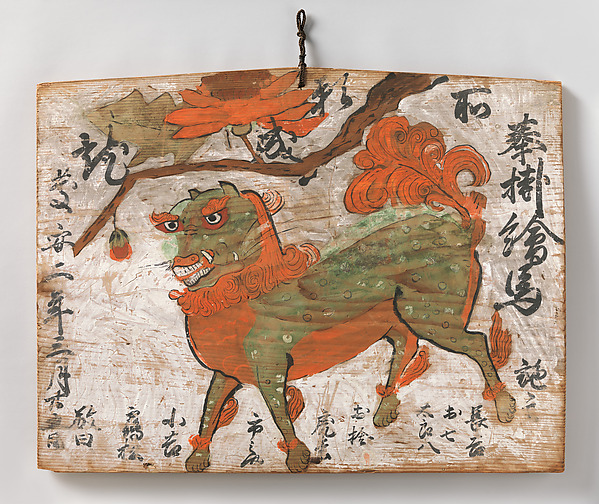
Ema (Votive Painting) of Chinese Lion and Peony Tree
Unrecorded maker
1649 · Ink and color on wood
Cleared · Public Domain
live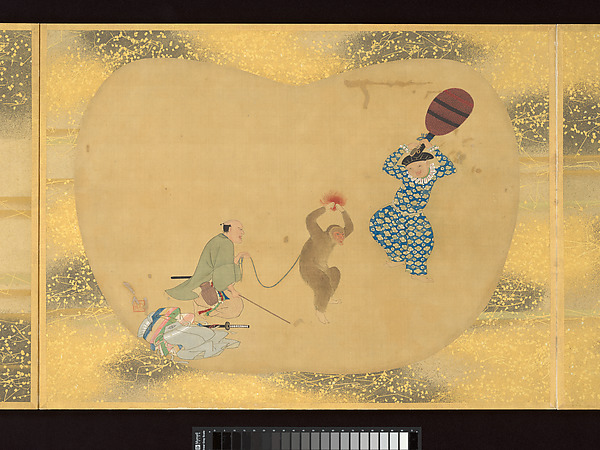
Album of Fan-Shaped Paintings of Figures, Birds and Flowers
Kano Tsunenobu (d. 1713)
17th–early 18th century · Album of twelve double leaves; ink and color on silk
Cleared · Public Domain
live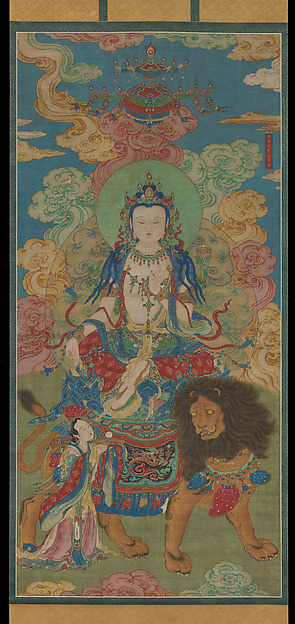
Mahasthamaprapta Bodhisattva
Unidentified artist
late 17th–early 18th century · Hanging scroll; ink and color on silk
Cleared · Public Domain
live
Lion (one of a pair)
Johann Gottlieb Kirchner (d. 1738)
ca. 1732 · Hard-paste porcelain
Cleared · Public Domain
live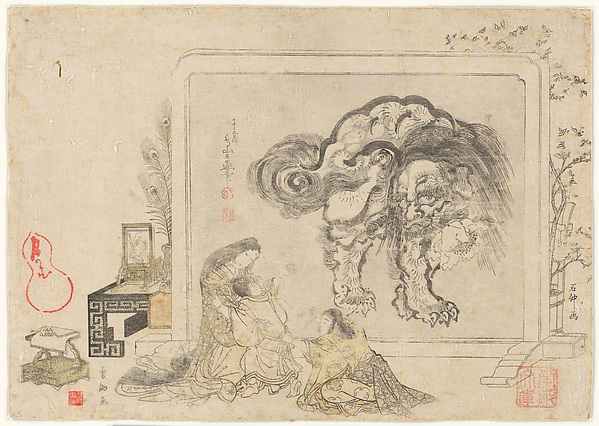
Mother and her Children in Front of a Freestanding Screen of a Chinese Lion
Kitagawa Utamaro 喜多川歌麿 (d. 1806)
1786 · Woodblock print (surimono); ink and color on paper
Cleared · Public Domain
live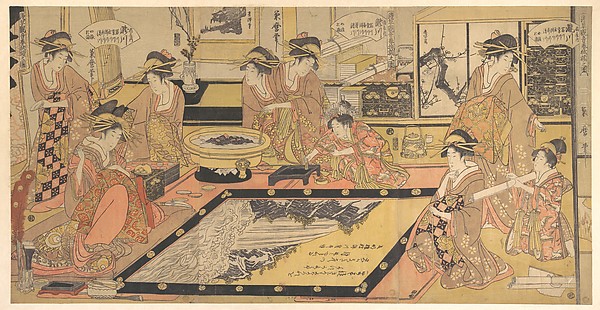
A Votive Picture to Be Donated to the Kannon of Asakusa (Asakusa Kannon hō kakegaku no zu), by Takigawa of the Ōgiya, Kamuro Menami and Onami, with Tomikawa, Kumegawa, Tamagawa, Tsugawa, Utagawa, and Kiyokawa
Kitagawa Kikumaro (d. 1830)
ca. 1800 · Triptych of woodblock prints; ink and color on paper
Cleared · Public Domain
live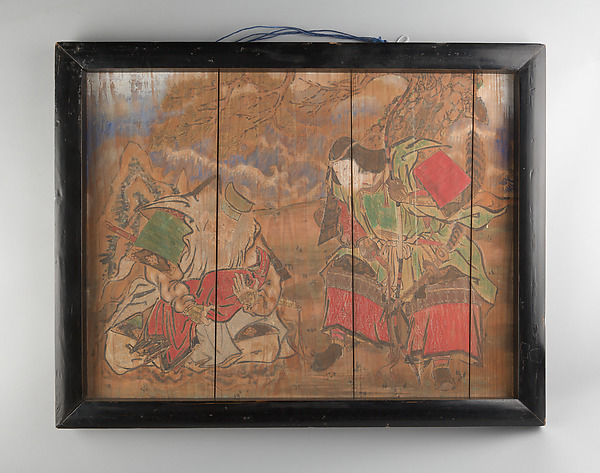
Ema (Votive Painting) of Empress Jingū, Her Minister Takenochi no Sukune, and an Infant (the Future Emperor Ōjin)
Nagano Yasunosuke
1898 · Ink and color on cryptomeria (sugi) wood
Cleared · Public Domain
live1. Pin the work
Choose the record and say what you are actually going to do with it. The product re-reads the work live and stores a snapshot, so your docket records what the institution said today.
2. Read the arithmetic
Six weighted factors: the institution's own claim, the creator's term, the publication-age rule, the restrictions in their statement, your use, and whether a credit line is even possible.
3. Seal and export
Record the decision into a SHA-384 chain, then export a dated docket as JSON, CSV or Markdown with the credit line and the seal a colleague can re-verify.