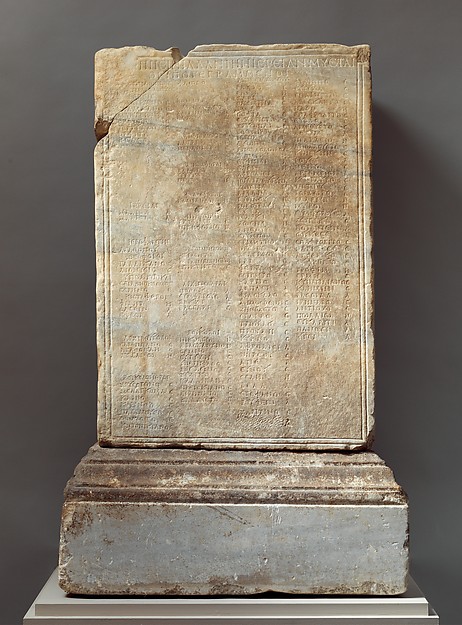
Marble inscribed statue base
Unrecorded maker
ca. 160–170 CE · Marble
Cleared · Public Domain
liveThe MetSimilar
Rights clearance desk for images
Museums publish two different things about the same artwork: whether the work is in copyright, and whether their picture of it is. OpenPlate reads both, does the arithmetic on the published term, and shows you the sentence behind every point of the score.
Where this page got its records
192 ms. The Metropolitan Museum of Art, Collection API (Open Access)
354 ms. The Cleveland Museum of Art, Open Access API
2 of 2 providers answered live. 77 matching records exist across the two collections.
Institutions answered newest-first by record, interleaved
Marble inscribed statue base
Unrecorded maker
ca. 160–170 CE · Marble
Cleared · Public Domain
live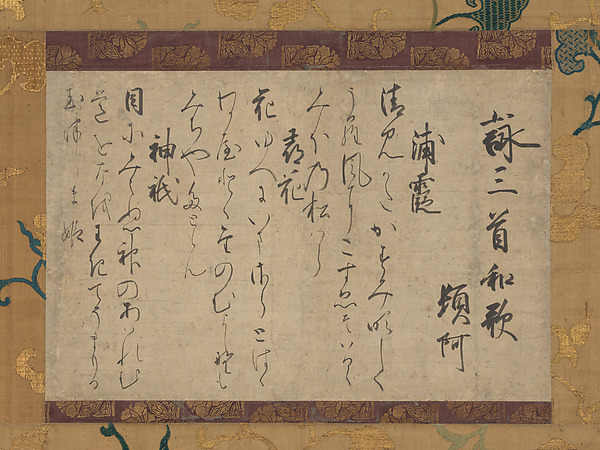
Three Waka Poems
Tonna (Ton’a) (d. 1372)
ca. 1368–69 · Poetry sheet (waka kaishi) mounted as a hanging scroll; ink on paper
Cleared · Public Domain
live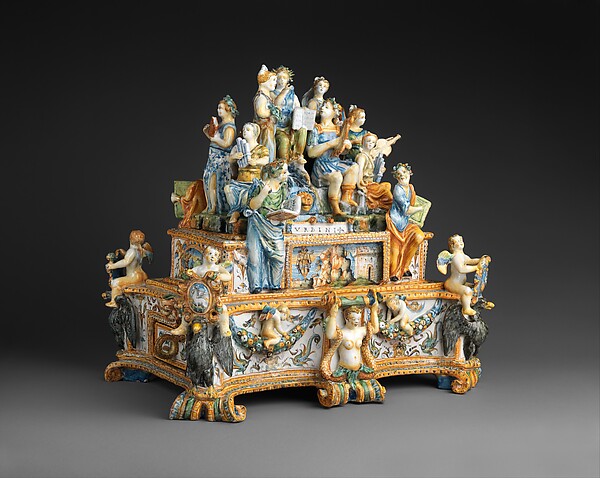
Inkstand with Apollo and the Muses
Patanazzi family (d. 1625)
1584 · Maiolica (tin-glazed earthenware)
Cleared · Public Domain
live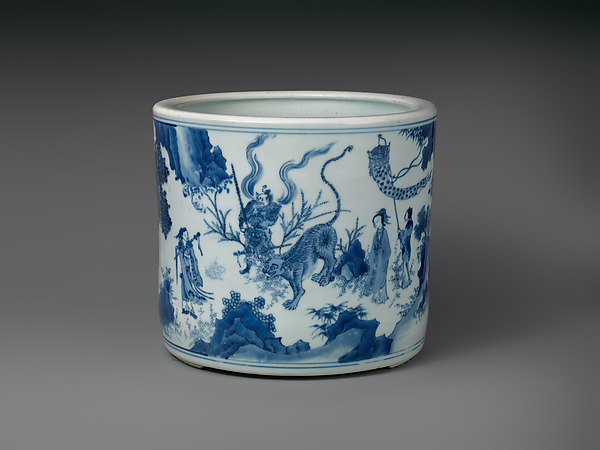
Brush pot with scene from The Investiture of the Gods
Unrecorded maker
mid-17th century · Porcelain painted with cobalt blue under transparent glaze (Jingdezhen ware)
Cleared · Public Domain
live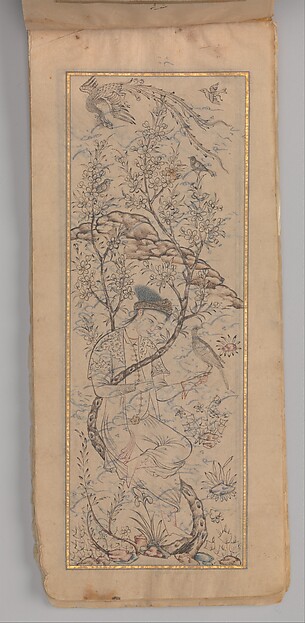
Anthology of Persian Poetry (Safina)
'Abd al-'Azim al-Yahya
1092 and 1096 AH/1681 and 1685 CE · Main support: Ink and watercolor on paper. Binding: Leather
Cleared · Public Domain
live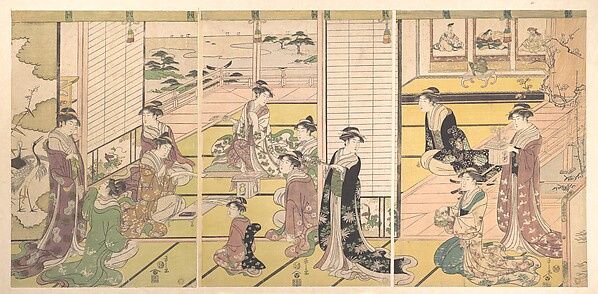
Honoring the Three Gods of Poetry: Women Composing Poems
Chōbunsai Eishi (d. 1829)
ca. 1792 · Triptych of woodblock prints; ink and color on paper
Cleared · Public Domain
live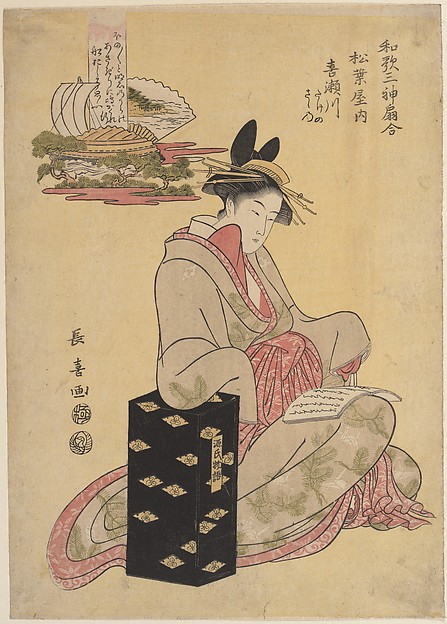
Three Gods of Waka Fan Matching: Kisegawa of Matsubaya Brothel, with Takeno and Sasano (Waka sanjin ōgi awase, Matsubaya uchi Kisegawa, Takeno, Sasano)
Eishōsai Chōki (d. 1900)
ca. 1796 · Woodblock print (nishiki-e); ink and color on paper
Cleared · Public Domain
live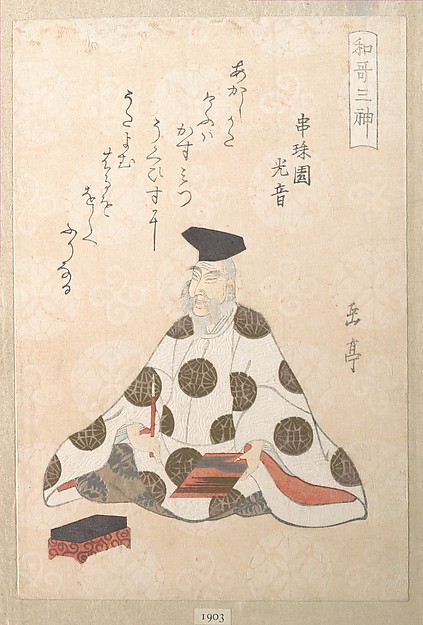
Kakinomoto no Hitomaro (ca. 662–710), One of the Three Gods of Poetry From the Spring Rain Collection (Harusame shū), vol. 1
Yashima Gakutei (d. 1868)
ca. 1820s · Woodblock print (surimono); ink and color on paper
Cleared · Public Domain
live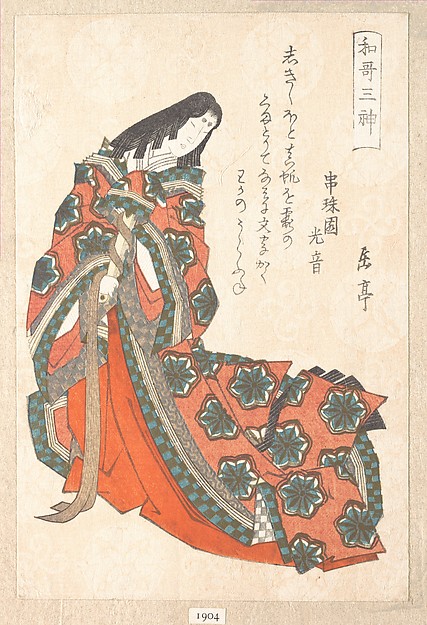
Sotoori-hime (early 5th century), One of the Three Gods of Poetry From the Spring Rain Collection (Harusame shū), vol. 1
Yashima Gakutei (d. 1868)
ca. 1820s · Woodblock print (surimono); ink and color on paper
Cleared · Public Domain
live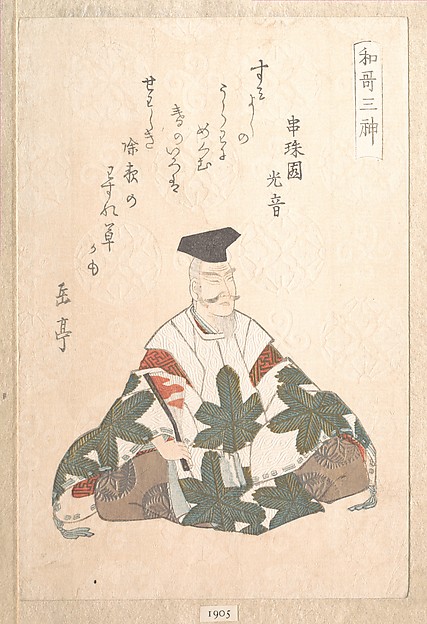
Yamabe no Akahito (active 724–736), One of the Three Gods of Poetry From the Spring Rain Collection (Harusame shū), vol. 1
Yashima Gakutei (d. 1868)
ca. 1820s · Woodblock print (surimono); ink and color on paper
Cleared · Public Domain
live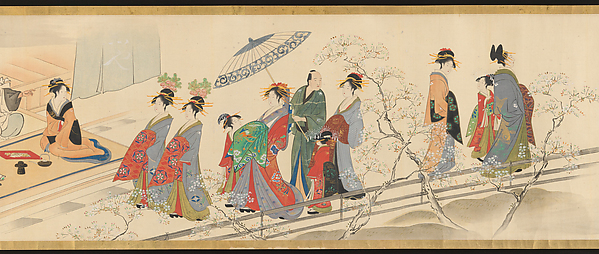
Three Gods of Good Fortune Visit the Yoshiwara; or “Scenes of Pleasure at the Height of Spring”
Chōbunsai Eishi (d. 1829)
early 19th century · Handscroll; ink and color on silk
Cleared · Public Domain
live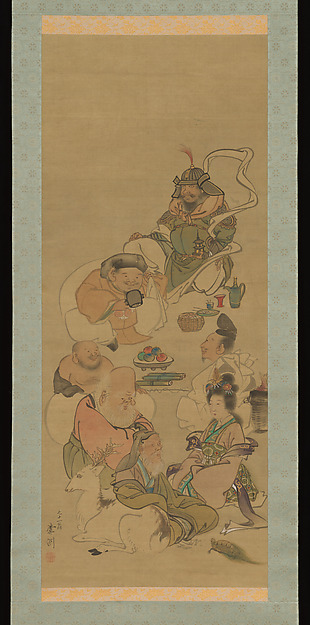
Seven Gods of Good Fortune
Nagasawa Roshū (d. 1847)
1837 · Hanging scroll; ink and color on silk
Cleared · Public Domain
live1. Pin the work
Choose the record and say what you are actually going to do with it. The product re-reads the work live and stores a snapshot, so your docket records what the institution said today.
2. Read the arithmetic
Six weighted factors: the institution's own claim, the creator's term, the publication-age rule, the restrictions in their statement, your use, and whether a credit line is even possible.
3. Seal and export
Record the decision into a SHA-384 chain, then export a dated docket as JSON, CSV or Markdown with the credit line and the seal a colleague can re-verify.