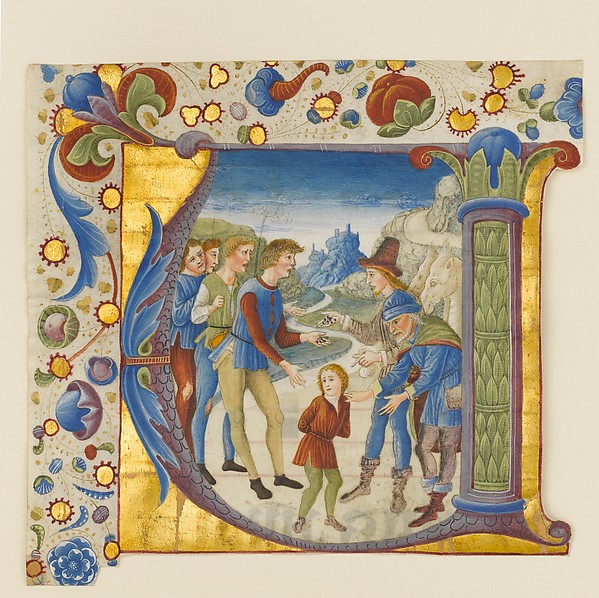
Manuscript Illumination with Joseph Sold by His Brothers in an Initial V, from an Antiphonary
Giovanni Pietro da Cemmo (d. 1507)
ca. 1490 · Tempera, ink and gold on parchment; leather binding
Cleared · Public Domain
liveThe MetSimilar
Rights clearance desk for images
Museums publish two different things about the same artwork: whether the work is in copyright, and whether their picture of it is. OpenPlate reads both, does the arithmetic on the published term, and shows you the sentence behind every point of the score.
Where this page got its records
288 ms. The Metropolitan Museum of Art, Collection API (Open Access)
380 ms. The Cleveland Museum of Art, Open Access API
2 of 2 providers answered live. 22 matching records exist across the two collections.
Institutions answered newest-first by record, interleaved
Manuscript Illumination with Joseph Sold by His Brothers in an Initial V, from an Antiphonary
Giovanni Pietro da Cemmo (d. 1507)
ca. 1490 · Tempera, ink and gold on parchment; leather binding
Cleared · Public Domain
live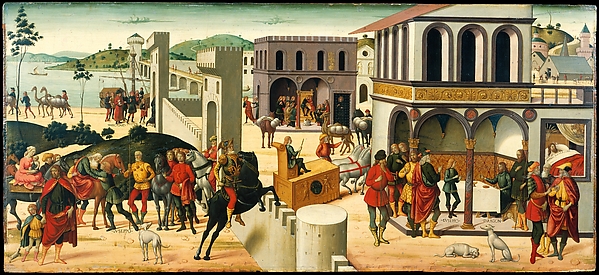
The Story of Joseph
Biagio d'Antonio (d. 1516)
1504 · Tempera on wood
Cleared · Public Domain
live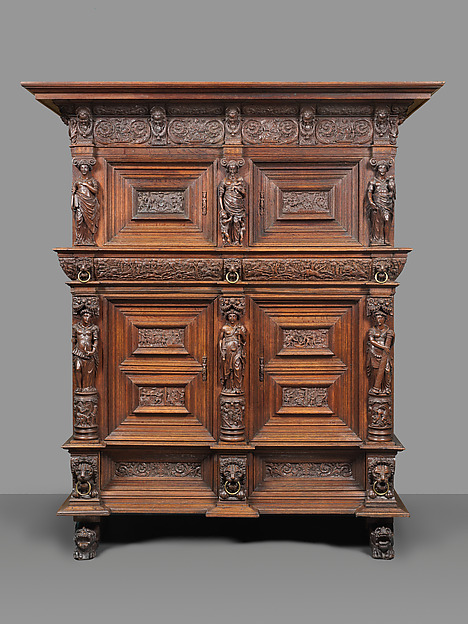
Cupboard (Beeldenkast)
Unrecorded maker
1622 · Oak
Cleared · Public Domain
live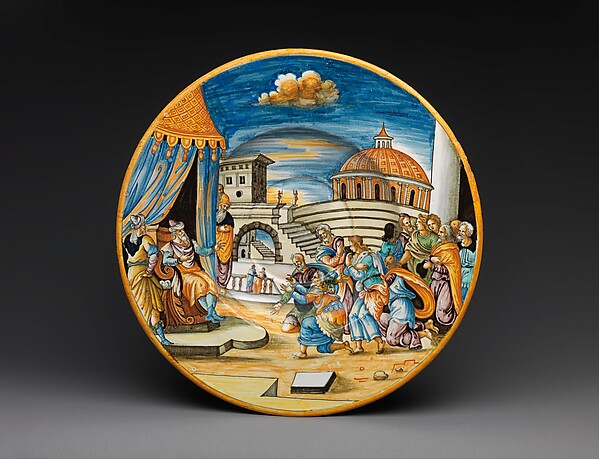
Dish with Joseph and His Brothers
Antoine Conrade (d. 1700)
ca. 1630–45 · Faïence (tin-glazed earthenware)
Cleared · Public Domain
live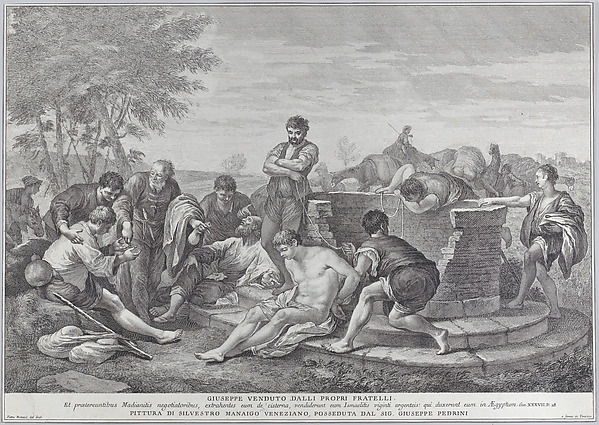
Joseph being sold into slavery by his brothers, who sit around a well dividing up the coins
Pietro Monaco (d. 1772)
1730–39 · Etching
Cleared · Public Domain
live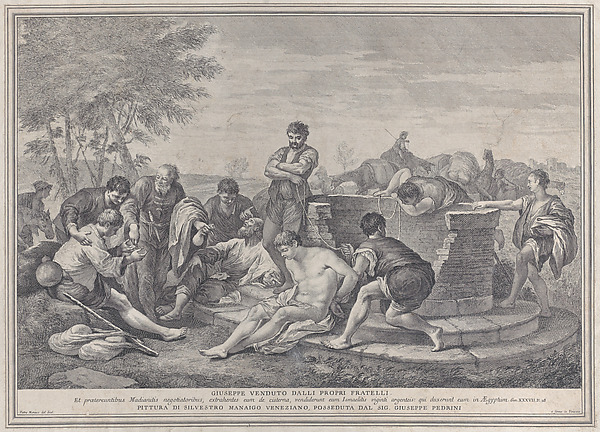
Joseph being sold into slavery by his brothers, who sit around a well dividing up the coins
Pietro Monaco (d. 1772)
1730–39 · Etching
Cleared · Public Domain
live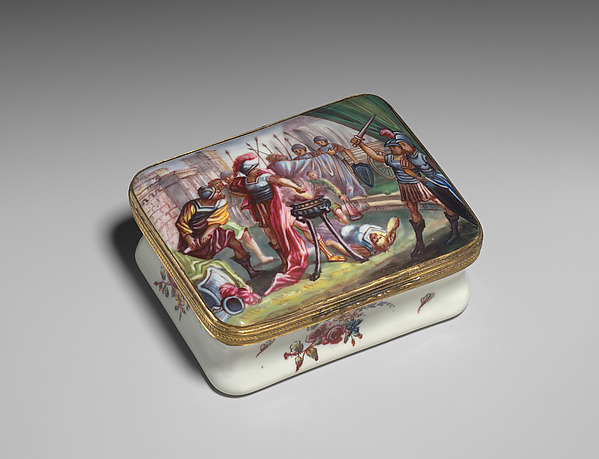
Mucius Scaevola
Joseph Goupy (d. 1769)
ca. 1755–60 · Enamel on copper
Cleared · Public Domain
live
Drop-front desk (secrétaire à abattant or secrétaire en cabinet)
Martin Carlin (d. 1785)
ca. 1776 · Oak veneered with tulipwood, amaranth, holly, and sycamore; six Sèvres soft-paste porcelain plaques and two painted tin plaques; gilt-bronze mounts; marble shelves; moiré silk
Cleared · Public Domain
live
Watch
Daniel Vauchez (d. 1790)
ca. 1783–90 · Case: partly enameled gold set with pearls, gold bezel with diamonds set in silver; Dial: white enamel with openwork brass hands; Movement: brass and steel
Cleared · Public Domain
live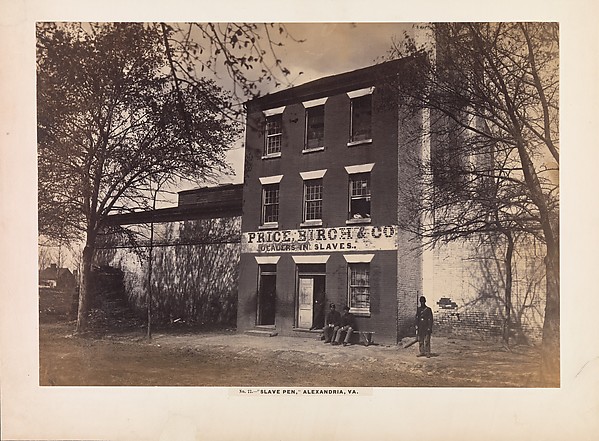
Slave Pen, Alexandria, Virginia
Andrew Joseph Russell (d. 1902)
1863 · Albumen silver print from glass negative
Cleared · Public Domain
live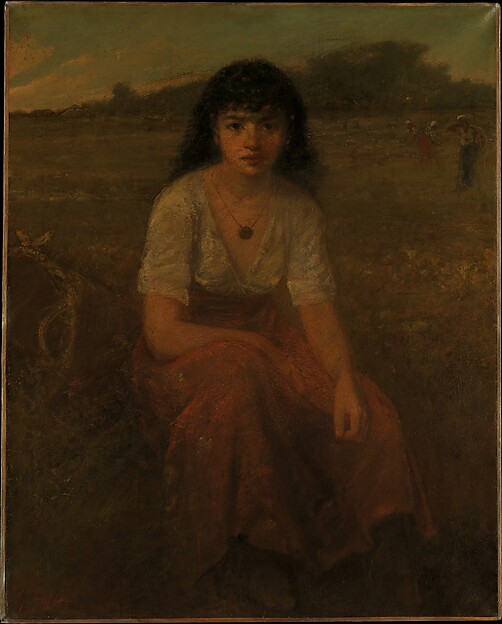
The Quadroon
George Fuller (d. 1884)
1880 · Oil on canvas
Cleared · Public Domain
live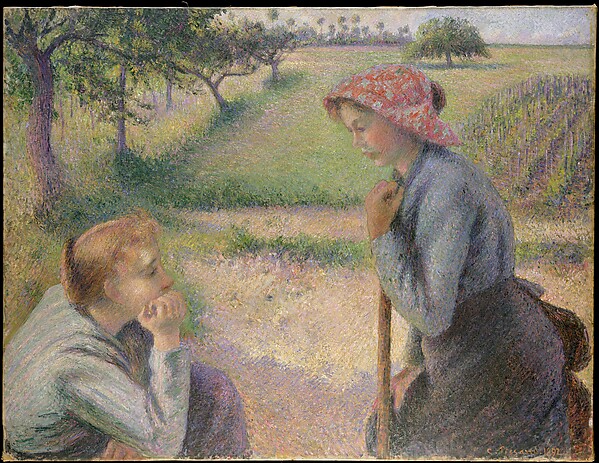
Two Young Peasant Women
Camille Pissarro (d. 1903)
1891–92 · Oil on canvas
Cleared · Public Domain
live1. Pin the work
Choose the record and say what you are actually going to do with it. The product re-reads the work live and stores a snapshot, so your docket records what the institution said today.
2. Read the arithmetic
Six weighted factors: the institution's own claim, the creator's term, the publication-age rule, the restrictions in their statement, your use, and whether a credit line is even possible.
3. Seal and export
Record the decision into a SHA-384 chain, then export a dated docket as JSON, CSV or Markdown with the credit line and the seal a colleague can re-verify.