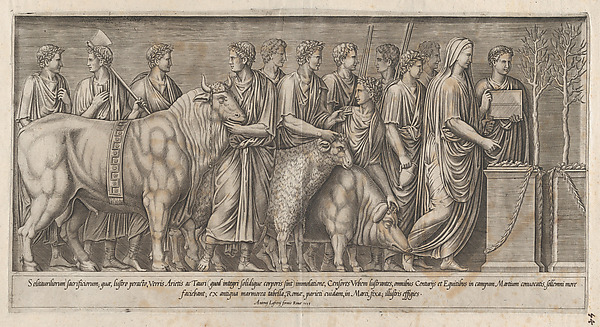
Sacrifice on the Campus Martius, from "Speculum Romanae Magnificentiae"
Anonymous
1553 · Engraving
Cleared · Public Domain
liveThe MetSimilar
Rights clearance desk for images
Museums publish two different things about the same artwork: whether the work is in copyright, and whether their picture of it is. OpenPlate reads both, does the arithmetic on the published term, and shows you the sentence behind every point of the score.
Where this page got its records
194 ms. The Metropolitan Museum of Art, Collection API (Open Access)
490 ms. The Cleveland Museum of Art, Open Access API
2 of 2 providers answered live. 23 matching records exist across the two collections.
Institutions answered newest-first by record, interleaved
Sacrifice on the Campus Martius, from "Speculum Romanae Magnificentiae"
Anonymous
1553 · Engraving
Cleared · Public Domain
live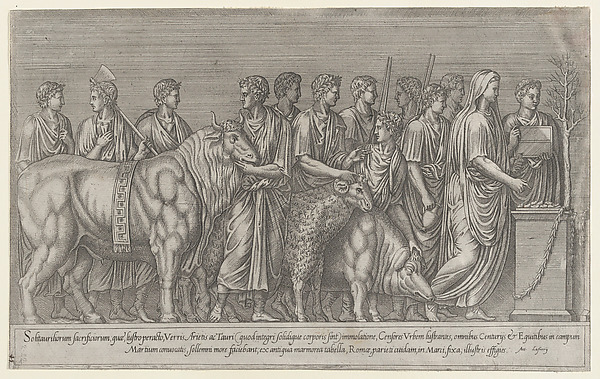
Sacrifice on the Campus Martius, from "Speculum Romanae Magnificentiae"
Anonymous
16th century · Engraving
Cleared · Public Domain
live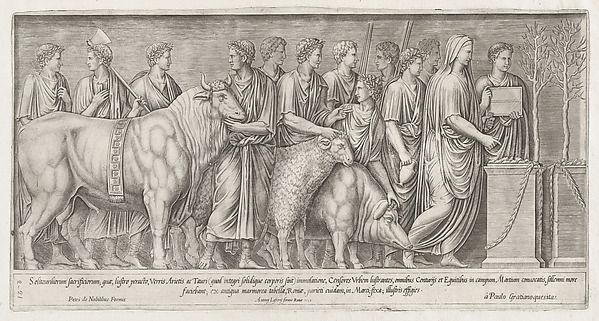
Sacrifice on the Campus Martius, from "Speculum Romanae Magnificentiae"
Anonymous
16th century · Engraving
Cleared · Public Domain
liveNo open reproduction
The institution withholds the image for this record, which is itself the answer: the picture on their page is not theirs to give away.
Colonne Traiane, from "Les Plus Beaux Monuments de Rome Ancienne ou Recueil des plus beaux Morceaux de l'Antiquité Romaine qui existent encore"
Jean Barbault (d. 1762)
1761 · Etching
In copyright
liveNo open reproduction
The institution withholds the image for this record, which is itself the answer: the picture on their page is not theirs to give away.
Map of the Campus Martius, showing the physical characteristics of the site, plate 1 from "Il Campo Marzio dell' Antica Roma, Opera di G.B. Piranesi socio della reale società degli antiquari di Londra" (The Campus Martius of Ancient Rome, the Work of G.B. Piranesi, Fellow of the Royal Society of Antiquaries, London)
Giovanni Battista Piranesi (d. 1778)
1762 · Etching
In copyright
liveNo open reproduction
The institution withholds the image for this record, which is itself the answer: the picture on their page is not theirs to give away.
Map of the neighborhood containing the remains of the Theater of Pompey...[site map and relevant fragments of the Severan Marble Plan], plate 16 from "Il Campo Marzio dell' Antica Roma, Opera di G.B. Piranesi socio della reale società degli antiquari di Londra" (The Campus Martius of Ancient Rome, the Work of G.B. Piranesi, Fellow of the Royal Society of Antiquaries, London)
Giovanni Battista Piranesi (d. 1778)
1762 · Etching
In copyright
liveNo open reproduction
The institution withholds the image for this record, which is itself the answer: the picture on their page is not theirs to give away.
Maps of the ruins of the old city and of the Campus Marius [four maps showing its evolution], plate 3 from "Il Campo Marzio dell' Antica Roma, Opera di G.B. Piranesi socio della reale società degli antiquari di Londra" (The Campus Martius of Ancient Rome, the Work of G.B. Piranesi, Fellow of the Royal Society of Antiquaries, London)
Giovanni Battista Piranesi (d. 1778)
1762 · Etching
In copyright
liveNo open reproduction
The institution withholds the image for this record, which is itself the answer: the picture on their page is not theirs to give away.
Remains of the Basilica of Gaius and Lucius, plate 14 from "Il Campo Marzio dell' Antica Roma, Opera di G.B. Piranesi socio della reale società degli antiquari di Londra" (The Campus Martius of Ancient Rome, the Work of G.B. Piranesi, Fellow of the Royal Society of Antiquaries, London)
Giovanni Battista Piranesi (d. 1778)
1762 · Etching
In copyright
liveNo open reproduction
The institution withholds the image for this record, which is itself the answer: the picture on their page is not theirs to give away.
Remains of the Portico of Gaius and Lucius, plate 15 from "Il Campo Marzio dell' Antica Roma, Opera di G.B. Piranesi socio della reale società degli antiquari di Londra" (The Campus Martius of Ancient Rome, the Work of G.B. Piranesi, Fellow of the Royal Society of Antiquaries, London)
Giovanni Battista Piranesi (d. 1778)
1762 · Etching
In copyright
liveNo open reproduction
The institution withholds the image for this record, which is itself the answer: the picture on their page is not theirs to give away.
Some sepulcral monuments, which are listed in the index of the ruins of ancient Rome and the Campus Martius, from "Il Campo Marzio dell' Antica Roma, Opera di G.B. Piranesi socio della reale società degli antiquari di Londra" (The Campus Martius of Ancient Rome, the Work of G.B. Piranesi, Fellow of the Royal Society of Antiquaries, London)
Giovanni Battista Piranesi (d. 1778)
1762 · Etching
In copyright
liveNo open reproduction
The institution withholds the image for this record, which is itself the answer: the picture on their page is not theirs to give away.
View of the crane with which Pope Clement XI, in 1705, raised the column and base of the Apotheosis of the Emperor Antoninus Pius from the ruins of the Campus Martius, plate 31 from "Il Campo Marzio dell' Antica Roma, Opera di G.B. Piranesi socio della reale società degli antiquari di Londra" (The Campus Martius of Ancient Rome, the Work of G.B. Piranesi, Fellow of the Royal Society of Antiquaries, London)
Arnold van Westerhout (d. 1725)
1762 · Etching
In copyright
liveNo open reproduction
The institution withholds the image for this record, which is itself the answer: the picture on their page is not theirs to give away.
Map of Rome and the Campus Martius, bound with "Vedute di Roma" (Views of Rome), part I
Giovanni Battista Piranesi (d. 1778)
ca. 1774 · Etching
In copyright
live1. Pin the work
Choose the record and say what you are actually going to do with it. The product re-reads the work live and stores a snapshot, so your docket records what the institution said today.
2. Read the arithmetic
Six weighted factors: the institution's own claim, the creator's term, the publication-age rule, the restrictions in their statement, your use, and whether a credit line is even possible.
3. Seal and export
Record the decision into a SHA-384 chain, then export a dated docket as JSON, CSV or Markdown with the credit line and the seal a colleague can re-verify.