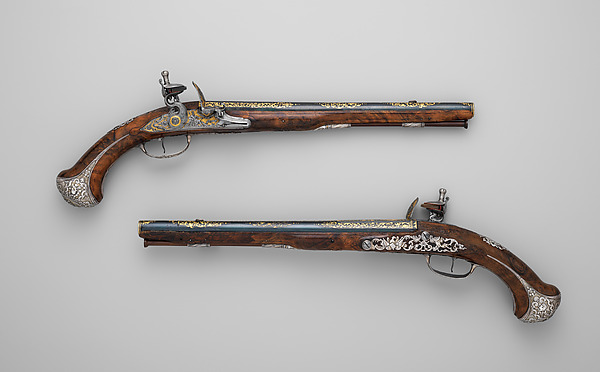
Pair of Flintlock Pistols of Count Heinrich von Brühl (1700–1763)
Adrien Reynier the Younger, called Le Hollandois (d. 1743)
ca. 1740 · Steel, wood, silver, gold, copper alloy
Cleared · Public Domain
liveThe MetSimilar
Rights clearance desk for images
Museums publish two different things about the same artwork: whether the work is in copyright, and whether their picture of it is. OpenPlate reads both, does the arithmetic on the published term, and shows you the sentence behind every point of the score.
Where this page got its records
318 ms. The Metropolitan Museum of Art, Collection API (Open Access)
264 ms. The Cleveland Museum of Art, Open Access API
2 of 2 providers answered live. 17 matching records exist across the two collections.
Institutions answered newest-first by record, interleaved
Pair of Flintlock Pistols of Count Heinrich von Brühl (1700–1763)
Adrien Reynier the Younger, called Le Hollandois (d. 1743)
ca. 1740 · Steel, wood, silver, gold, copper alloy
Cleared · Public Domain
live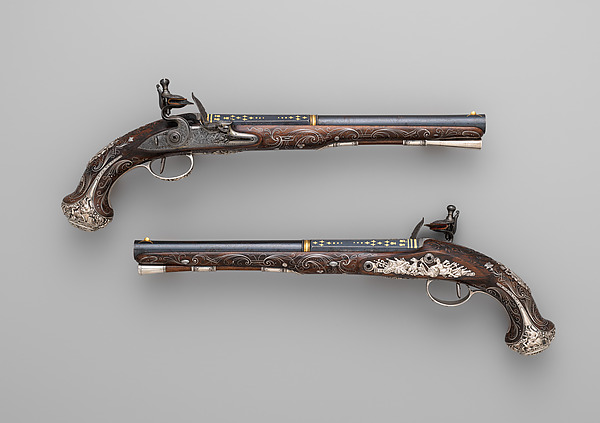
Pair of Flintlock Pistols
Henry Hadley (d. 1773)
ca. 1765 · Steel, wood (walnut), silver, gold, copper alloy
Cleared · Public Domain
live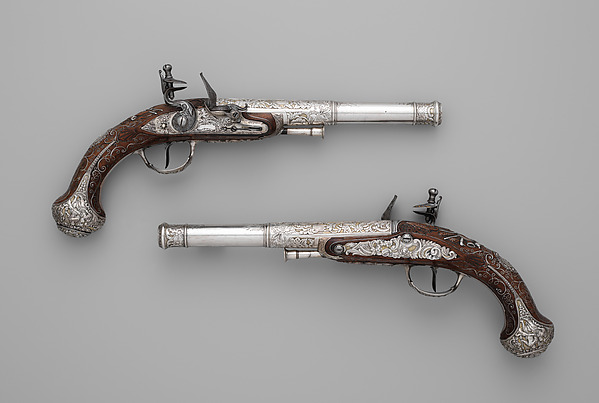
Pair of Flintlock Pistols
Claude Martin (d. 1800)
ca. 1786 · Steel, wood, silver, gold
Cleared · Public Domain
live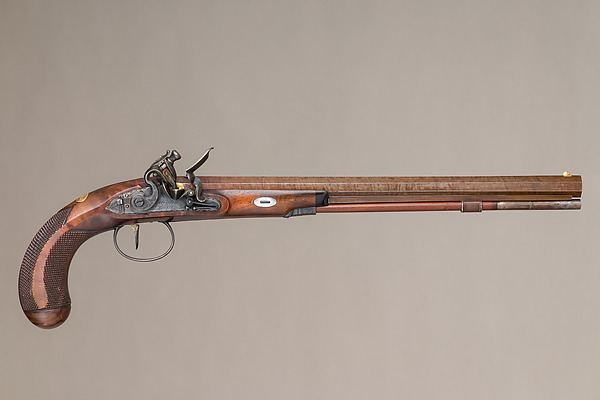
Flintlock Target Pistol of Prince William Frederick, Second Duke of Gloucester and Edinburgh (1776–1834), with Case and Accessories
Wogdon & Barton (d. 1803)
1801–3 · Pistol: wood (walnut), steel, gold, brass, horn; ramrod: wood (walnut), brass, steel; case: wood (mahogany), velvet, brass; powder flask: brass, steel, leather; bullet mold: steel; screwdriver: wood (walnut), brass, steel; cleaning rod: wood (walnut), brass, steel; bottle: glass
Cleared · Public Domain
live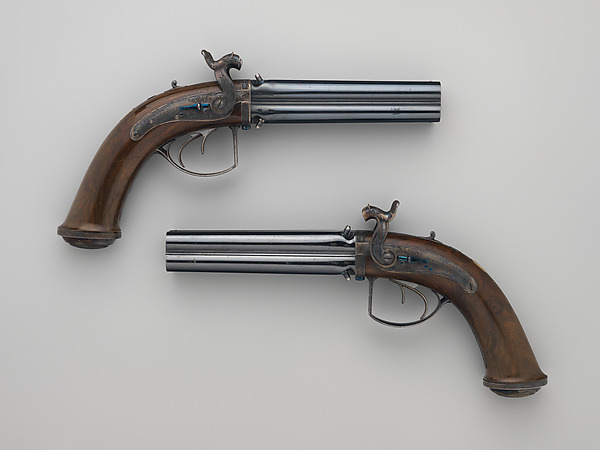
Pair of Four-Barreled Turnover Percussion Pistols of Henry Pelham Fiennes Pelham-Clinton, 4th Duke of Newcastle-under-Lyne (1785–1851), with Pair of Box-Lock Turn-Off Pocket Pistols, Case, and Accessories
James Purdey the Elder (d. 1863)
1831 · Turnover pistols: steel, wood (walnut), gold, silver; pocket pistols: steel, wood (walnut); mallet: wood (walnut, rosewood, ebony), leather; ramrod: wood (ebony), brass; cleaning rod: wood (walnut), brass, steel; cleaning rod tip: brass; powder flask: copper, gold, brass, steel; bullet mold: steel; nipple wrench: wood (walnut), steel, brass; screwdriver: horn, steel, brass; socket wrench: steel; patch box: ivory; case: wood (mahogany), brass, ivory, textile, paper
Cleared · Public Domain
live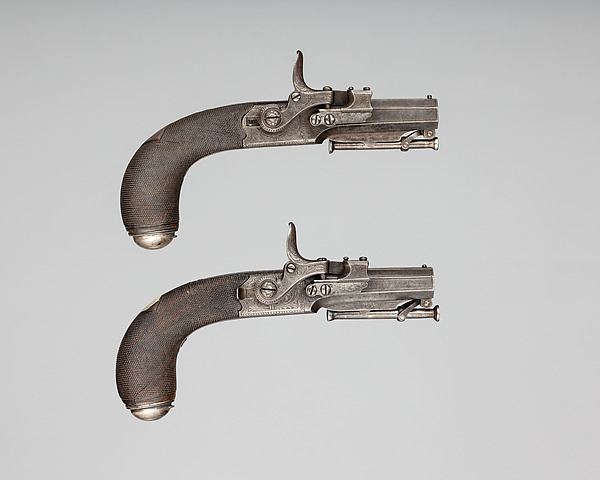
Pair of Forsyth Patent Third Model Sliding Primer Pistols
Alexander John Forsyth (d. 1843)
ca. 1828 · Steel, wood (walnut), silver
Cleared · Public Domain
live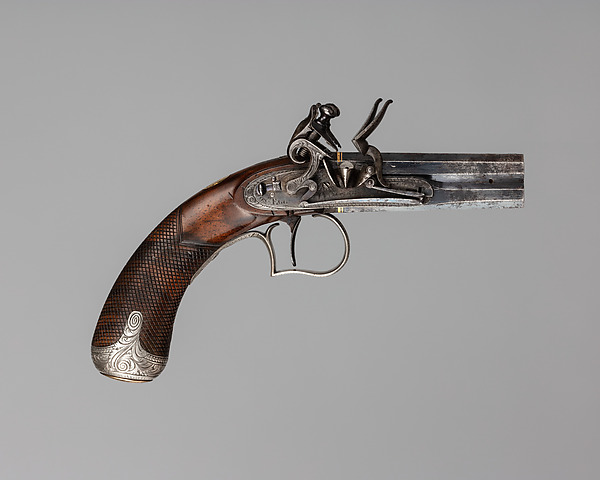
Over-and-Under Flintlock Pocket Pistol of the Hughes of Gwerclas Family with Case and Accessories
Joseph Egg (d. 1837)
ca. 1815–20 · Pistol: steel, wood (walnut) silver, brass, gold, platinum; case: wood (mahogany), textile, brass; powder flask: brass, steel, leather, paper; ramrod: steel; cleaning rod: steel, bronze
Cleared · Public Domain
live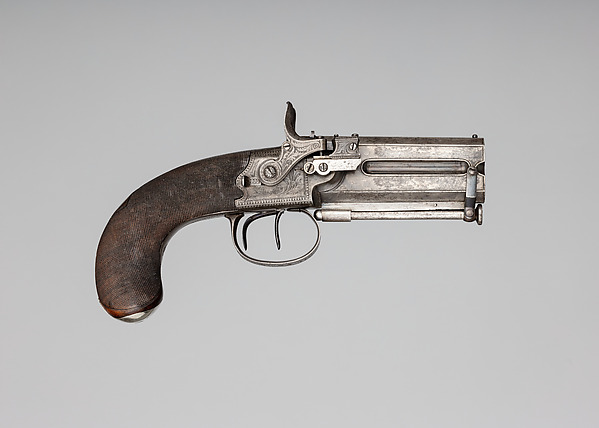
Forsyth Patent Second Model Sliding Primer Over-and-Under Pistol with Case and Accessories
Alexander John Forsyth (d. 1843)
ca. 1824 · Pistol: steel, wood (walnut), silver; case: wood (mahogany), brass, textile, ivory; flask: ivory; oil can: steel; cleaning rod: brass, steel
Cleared · Public Domain
live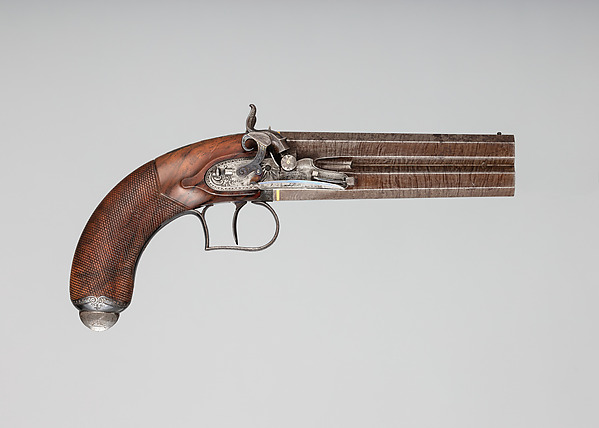
Over-and-Under Percussion Pistol bearing the Crest of the Polhill Family
Joseph Egg (d. 1837)
ca. 1815–20; converted ca. 1825 · Steel, wood (walnut), brass, gold, platinum
Cleared · Public Domain
live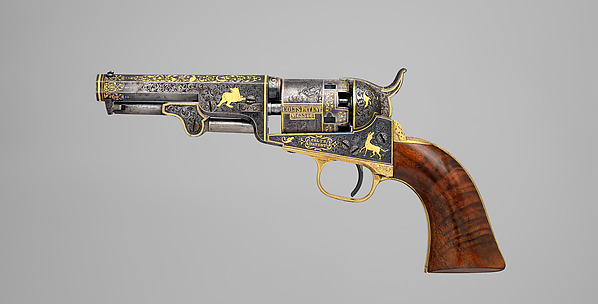
Gold-inlaid Colt Model 1849 Pocket Revolver (serial no. 63306)
Samuel Colt (d. 1862)
ca. 1853 · Steel, copper alloy, gold, wood (walnut)
Cleared · Public Domain
live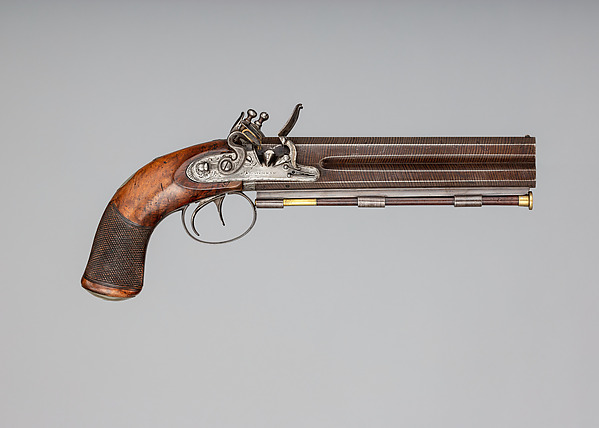
Over-and-Under Flintlock Pistol
George Sturman (d. 1875)
1841–48 · Steel, wood (walnut), platinum, brass
Cleared · Public Domain
liveNo open reproduction
The institution withholds the image for this record, which is itself the answer: the picture on their page is not theirs to give away.
Man's theatrical costume for the song 'O Leo' in "At Home Abroad"
Vincente Minnelli (d. 1986)
1935 · Watercolor over graphite
In copyright
live1. Pin the work
Choose the record and say what you are actually going to do with it. The product re-reads the work live and stores a snapshot, so your docket records what the institution said today.
2. Read the arithmetic
Six weighted factors: the institution's own claim, the creator's term, the publication-age rule, the restrictions in their statement, your use, and whether a credit line is even possible.
3. Seal and export
Record the decision into a SHA-384 chain, then export a dated docket as JSON, CSV or Markdown with the credit line and the seal a colleague can re-verify.