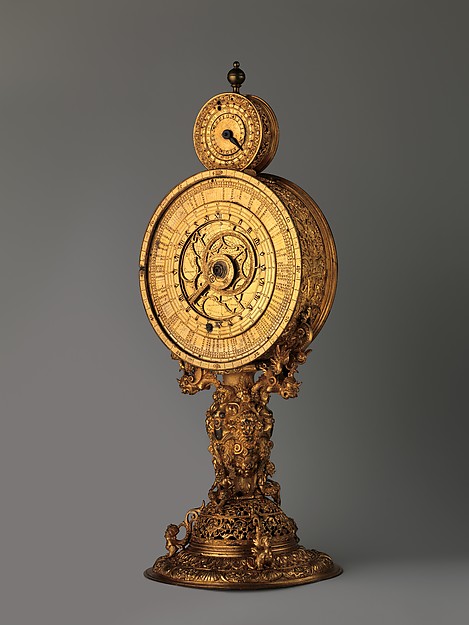
Mirror clock
Master CR (d. 1565)
ca. 1565–70 · Case: gilded brass and gilded copper; Dial: gilded brass; Movement: plated frame of iron, iron wheels
Cleared · Public Domain
liveThe MetSimilar
Rights clearance desk for images
Museums publish two different things about the same artwork: whether the work is in copyright, and whether their picture of it is. OpenPlate reads both, does the arithmetic on the published term, and shows you the sentence behind every point of the score.
Where this page got its records
136 ms. The Metropolitan Museum of Art, Collection API (Open Access)
374 ms. The Cleveland Museum of Art, Open Access API
2 of 2 providers answered live. 11 matching records exist across the two collections.
Institutions answered newest-first by record, interleaved
Mirror clock
Master CR (d. 1565)
ca. 1565–70 · Case: gilded brass and gilded copper; Dial: gilded brass; Movement: plated frame of iron, iron wheels
Cleared · Public Domain
live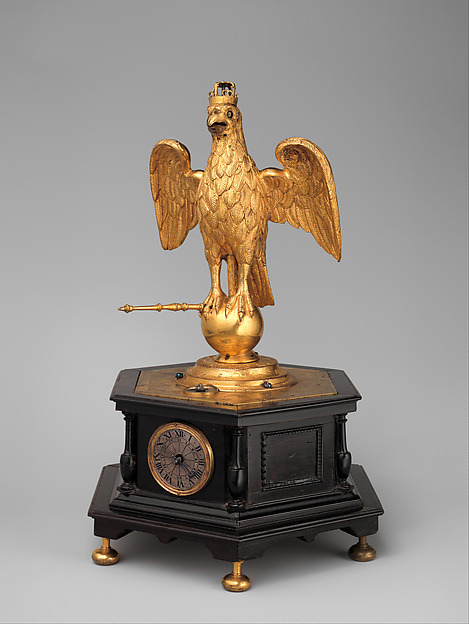
Automaton clock in the form of an eagle
Unrecorded maker
ca. 1630 · Case: gilded brass on base of ebony and ebony veneered on fruitwood; Movement: brass and iron
Cleared · Public Domain
live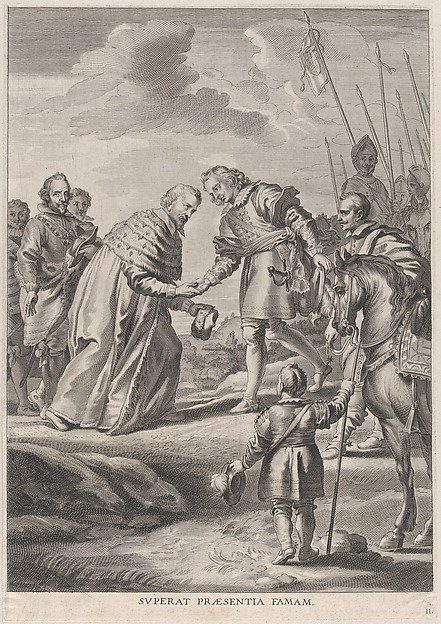
Plate 11: Ferdinand greeted by the Elector of Cologne; from Guillielmus Becanus's 'Serenissimi Principis Ferdinandi, Hispaniarum Infantis...'
Pieter de Jode II (d. 1674)
1636 · Engraving
Cleared · Public Domain
live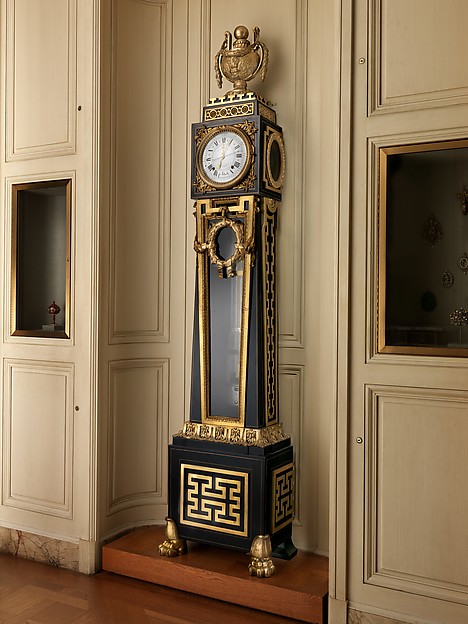
Longcase astronomical regulator
Ferdinand Berthoud (d. 1807)
ca. 1768–70 · Case: oak veneered with ebony and brass, with gilt-bronze mounts; Dial: white enamel; Movement: gilded brass and steel
Cleared · Public Domain
live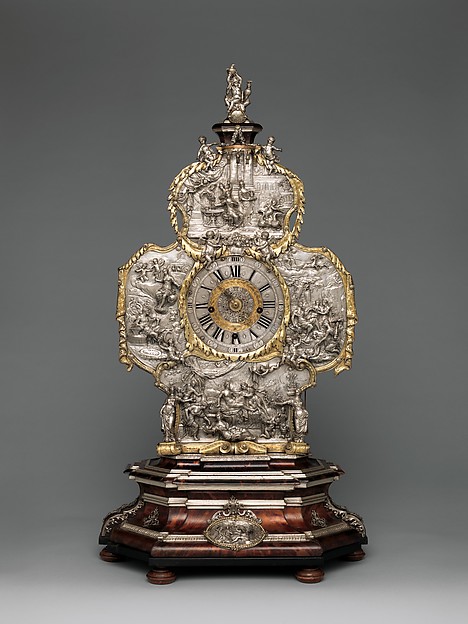
Mantel clock with alarm
Franz Xavier Gegenreiner (d. 1770)
case ca. 1710, movement ca. 1760–70 · Case: tortoiseshell backed with brass leaf, pearwood veneered with rosewood; and partly gilded silver; Movement: gilded brass and steel
Cleared · Public Domain
live
Commode à vantaux
David Roentgen (d. 1807)
ca. 1775–79 with later alterations · Oak, pine, walnut, mahogany, and cherry veneered with hornbeam (partially stained), tulipwood, walnut, holly and maple (both partially stained), boxwood, mahogany, and other woods; red brocatelle marble; gilt bronze; iron, steel, and brass
Cleared · Public Domain
live
Watch
Daniel Vauchez (d. 1790)
ca. 1783–90 · Case: partly enameled gold set with pearls, gold bezel with diamonds set in silver; Dial: white enamel with openwork brass hands; Movement: brass and steel
Cleared · Public Domain
live
Medici vase with a scene of the park at Saint-Cloud (one of a pair)
Sèvres Manufactory (d. 9999)
1811 · Hard-paste porcelain decorated in polychrome enamels, gold, gilt bronze
Cleared · Public Domain
live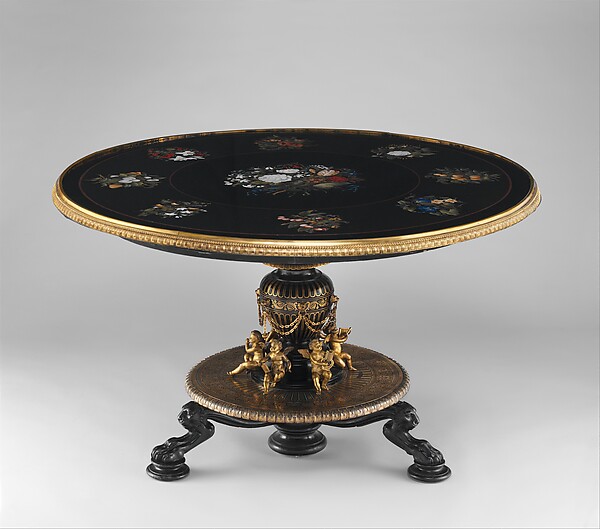
Marble-top table
Theophil Hansen (d. 1891)
ca. 1855–65 · Belgian black marble and semi-precious stones; painted pine, ebonized fruitwood; brass, gilt bronze
Cleared · Public Domain
liveNo open reproduction
The institution withholds the image for this record, which is itself the answer: the picture on their page is not theirs to give away.
The Return of the Prodigal Son, plate 4 from The Story of the Prodigal Son
David Vinckboons (d. 1629)
1608 · Etching
In copyright
liveNo open reproduction
The institution withholds the image for this record, which is itself the answer: the picture on their page is not theirs to give away.
Views of the Interior and Exterior of Windsor Castle
Joseph Nash (d. 1878)
1852 · Illustrations: lithographs with tint stones
In copyright
live1. Pin the work
Choose the record and say what you are actually going to do with it. The product re-reads the work live and stores a snapshot, so your docket records what the institution said today.
2. Read the arithmetic
Six weighted factors: the institution's own claim, the creator's term, the publication-age rule, the restrictions in their statement, your use, and whether a credit line is even possible.
3. Seal and export
Record the decision into a SHA-384 chain, then export a dated docket as JSON, CSV or Markdown with the credit line and the seal a colleague can re-verify.