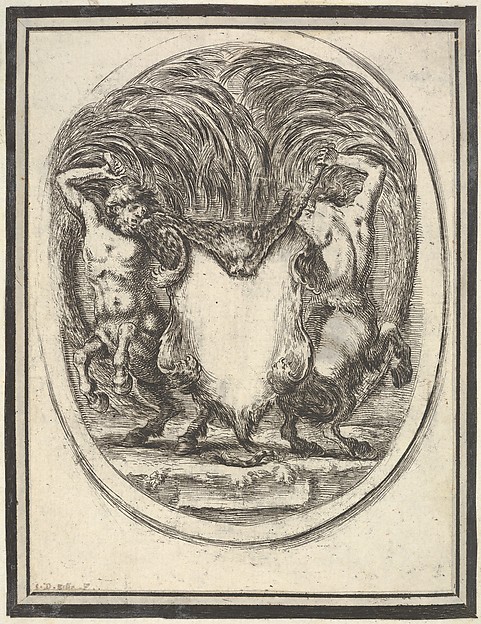
A cartouche formed by a tiger skin and flanked by two centaurs, plate 4 from "Nouvelles inventions de Cartouches"
Stefano della Bella (d. 1664)
ca. 1647 · Etching
Cleared · Public Domain
liveThe MetSimilar
Rights clearance desk for images
Museums publish two different things about the same artwork: whether the work is in copyright, and whether their picture of it is. OpenPlate reads both, does the arithmetic on the published term, and shows you the sentence behind every point of the score.
Where this page got its records
331 ms. The Metropolitan Museum of Art, Collection API (Open Access)
261 ms. The Cleveland Museum of Art, Open Access API
2 of 2 providers answered live. 52 matching records exist across the two collections.
Institutions answered newest-first by record, interleaved
A cartouche formed by a tiger skin and flanked by two centaurs, plate 4 from "Nouvelles inventions de Cartouches"
Stefano della Bella (d. 1664)
ca. 1647 · Etching
Cleared · Public Domain
live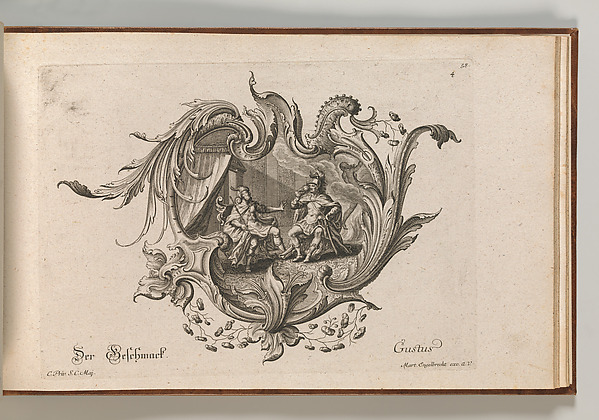
Design for a Cartouche and a Representation of Taste, plate 4 from "Neu Inventierte auf die artigste Facon Sehr nutzliche Schild"
Johann Georg Pintz
printed ca. 1750–56 · Etching
Cleared · Public Domain
live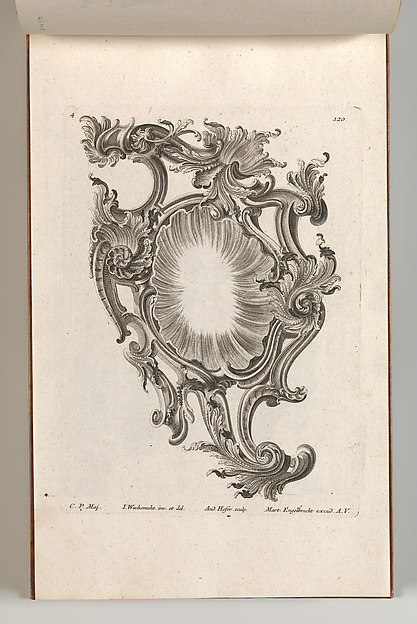
Design for a Cartouche, plate 4 from "Allerneueste Façon einiger Schild oder Cartouches"
Andreas Hofer
printed ca. 1750–56 · Etching
Cleared · Public Domain
live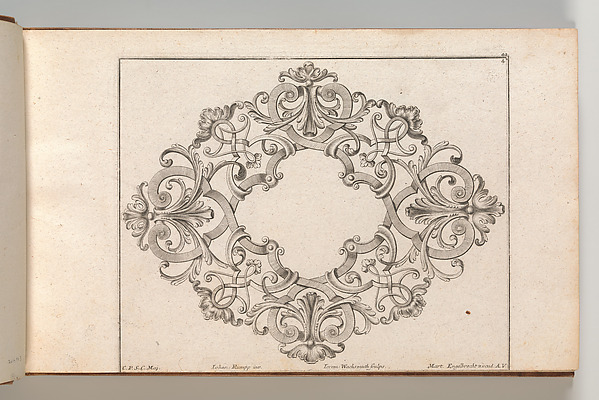
Design for a Cartouche, plate 4 from "Neü inventierte sehr dienstiche Schilde oder Cartouches"
Jeremias Wachsmuth (d. 1771)
printed ca. 1750–56 · Etching
Cleared · Public Domain
live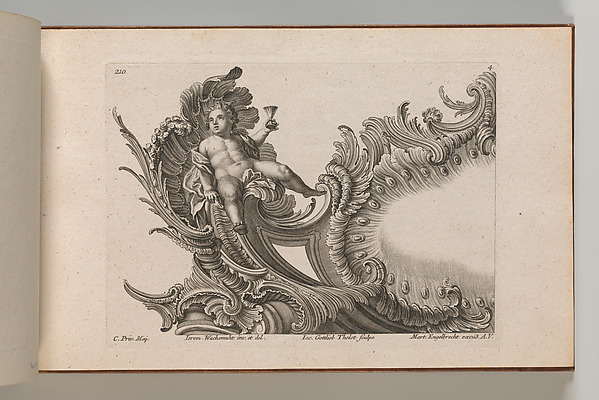
Design for a Rocaille Cartouche with the Figure of Putto holding up a Cup, plate 4 from an untitled series with architectural cartouches and allegorical figures
Jacob Gottlieb Thelot
printed ca. 1750–56 · Etching
Cleared · Public Domain
liveNo open reproduction
The institution withholds the image for this record, which is itself the answer: the picture on their page is not theirs to give away.
Cartouche with a sphinx at bottom left and right, from Strapwork Cartouches with Grotesques, plate 4
Hans Vredeman de Vries (d. 1606)
ca. 1555–70 · Etching
In copyright
liveNo open reproduction
The institution withholds the image for this record, which is itself the answer: the picture on their page is not theirs to give away.
Plate 1, from "Cartouche Pitoresque"
Pierre Edmé Babel (d. 1775)
ca. 1740–60 · Etching
In copyright
liveNo open reproduction
The institution withholds the image for this record, which is itself the answer: the picture on their page is not theirs to give away.
Plate 2, from "Cartouche Pitoresque"
Pierre Edmé Babel (d. 1775)
ca. 1740–60 · Etching
In copyright
liveNo open reproduction
The institution withholds the image for this record, which is itself the answer: the picture on their page is not theirs to give away.
Plate 3, from "Cartouche Pitoresque"
Pierre Edmé Babel (d. 1775)
ca. 1740–60 · Etching
In copyright
liveNo open reproduction
The institution withholds the image for this record, which is itself the answer: the picture on their page is not theirs to give away.
Plate 4, from "Cartouche Pitoresque"
Pierre Edmé Babel (d. 1775)
ca. 1740–60 · Etching
In copyright
liveNo open reproduction
The institution withholds the image for this record, which is itself the answer: the picture on their page is not theirs to give away.
Cartouche with trophies and pyramide (Cartouche avec des trophées et piramide)
Pierre Edmé Babel (d. 1775)
ca. 1740–60 · Etching
In copyright
liveNo open reproduction
The institution withholds the image for this record, which is itself the answer: the picture on their page is not theirs to give away.
Fountains, Plate 4
Charles Hutin (d. 1776)
1764 · Etching
In copyright
live1. Pin the work
Choose the record and say what you are actually going to do with it. The product re-reads the work live and stores a snapshot, so your docket records what the institution said today.
2. Read the arithmetic
Six weighted factors: the institution's own claim, the creator's term, the publication-age rule, the restrictions in their statement, your use, and whether a credit line is even possible.
3. Seal and export
Record the decision into a SHA-384 chain, then export a dated docket as JSON, CSV or Markdown with the credit line and the seal a colleague can re-verify.