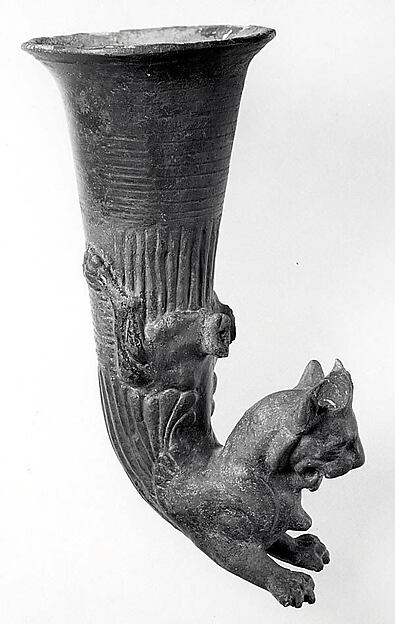
Rhyton terminating in a horned lion
Unrecorded maker
ca. 4th–3rd century BCE · Ceramic
Cleared · Public Domain
liveThe MetSimilar
Rights clearance desk for images
Museums publish two different things about the same artwork: whether the work is in copyright, and whether their picture of it is. OpenPlate reads both, does the arithmetic on the published term, and shows you the sentence behind every point of the score.
Where this page got its records
201 ms. The Metropolitan Museum of Art, Collection API (Open Access)
389 ms. The Cleveland Museum of Art, Open Access API
2 of 2 providers answered live. 207 matching records exist across the two collections.
Institutions answered newest-first by record, interleaved
Rhyton terminating in a horned lion
Unrecorded maker
ca. 4th–3rd century BCE · Ceramic
Cleared · Public Domain
live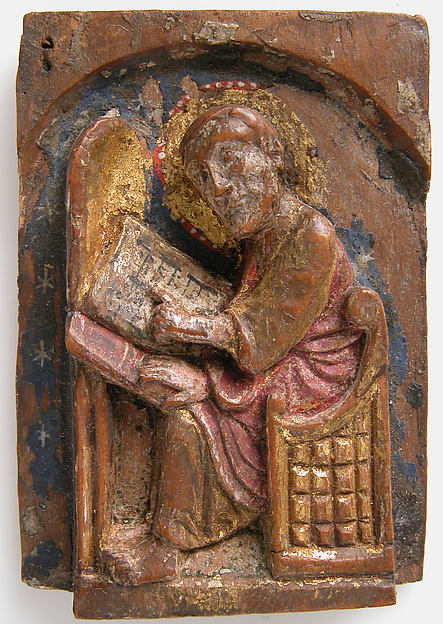
Miniature Relief of a Saint Luke at His Writing Table
Unrecorded maker
1200–1225 · Wood, polychromy, gilding
Cleared · Public Domain
live
Eyema byeri (reliquary guardian figure)
Okak-Fang artist
19th century · Wood, copper alloy, palm oil
Cleared · Public Domain
live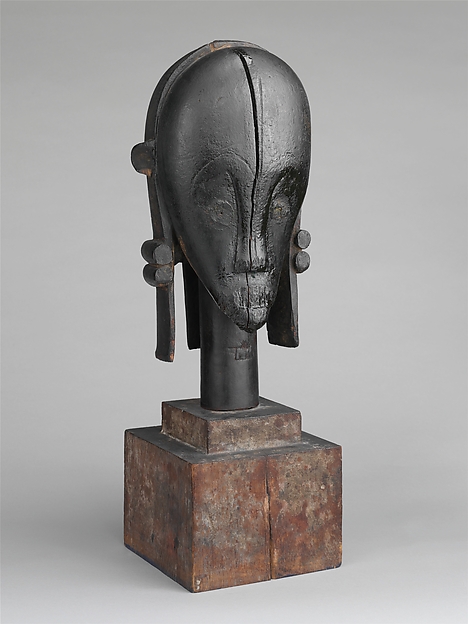
Nlô byeri (reliquary guardian head)
Betsi-Fang artist
19th century · Wood, copper alloy, palm oil
Cleared · Public Domain
liveNo open reproduction
The institution withholds the image for this record, which is itself the answer: the picture on their page is not theirs to give away.
Boho na bwete (face of the ancestor)
Mahongwe-Kota artist
1879–early 20th century · Wood, copper alloy sheet, copper alloy sheet-wire filaments, copper-alloy wire, iron and copper-alloy nails
In copyright
liveNo open reproduction
The institution withholds the image for this record, which is itself the answer: the picture on their page is not theirs to give away.
Mbulu ngulu (image of the dead)
Obamba-Kota artist
late 19th–early 20th century · Wood, brass sheets, brass and copper sheet-wire filaments, bone, brass nails, iron nails
In copyright
liveNo open reproduction
The institution withholds the image for this record, which is itself the answer: the picture on their page is not theirs to give away.
a-Mantsho-ña-Tshol (master of medicine) headdress
Baga artist
19th–first half of 20th century · Wood (Pterocarpus erinaceus), pigment
In copyright
liveNo open reproduction
The institution withholds the image for this record, which is itself the answer: the picture on their page is not theirs to give away.
Penny Arcade Machine
Joseph Cornell (d. 1972)
1950 · Box construction: wood, glass, mirror, and printed paper
In copyright
liveNo open reproduction
The institution withholds the image for this record, which is itself the answer: the picture on their page is not theirs to give away.
Reliquary
Kota artist
19th–first half of 20th century · Wood, cane, pigment, raffia palm, leaves, copper alloy, resin, primate skull, spire shell
In copyright
liveNo open reproduction
The institution withholds the image for this record, which is itself the answer: the picture on their page is not theirs to give away.
Untitled #73 (from the series 'Technological Reliquaries')
Paul Thek (d. 1988)
1964 · Beeswax, plexiglas and metal
In copyright
liveNo open reproduction
The institution withholds the image for this record, which is itself the answer: the picture on their page is not theirs to give away.
Untitled, # 17
Lucas Samaras (d. 2024)
1975 · Brush and black ink, black ink wash, and metallic-colored paint on paper
In copyright
liveNo open reproduction
The institution withholds the image for this record, which is itself the answer: the picture on their page is not theirs to give away.
Figure from a Reliquary Element: Seated Male (Nlo Bieri)
Unrecorded maker
19th–20th century · Wood, metal
In copyright
live1. Pin the work
Choose the record and say what you are actually going to do with it. The product re-reads the work live and stores a snapshot, so your docket records what the institution said today.
2. Read the arithmetic
Six weighted factors: the institution's own claim, the creator's term, the publication-age rule, the restrictions in their statement, your use, and whether a credit line is even possible.
3. Seal and export
Record the decision into a SHA-384 chain, then export a dated docket as JSON, CSV or Markdown with the credit line and the seal a colleague can re-verify.