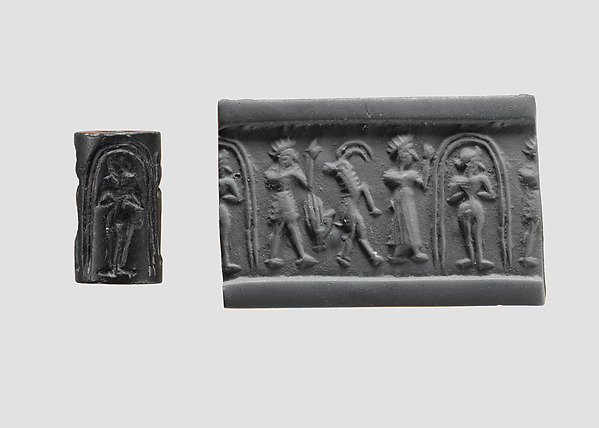
Cylinder seal
Unrecorded maker
ca. 1820–1730 BCE · Hematite
Cleared · Public Domain
liveThe MetSimilar
Rights clearance desk for images
Museums publish two different things about the same artwork: whether the work is in copyright, and whether their picture of it is. OpenPlate reads both, does the arithmetic on the published term, and shows you the sentence behind every point of the score.
Where this page got its records
1250 ms. The Metropolitan Museum of Art, Collection API (Open Access)
514 ms. The Cleveland Museum of Art, Open Access API
2 of 2 providers answered live. 58 matching records exist across the two collections.
Institutions answered newest-first by record, interleaved
Cylinder seal
Unrecorded maker
ca. 1820–1730 BCE · Hematite
Cleared · Public Domain
live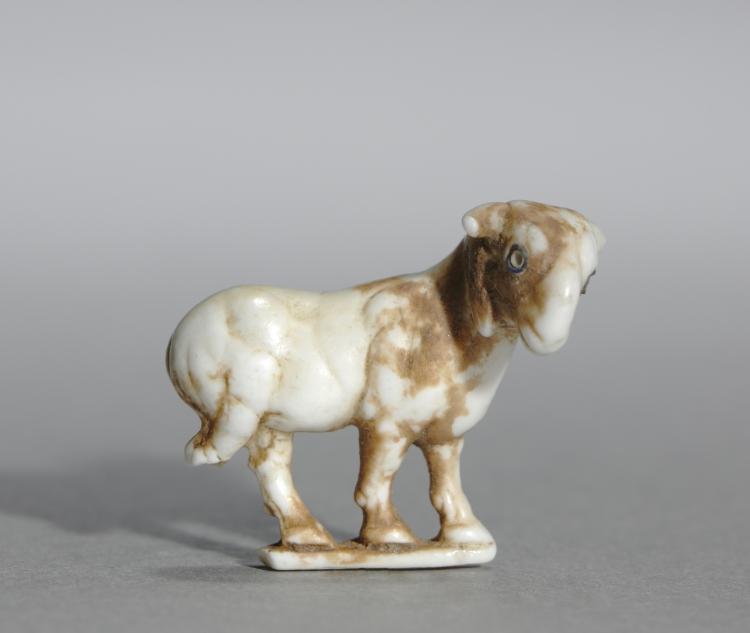
Striding Goat
Unrecorded maker
c. 3200–3000 BCE · Sculpture, limestone and Egyptian blue inlay
Cleared · CC0
live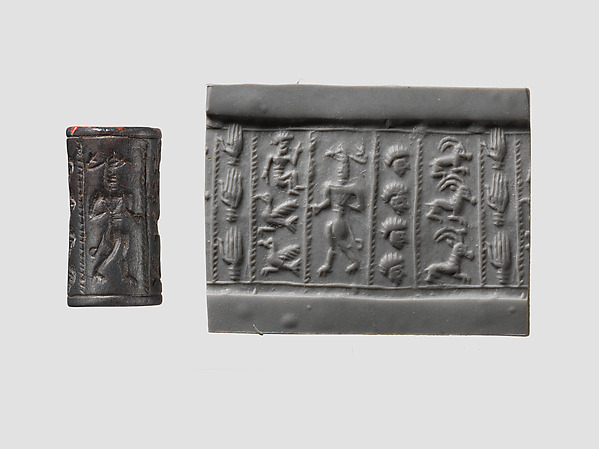
Cylinder seal
Unrecorded maker
ca. 1820–1730 BCE · Hematite
Cleared · Public Domain
live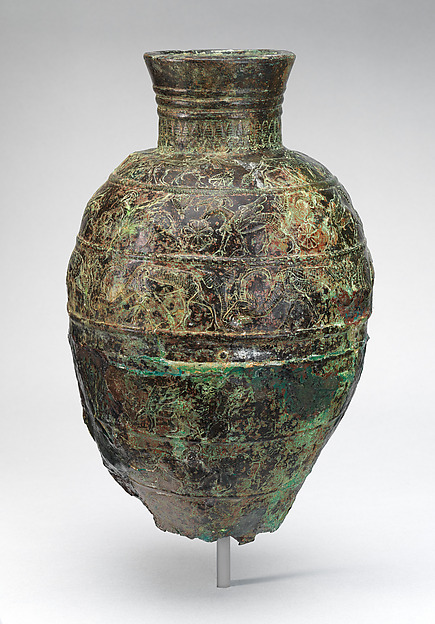
Vessel with six animal friezes
Unrecorded maker
ca. 10th–8th century BCE · Bronze
Cleared · Public Domain
live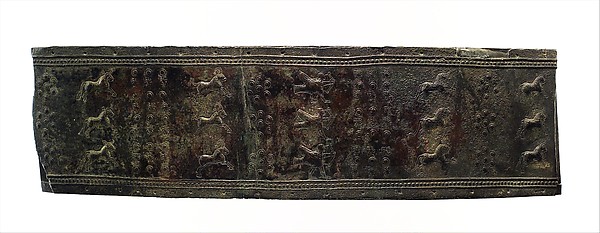
Belt fragment
Unrecorded maker
ca. 7th century BCE · Bronze
Cleared · Public Domain
live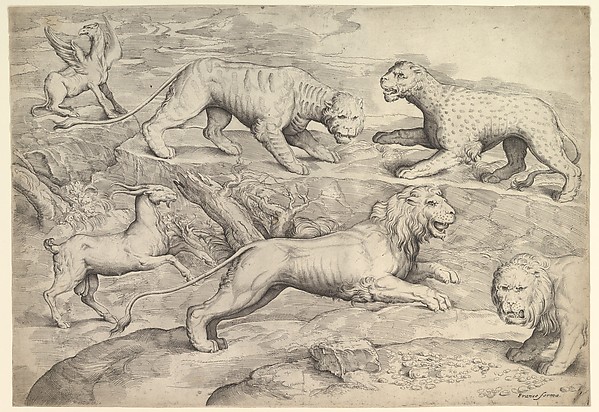
Six Animals, including lions, a tiger, a leopard, a griffin, and a goat
Battista Franco (d. 1561)
ca. 1530–61 · Etching and engraving; second state of two
Cleared · Public Domain
live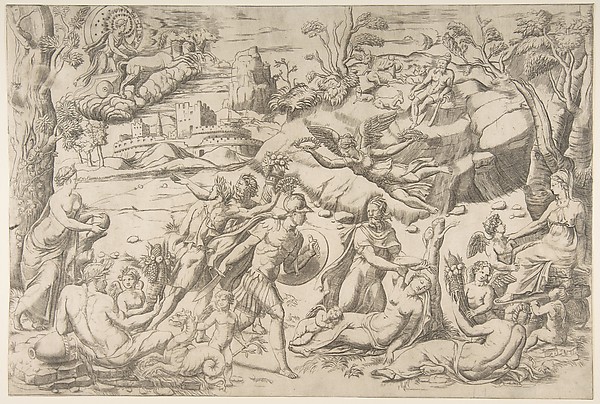
Mars and Rhea Silvia: in the centre Mars holds a shield and sword, Rhea Silvia sleeping, Apollo in his chariot upper left
Giulio Bonasone (d. 1576)
ca 1531–76 · Engraving
Cleared · Public Domain
live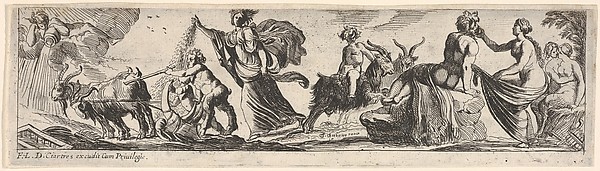
Ceres sows seeds and walks behind a goat-drawn plough, at right a man draped with a lion skin grasps a woman's garment and a female satyr receives an embrace from another figure, from a series of twelve frieze-like designs showing bacchanals, sacrifices, and dances
Pierre Brebiette (d. 1642)
ca. 1617–25 · Etching
Cleared · Public Domain
live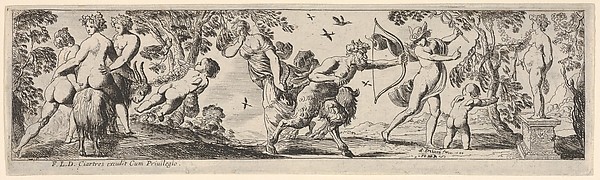
Composition of figures arranged in a landscape foreground before a statue of a female goddess, at left two nude figures support a nude woman riding a goat led by a putto, at center a draped woman holds one finger to her eye behind a satyr holding a bow, at right Mercury twists away from the satyr, from a series of twelve frieze-like designs showing bacchanals, sacrifices, and dances
Pierre Brebiette (d. 1642)
ca. 1617–25 · Etching
Cleared · Public Domain
live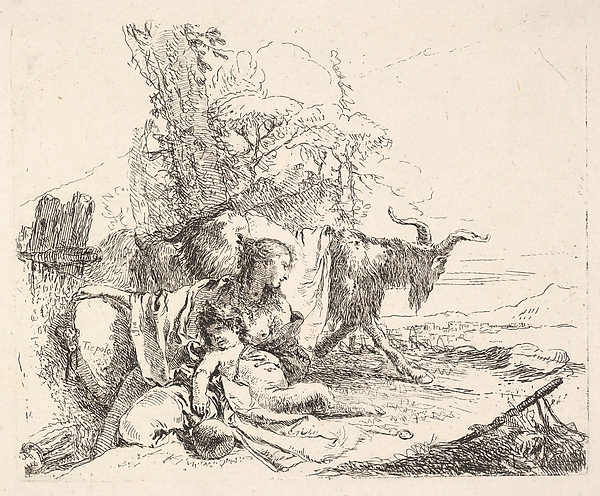
Woman and infant satyr in a landscape, the woman twisting to look over her left shoulder, a horned goat striding toward the background, from "The Capricci"
Giovanni Battista Tiepolo (d. 1770)
ca. 1740–42 · Etching
Cleared · Public Domain
live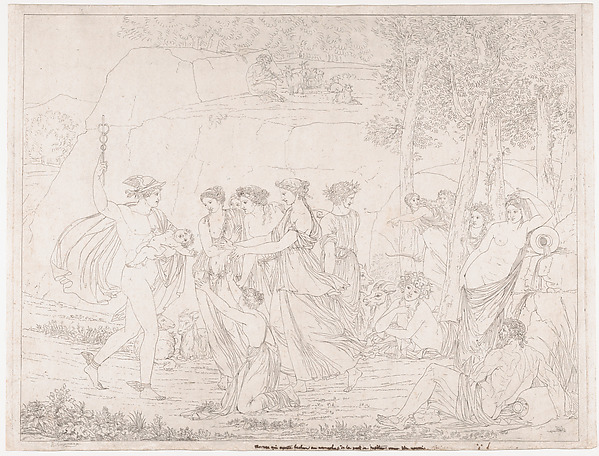
Mercury Delivers the Infant Bacchus to the Nymphs
Bénigne Gagneraux (d. 1795)
ca. 1789–90 · Etching, proof impression, partly reworked in graphite
Cleared · Public Domain
live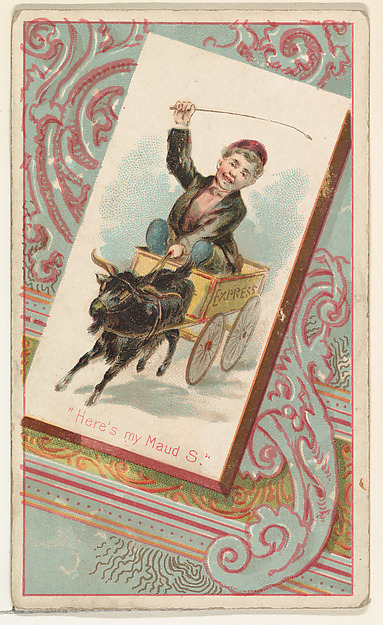
"Here's my Maud S.," from the Terrors of America set (N136) issued by Duke Sons & Co. to promote Honest Long Cut Tobacco
W. Duke, Sons & Co. (d. 1920)
1888–89 · Commercial color lithograph
Cleared · Public Domain
live1. Pin the work
Choose the record and say what you are actually going to do with it. The product re-reads the work live and stores a snapshot, so your docket records what the institution said today.
2. Read the arithmetic
Six weighted factors: the institution's own claim, the creator's term, the publication-age rule, the restrictions in their statement, your use, and whether a credit line is even possible.
3. Seal and export
Record the decision into a SHA-384 chain, then export a dated docket as JSON, CSV or Markdown with the credit line and the seal a colleague can re-verify.