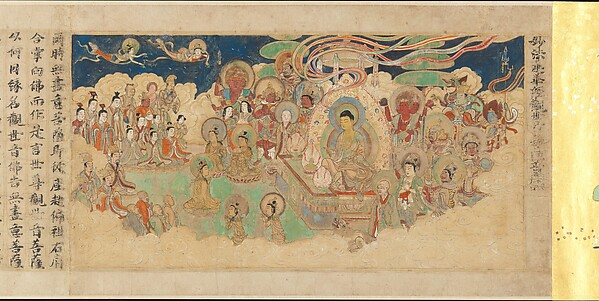
“Universal Gateway,” Chapter 25 of the Lotus Sutra
Sugawara Mitsushige (d. 1266)
dated 1257 · Handscroll; ink, color, and gold on paper
Cleared · Public Domain
liveThe MetSimilar
Rights clearance desk for images
Museums publish two different things about the same artwork: whether the work is in copyright, and whether their picture of it is. OpenPlate reads both, does the arithmetic on the published term, and shows you the sentence behind every point of the score.
Where this page got its records
244 ms. The Metropolitan Museum of Art, Collection API (Open Access)
403 ms. The Cleveland Museum of Art, Open Access API
2 of 2 providers answered live. 159 matching records exist across the two collections.
Institutions answered newest-first by record, interleaved
“Universal Gateway,” Chapter 25 of the Lotus Sutra
Sugawara Mitsushige (d. 1266)
dated 1257 · Handscroll; ink, color, and gold on paper
Cleared · Public Domain
live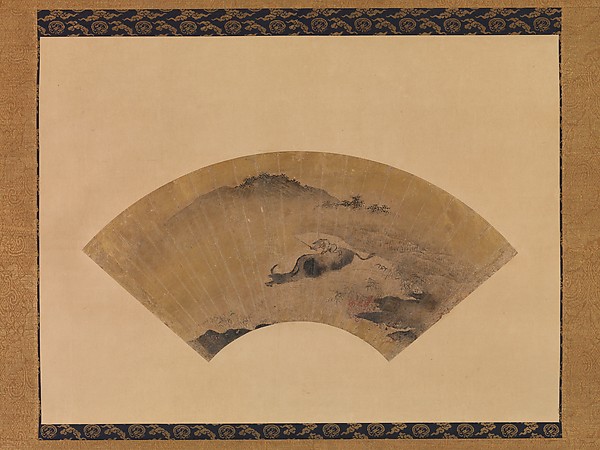
Herd Boy with Ox
Kano Masanobu 狩野正信 (d. 1530)
late 15th century · Folding fan mounted as a hanging scroll; ink and gold on paper
Cleared · Public Domain
live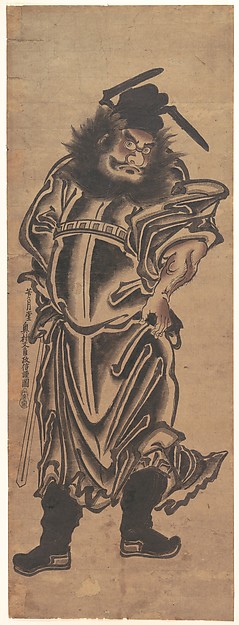
Zhong Kui, the Demon Queller
Okumura Masanobu (d. 1764)
first half 18th century · Woodblock print (urushi-e); ink and color on paper
Cleared · Public Domain
live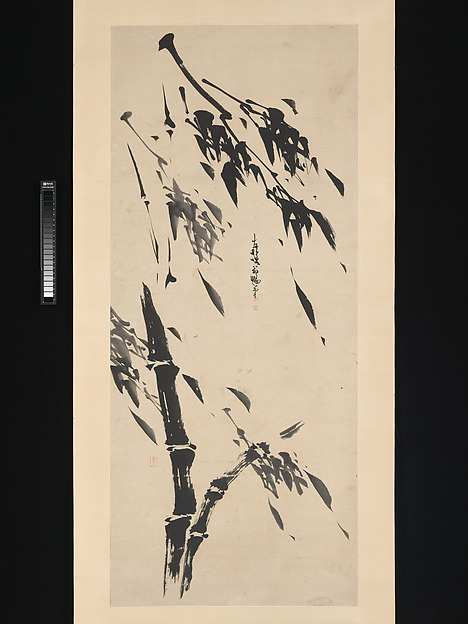
Bamboo in the Wind
Dapeng Zhengkun (Taihō Shōkon) (d. 1774)
mid-18th century · Hanging scroll; ink on paper
Cleared · Public Domain
live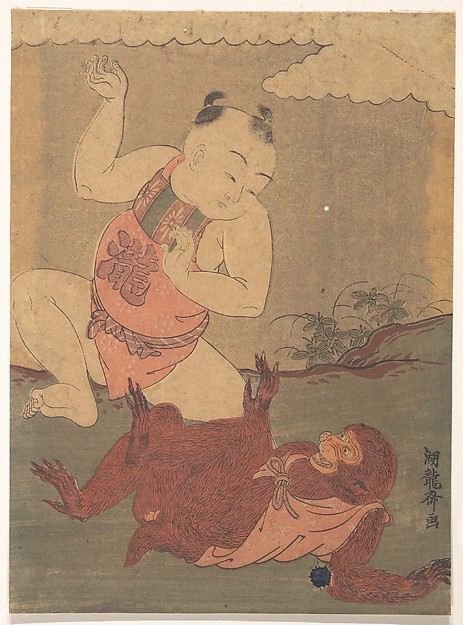
Chinese Boy and Monkey Wrestling
Isoda Koryūsai (d. 1790)
ca. 1770–72 (Meiwa 7–An’ei 1) · Woodblock print (nishiki-e); ink and color on paper
Cleared · Public Domain
live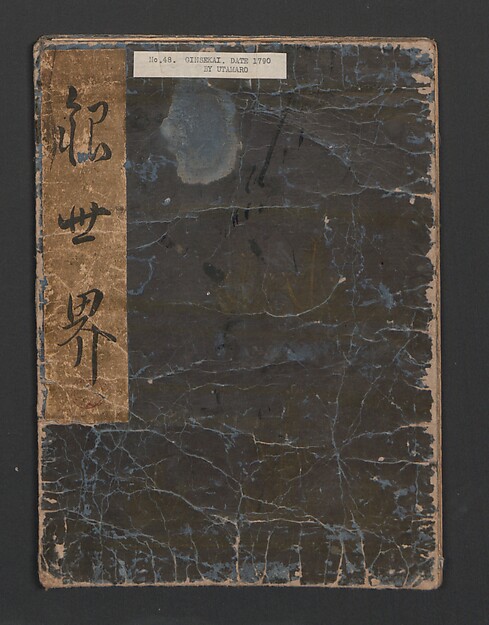
The Silver World (Gin sekai) 銀世界
Kitagawa Utamaro 喜多川歌麿 (d. 1806)
1790, first month · Polychrome woodblock printed book; ink and color on paper
Cleared · Public Domain
live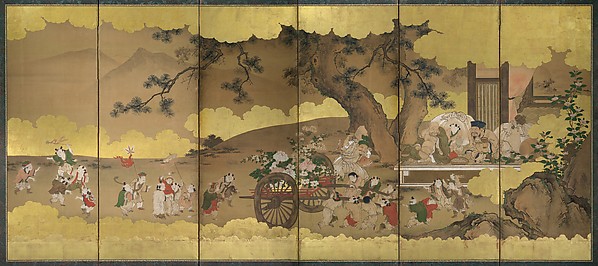
Seven Gods of Good Fortune and Chinese Children
Kano Chikanobu (d. 1728)
17th–18th century · Six-panel folding screen; ink, color, and gilt on paper; Reverse side: ink, color, and gold on paper
Cleared · Public Domain
live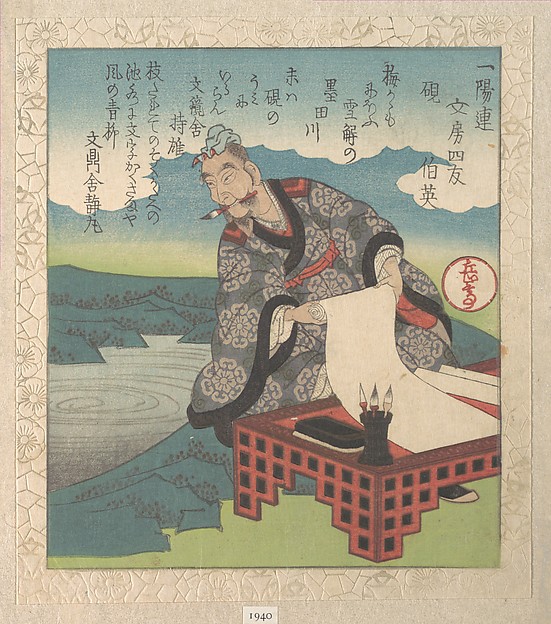
The Chinese Calligrapher Boying (Japanese: Hakuei; also known as the “Sage of Cursive Script”); “Inkstone” (Suzuri), from Four Friends of the Writing Table for the Ichiyō Poetry Circle (Ichiyō-ren Bunbō shiyū) From the Spring Rain Collection (Harusame shū), vol. 1
Yashima Gakutei (d. 1868)
ca. 1827 · Woodblock print (surimono); ink and color on paper
Cleared · Public Domain
live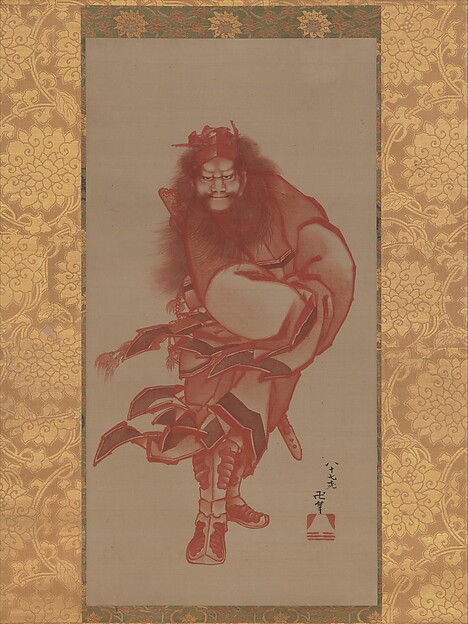
Red Zhong Kui, the Demon Queller
Katsushika Hokusai (d. 1849)
1846 · Hanging scroll; ink and color on silk
Cleared · Public Domain
liveNo open reproduction
The institution withholds the image for this record, which is itself the answer: the picture on their page is not theirs to give away.
Woodpecker
Gao Qifeng (d. 1933)
dated 1927 · Hanging scroll; ink and color on alum paper
In copyright
liveNo open reproduction
The institution withholds the image for this record, which is itself the answer: the picture on their page is not theirs to give away.
Portrait of the Priest Hongyi
Feng Zikai (d. 1975)
dated 1943 · Hanging scroll; ink on paper
In copyright
liveNo open reproduction
The institution withholds the image for this record, which is itself the answer: the picture on their page is not theirs to give away.
“Kanzan” (Hanshan)
Inoue Yūichi (d. 1985)
1966 · Panel; ink on Japanese paper
In copyright
live1. Pin the work
Choose the record and say what you are actually going to do with it. The product re-reads the work live and stores a snapshot, so your docket records what the institution said today.
2. Read the arithmetic
Six weighted factors: the institution's own claim, the creator's term, the publication-age rule, the restrictions in their statement, your use, and whether a credit line is even possible.
3. Seal and export
Record the decision into a SHA-384 chain, then export a dated docket as JSON, CSV or Markdown with the credit line and the seal a colleague can re-verify.