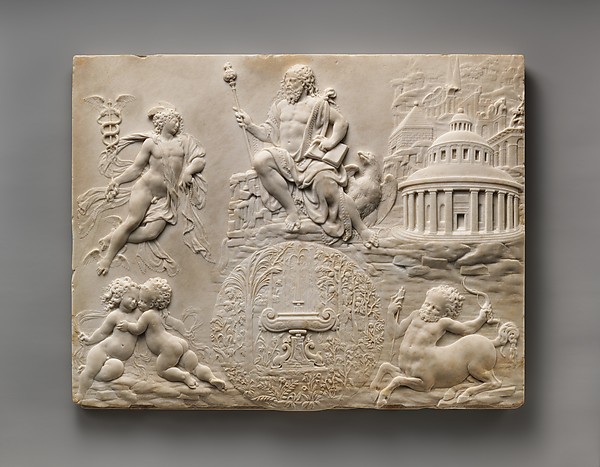
The Reign of Jupiter
Unrecorded maker
ca. 1550–70 · Marble
Cleared · Public Domain
liveThe MetSimilar
Rights clearance desk for images
Museums publish two different things about the same artwork: whether the work is in copyright, and whether their picture of it is. OpenPlate reads both, does the arithmetic on the published term, and shows you the sentence behind every point of the score.
Where this page got its records
287 ms. The Metropolitan Museum of Art, Collection API (Open Access)
319 ms. The Cleveland Museum of Art, Open Access API
2 of 2 providers answered live. 106 matching records exist across the two collections.
Institutions answered newest-first by record, interleaved
The Reign of Jupiter
Unrecorded maker
ca. 1550–70 · Marble
Cleared · Public Domain
live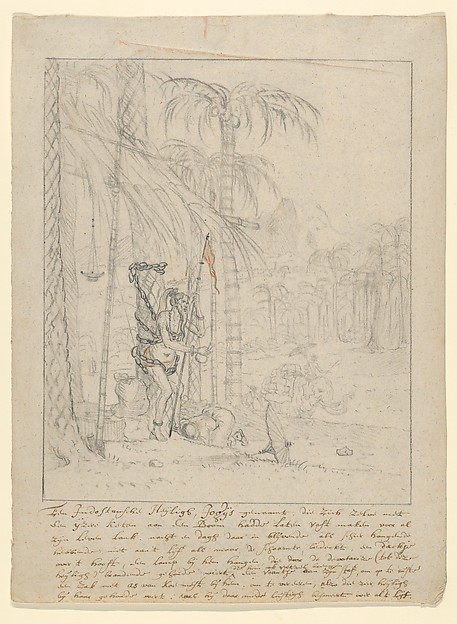
An Indian Yogi Tied to a Palm Tree
Willem Schellinks (d. 1678)
mid-17th–late 17th century · Black chalk, graphite, red chalk; framing line in graphite, by the artist
Cleared · Public Domain
live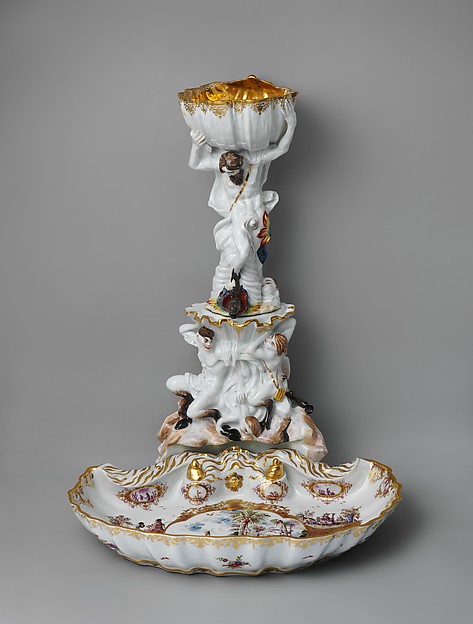
Fountain and basin
Meissen Manufactory (d. 9999)
ca. 1727–32 · Hard-paste porcelain decorated in polychrome enamels, gold; silver spout
Cleared · Public Domain
live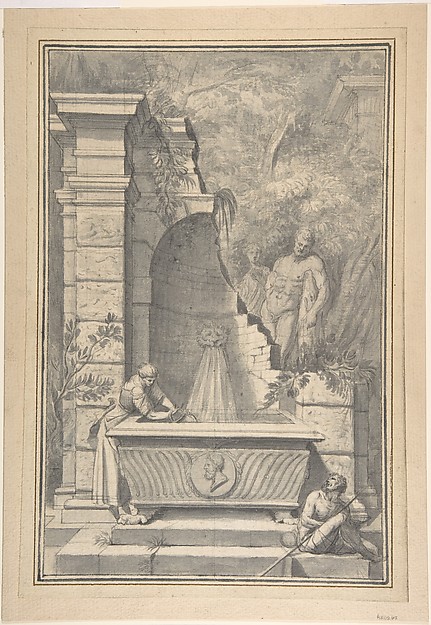
A Woman at a Fountain by a Ruined Temple, the Farnese Hercules in the Background
Johannes Antiquus (d. 1750)
1726–50 · Black chalk, pen and gray ink, with gray wash; framing line in black ink
Cleared · Public Domain
live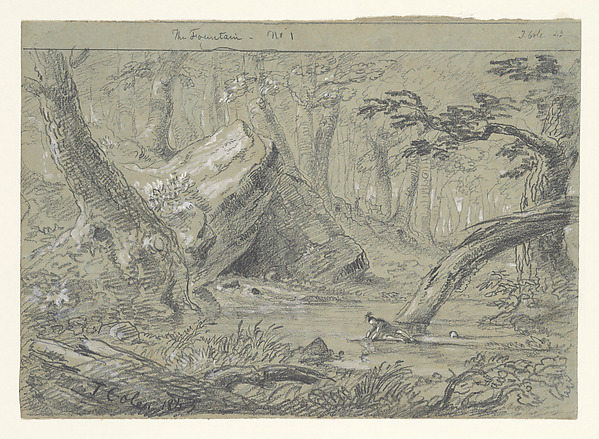
The Fountain, No. 1: The Wounded Indian Slaking His Death Thirst
Thomas Cole (d. 1848)
1843 · Graphite and white gouache on green wove paper
Cleared · Public Domain
liveNo open reproduction
The institution withholds the image for this record, which is itself the answer: the picture on their page is not theirs to give away.
View of a courtyard with a labyrinth in the foreground at left and a fountain at right, plate 49, from Variæ Architecturæ Formae
Hans Vredeman de Vries (d. 1606)
Published after 1601 · Etching; second state of two (Hollstein)
In copyright
liveNo open reproduction
The institution withholds the image for this record, which is itself the answer: the picture on their page is not theirs to give away.
Journal des Dames et des Modes, No. 44 (10 August 1913)
Vaugirard
1913 · plates: hand colored engraving
In copyright
liveNo open reproduction
The institution withholds the image for this record, which is itself the answer: the picture on their page is not theirs to give away.
Announcement for Kelley's Weekly Bulletin with cards from the American Indian Series (D6), issued by the Kelley Baking Company, including cards Man and Chief, No. 1; Crow's Breast, No. 2; Arkikita, No. 3; Geronimo, No. 4; British, No. 5; True Eagle, No. 6; Young Black Dog, No. 7; Red Thunder, No. 8
Kelley Baking Company
1940 · Commercial color lithograph
In copyright
liveNo open reproduction
The institution withholds the image for this record, which is itself the answer: the picture on their page is not theirs to give away.
Card No. 1, White Swan, from the Indian Chiefs series (T129) issued by Red Man Chewing Tobacco
Red Man Chewing Tobacco
1954 · Commercial color lithograph
In copyright
live1. Pin the work
Choose the record and say what you are actually going to do with it. The product re-reads the work live and stores a snapshot, so your docket records what the institution said today.
2. Read the arithmetic
Six weighted factors: the institution's own claim, the creator's term, the publication-age rule, the restrictions in their statement, your use, and whether a credit line is even possible.
3. Seal and export
Record the decision into a SHA-384 chain, then export a dated docket as JSON, CSV or Markdown with the credit line and the seal a colleague can re-verify.