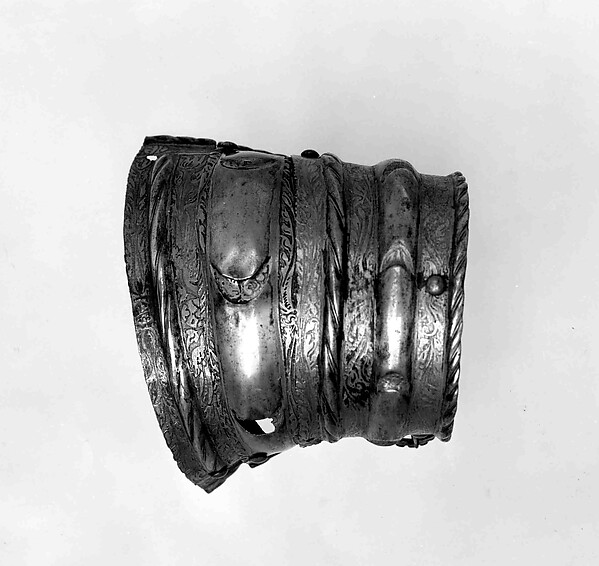
Portions of a Boy's Costume Armor
Hans Seusenhofer (d. 1555)
1532 · Steel, copper alloy, gold
Cleared · Public Domain
liveThe MetSimilar
Rights clearance desk for images
Museums publish two different things about the same artwork: whether the work is in copyright, and whether their picture of it is. OpenPlate reads both, does the arithmetic on the published term, and shows you the sentence behind every point of the score.
Where this page got its records
421 ms. The Metropolitan Museum of Art, Collection API (Open Access)
376 ms. The Cleveland Museum of Art, Open Access API
2 of 2 providers answered live. 24 matching records exist across the two collections.
Institutions answered newest-first by record, interleaved
Portions of a Boy's Costume Armor
Hans Seusenhofer (d. 1555)
1532 · Steel, copper alloy, gold
Cleared · Public Domain
live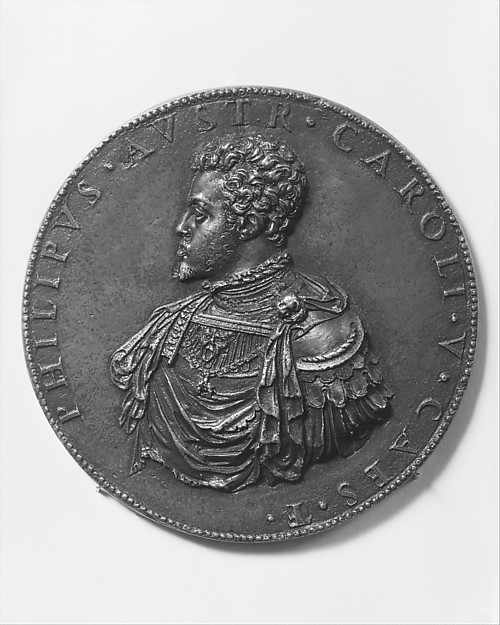
The Infante Philip of Spain, later Philip II of Spain (1527–98, r. 1556)
Leone Leoni (d. 1590)
1549 · Bronze, brown patina, cast
Cleared · Public Domain
liveLeft Pauldron (Shoulder Defense) from a Boy's Costume Armor
Hans Seusenhofer (d. 1555)
ca. 1532 · Steel, copper alloy, gold
Cleared · Public Domain
live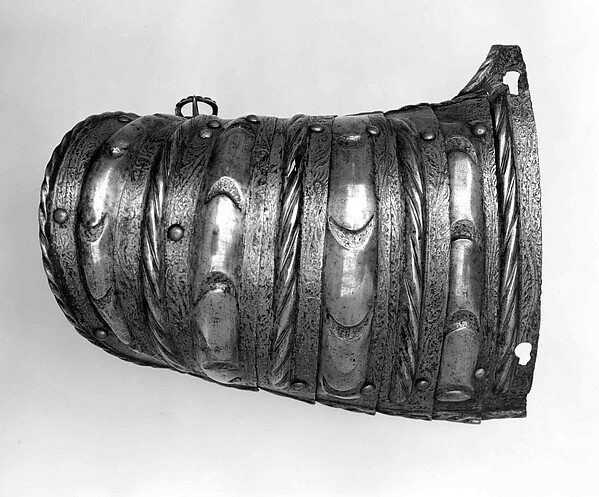
Left Tasset (Thigh Defense) from a Boy's Costume Armor
Hans Seusenhofer (d. 1555)
ca. 1532 · Steel, copper alloy, gold
Cleared · Public Domain
live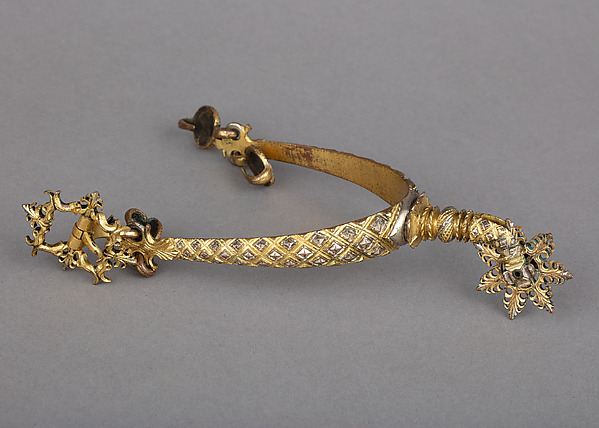
Rowel Spur (Left)
Unrecorded maker
ca.1560 · Copper alloy, gold, silver
Cleared · Public Domain
live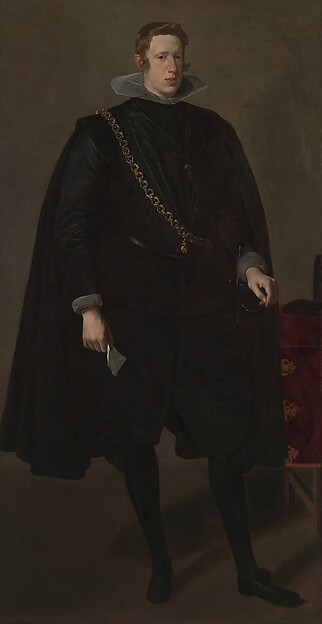
Philip IV (1605–1665), King of Spain
Velázquez (Diego Rodríguez de Silva y Velázquez) (d. 1660)
probably 1624 · Oil on canvas
Cleared · Public Domain
live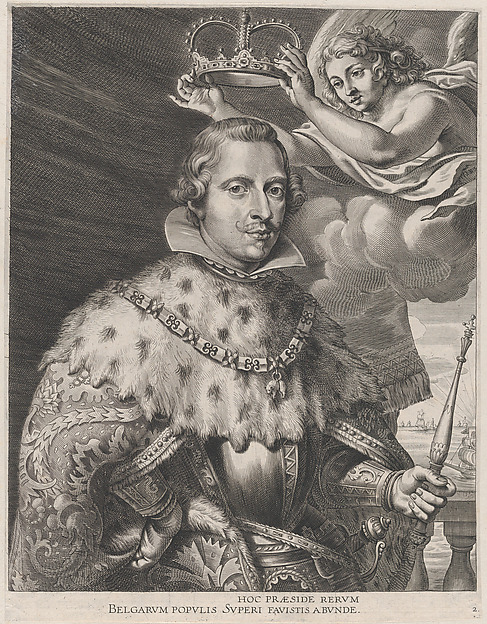
Plate 2: Portrait of Philip IV, King of Spain, being crowned; from Guillielmus Becanus's 'Serenissimi Principis Ferdinandi, Hispaniarum Infantis...'
Johannes Meursius (d. 1699)
1636 · Engraving
Cleared · Public Domain
live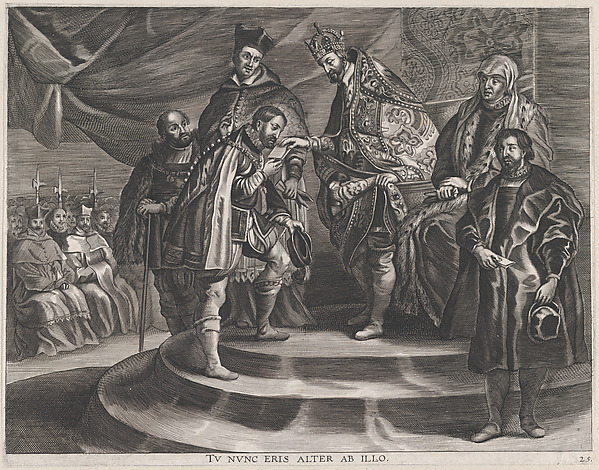
Plate 25: Philip crowned King of Spain by his father, Charles V; from Guillielmus Becanus's 'Serenissimi Principis Ferdinandi, Hispaniarum Infantis...'
Anton van der Does (d. 1680)
1636 · Engraving
Cleared · Public Domain
live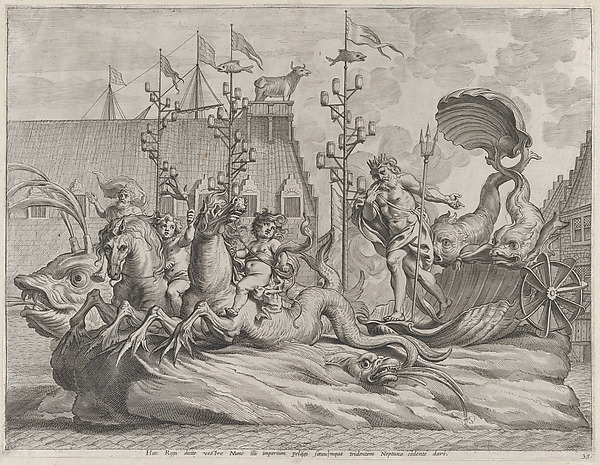
Plate 35: Philip of Spain as Neptune, riding in a chariot drawn by two sea horses; from Guillielmus Becanus's 'Serenissimi Principis Ferdinandi, Hispaniarum Infantis...'
Pieter de Jode II (d. 1674)
1636 · Engraving
Cleared · Public Domain
live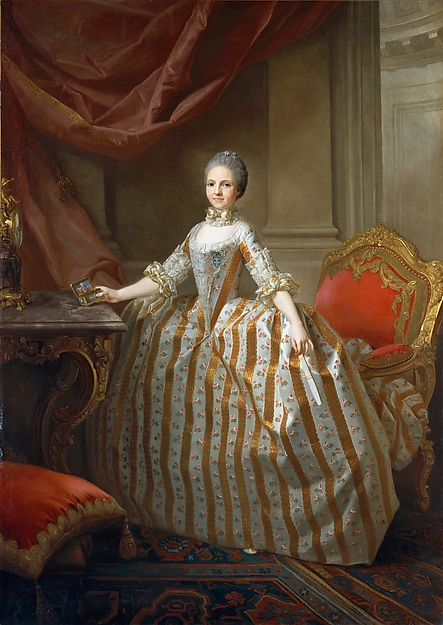
Maria Luisa of Parma (1751–1819), Later Queen of Spain
Laurent Pécheux (d. 1821)
1765 · Oil on canvas
Cleared · Public Domain
live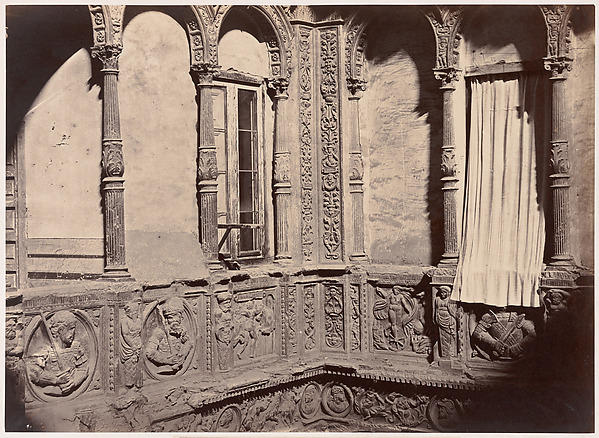
Zaragoza, Patio de la Casa Conocida con el Nombre de los Infantes
Charles Clifford (d. 1863)
1860 · Albumen silver print from glass negative
Cleared · Public Domain
live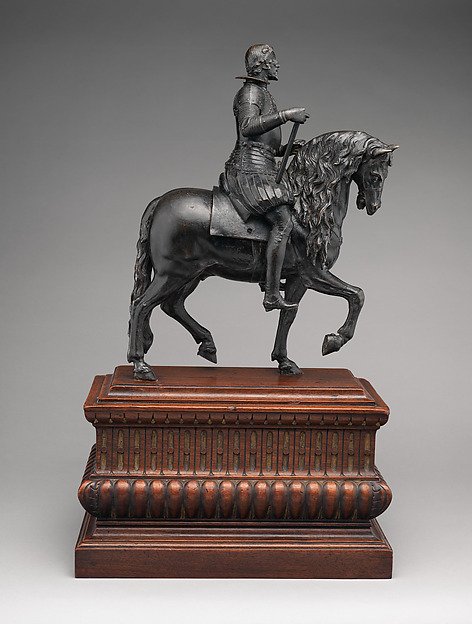
Equestrian statuette, possibly of Philip IV, King of Spain
Pietro Tacca (d. 1640)
17th century, cast possibly 19th century · Bronze, on later wood base
Cleared · Public Domain
live1. Pin the work
Choose the record and say what you are actually going to do with it. The product re-reads the work live and stores a snapshot, so your docket records what the institution said today.
2. Read the arithmetic
Six weighted factors: the institution's own claim, the creator's term, the publication-age rule, the restrictions in their statement, your use, and whether a credit line is even possible.
3. Seal and export
Record the decision into a SHA-384 chain, then export a dated docket as JSON, CSV or Markdown with the credit line and the seal a colleague can re-verify.