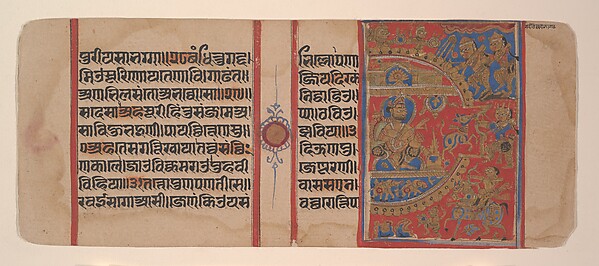
The Siege of Ujjain and the Magic She-Ass: Folio from the Kalakacarya Section of a Kalpasutra Manuscript
Unrecorded maker
16th century · Ink, opaque watercolor, and gold on paper
Cleared · Public Domain
liveThe MetSimilar
Rights clearance desk for images
Museums publish two different things about the same artwork: whether the work is in copyright, and whether their picture of it is. OpenPlate reads both, does the arithmetic on the published term, and shows you the sentence behind every point of the score.
Where this page got its records
490 ms. The Metropolitan Museum of Art, Collection API (Open Access)
311 ms. The Cleveland Museum of Art, Open Access API
2 of 2 providers answered live. 81,314 matching records exist across the two collections.
Institutions answered newest-first by record, interleaved
The Siege of Ujjain and the Magic She-Ass: Folio from the Kalakacarya Section of a Kalpasutra Manuscript
Unrecorded maker
16th century · Ink, opaque watercolor, and gold on paper
Cleared · Public Domain
live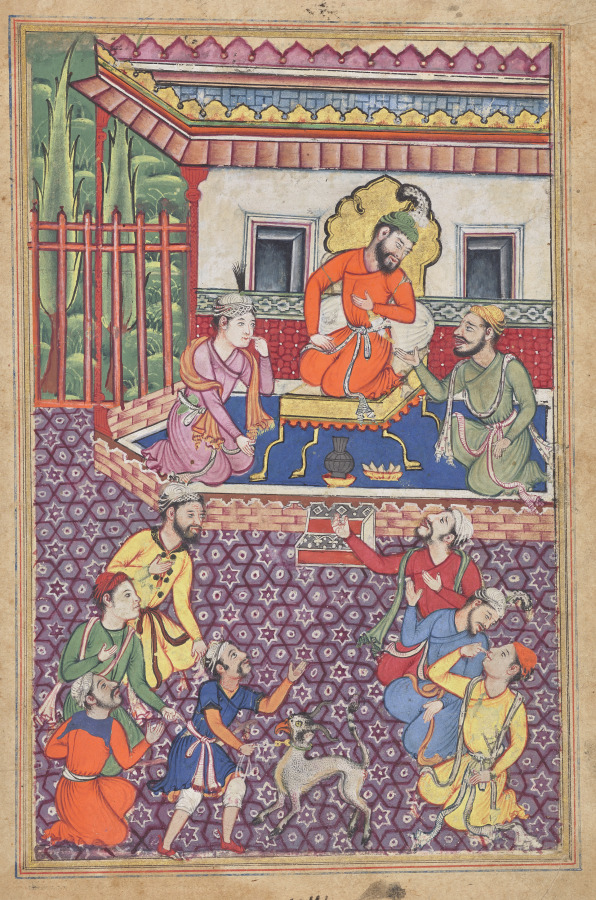
The court of the Raja of Ujjain, from a Tuti-nama (Tales of a Parrot): Forty-sixth Night
Unrecorded maker
c. 1560 · Painting, gum tempera, ink, and gold on paper
Cleared · CC0
live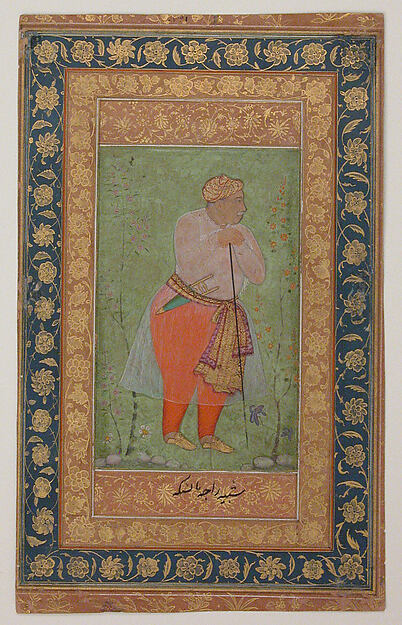
Portrait of Raja Man Singh of Amber
Unrecorded maker
ca. 1590 · Ink, opaque watercolor, and gold on paper
Cleared · Public Domain
live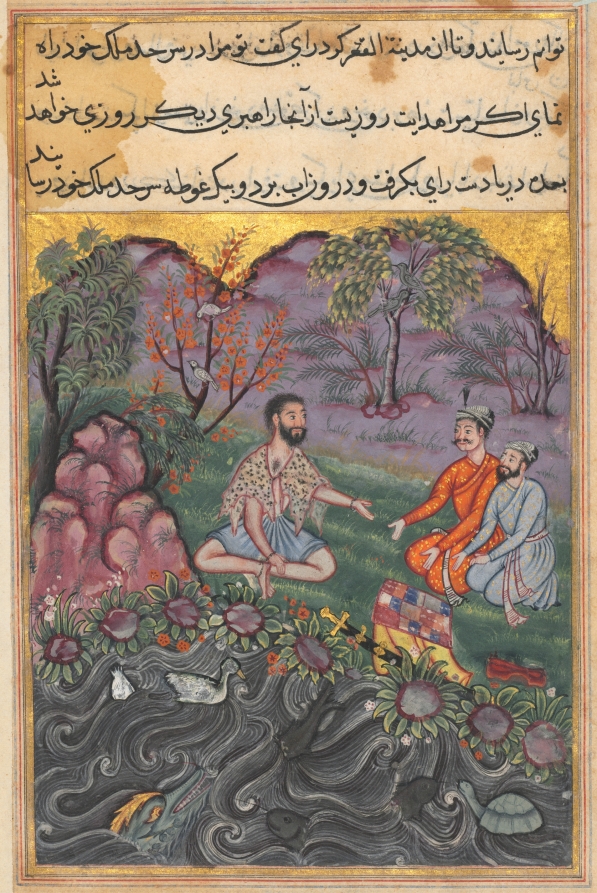
The Raja of Ujjain, who is traveling in the guise of a yogi, meets two brothers who ask him to equitably partition their father’s possession, from a Tuti-nama (Tales of a Parrot): Forty-sixth Night
Unrecorded maker
c. 1560 · Painting, gum tempera, ink, and gold on paper
Cleared · CC0
live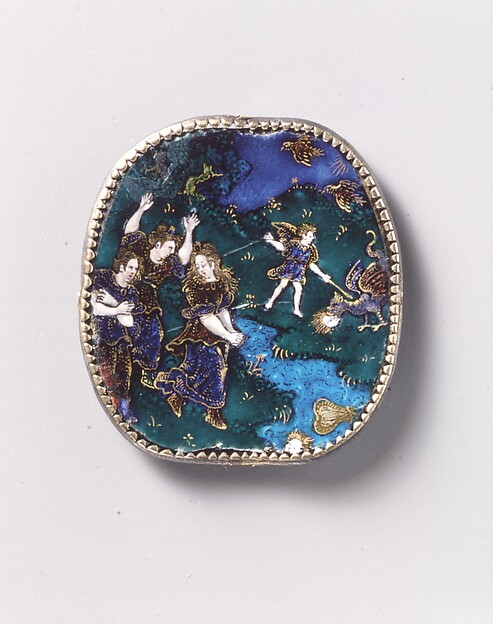
Orpheus Attacked by the Maenads
Suzanne de Court (d. 1625)
first quarter 17th century · Painted enamel on copper, partly gilt; gilt brass
Cleared · Public Domain
live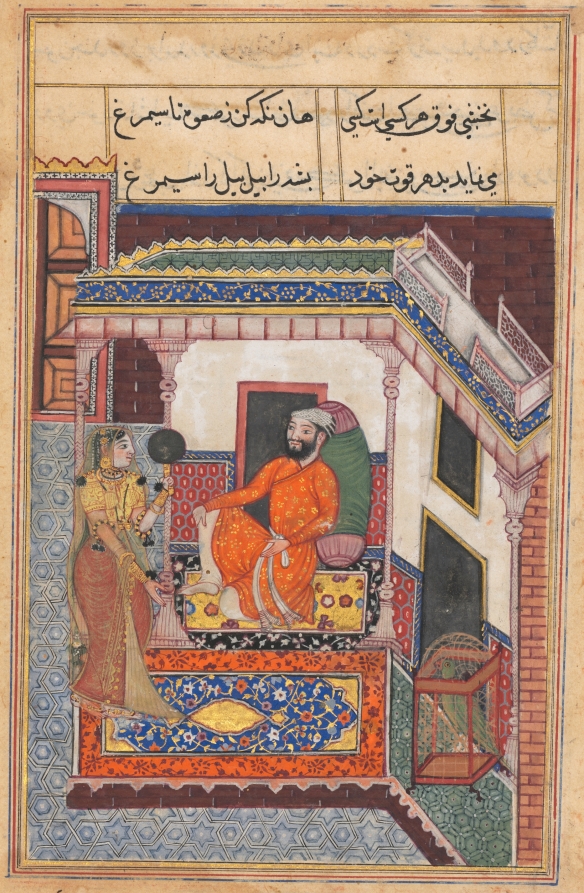
The parrot laughs on hearing the Raja of Ujjain’s wife admire her beauty in a mirror, from a Tuti-nama (Tales of a Parrot: Forty-sixth Night
Unrecorded maker
c. 1560 · Painting, gum tempera, ink, and gold on paper
Cleared · CC0
live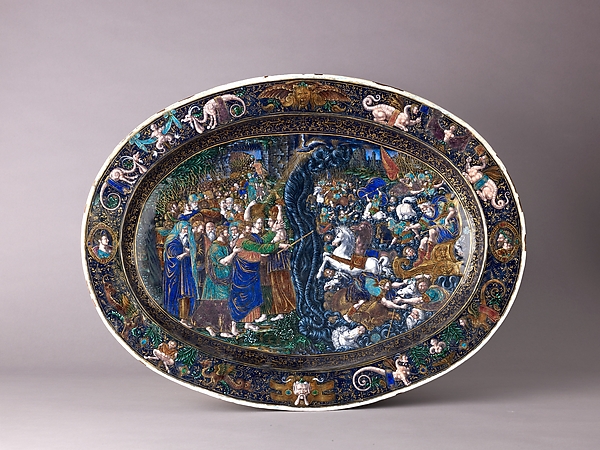
Dish: The Destruction of the Hosts of Pharaoh
Master IC (probably Jean Court) (d. 1627)
probably early 17th century · Painted enamel on copper, partly gilt.
Cleared · Public Domain
live
"Arjuna Battles Raja Tamradhvaja", Folio from a Razmnama
'Abd al-Rahim ibn Muhammad Bairam Khan Khan-i Khanan (d. 1627)
ca. 1616–17 · Ink, opaque watercolor, and gold on paper
Cleared · Public Domain
live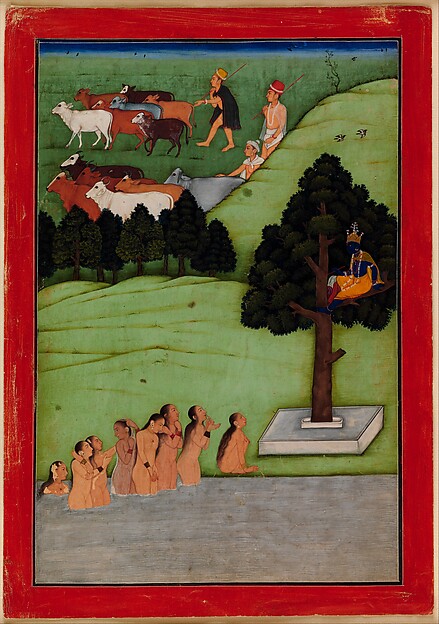
"Krishna Steals the Clothing of the Gopis (Female Cowherds)", Folio from the Devotional Text of the Bhagavata Purana
The Early Master at the Court of Mandi (d. 1685)
ca. 1640 · Opaque watercolor and gold on paper
Cleared · Public Domain
live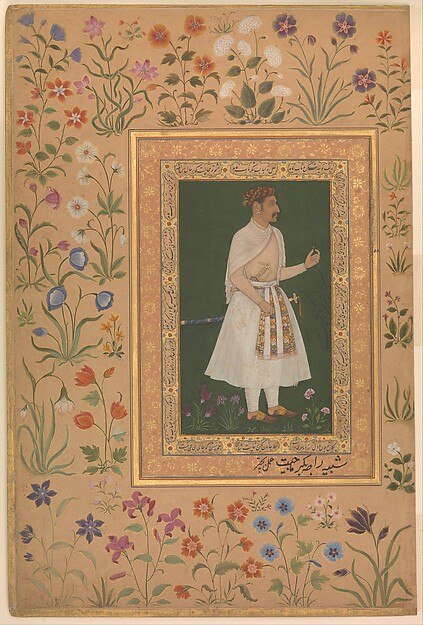
"Portrait of Raja Bikramajit (Sundar Das)", Folio from the Shah Jahan Album
Bichitr (d. 1685)
recto: ca. 1620; verso: ca. 1540 · Ink, opaque watercolor, and gold on paper
Cleared · Public Domain
live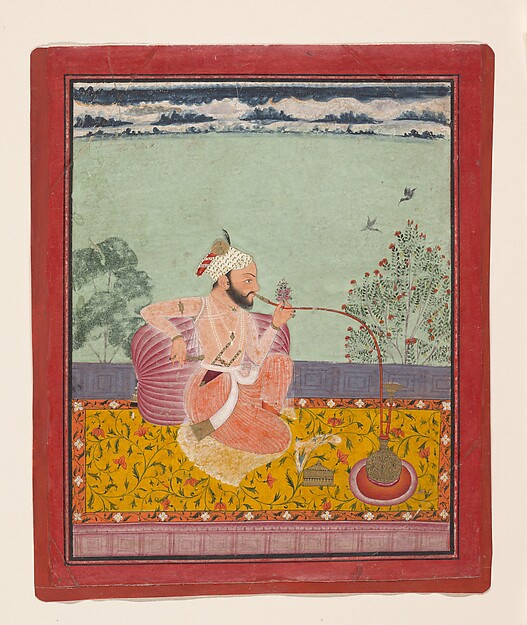
A Raja Smoking a Hookah
Unrecorded maker
ca. 1690–1710 · Ink, opaque watercolor, and gold on paper
Cleared · Public Domain
live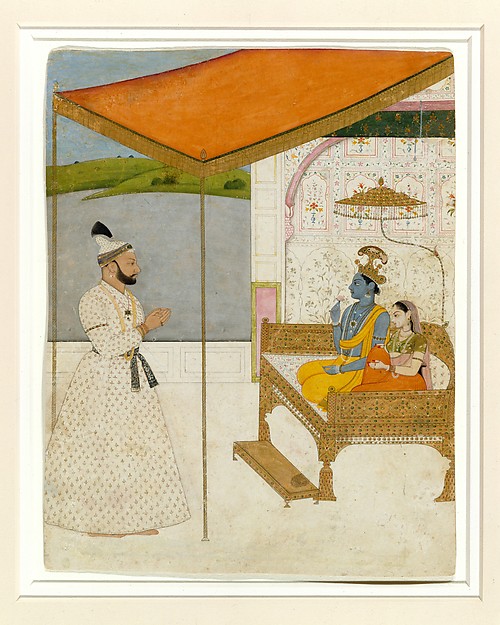
Raja Balwant Singh’s Vision of Krishna and Radha
Nainsukh (d. 1778)
ca. 1745–50 · Ink, opaque watercolor, and gold on paper
Cleared · Public Domain
live1. Pin the work
Choose the record and say what you are actually going to do with it. The product re-reads the work live and stores a snapshot, so your docket records what the institution said today.
2. Read the arithmetic
Six weighted factors: the institution's own claim, the creator's term, the publication-age rule, the restrictions in their statement, your use, and whether a credit line is even possible.
3. Seal and export
Record the decision into a SHA-384 chain, then export a dated docket as JSON, CSV or Markdown with the credit line and the seal a colleague can re-verify.