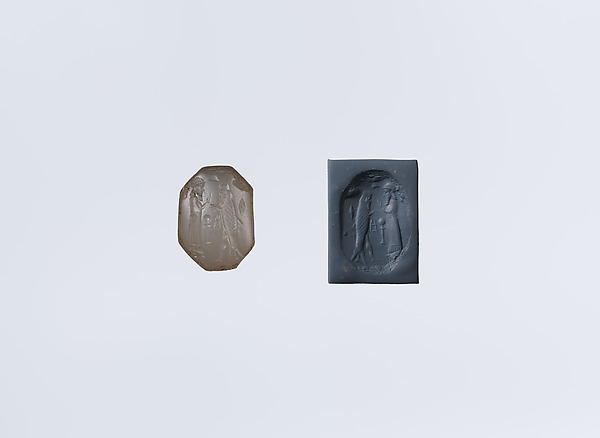
Stamp seal (octagonal pyramid) with cultic scene
Unrecorded maker
late 8th–7th century BCE · Veined neutral Chalcedony (Quartz)
Cleared · Public Domain
liveThe MetSimilar
Rights clearance desk for images
Museums publish two different things about the same artwork: whether the work is in copyright, and whether their picture of it is. OpenPlate reads both, does the arithmetic on the published term, and shows you the sentence behind every point of the score.
Where this page got its records
282 ms. The Metropolitan Museum of Art, Collection API (Open Access)
466 ms. The Cleveland Museum of Art, Open Access API
2 of 2 providers answered live. 70 matching records exist across the two collections.
Institutions answered newest-first by record, interleaved
Stamp seal (octagonal pyramid) with cultic scene
Unrecorded maker
late 8th–7th century BCE · Veined neutral Chalcedony (Quartz)
Cleared · Public Domain
live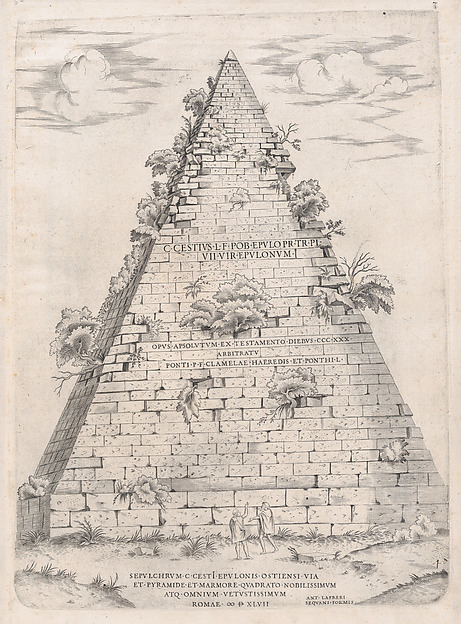
Pyramid of Caius Cestius, from "Speculum Romanae Magnificentiae"
Anonymous
1547 · Engraving
Cleared · Public Domain
live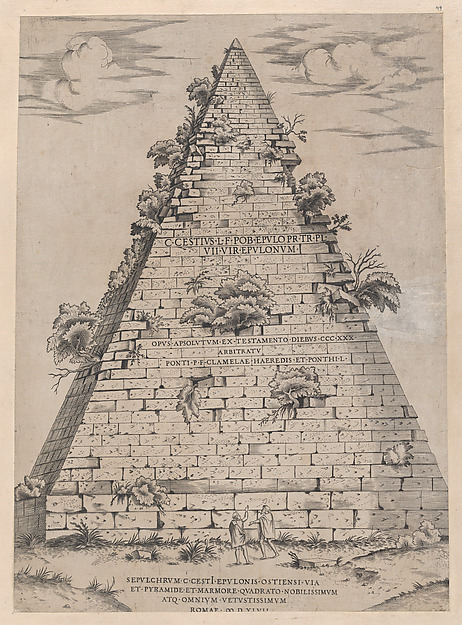
Pyramid of Caius Cestius, from "Speculum Romanae Magnificentiae"
Anonymous
1547 · Engraving
Cleared · Public Domain
live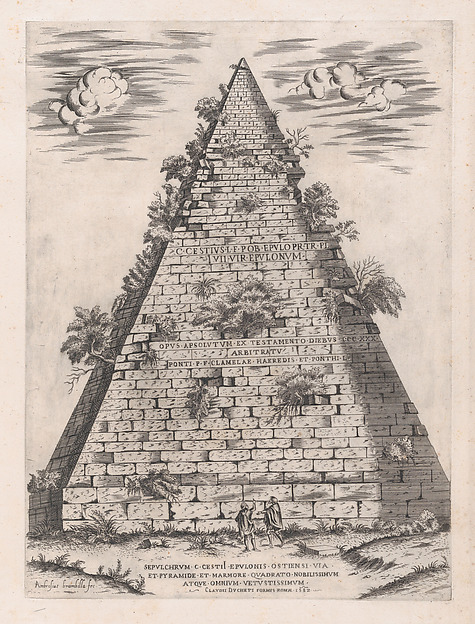
Pyramid of Caius Cestius, from "Speculum Romanae Magnificentiae"
Giovanni Ambrogio Brambilla (d. 1599)
1582 · Etching and engraving
Cleared · Public Domain
live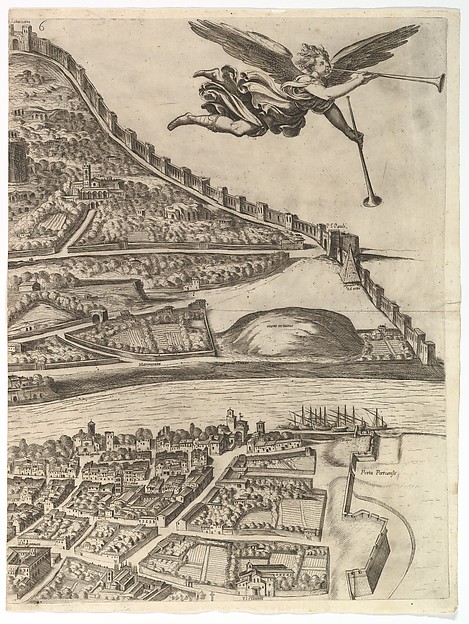
Plan of the City of Rome. Part 6 with the Aurelian city wall, the Porta Portuensis (Ostiensis?) and the Sepulcre of Caius Cestius.
Antonio Tempesta (d. 1630)
1645 · Etching with some engraving, undescribed state.
Cleared · Public Domain
live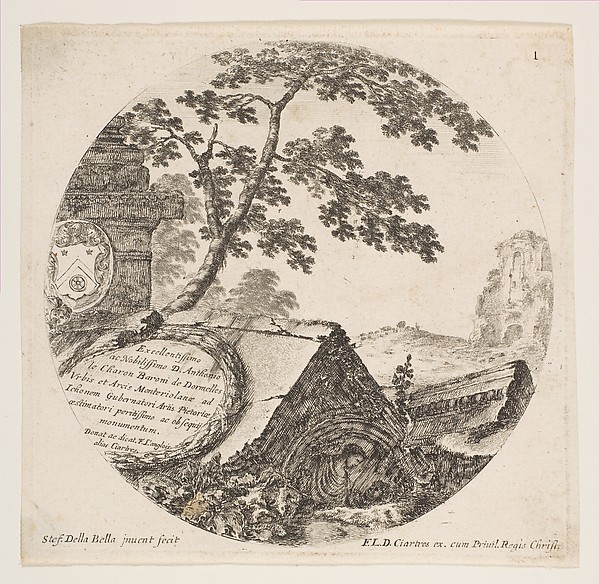
Fragments from ancient monuments, plate 1 from "Roman landscapes and ruins" (Paysages et ruines de Rome)
Stefano della Bella (d. 1664)
ca. 1646 · Etching; fourth state of nine (Talbierska)
Cleared · Public Domain
live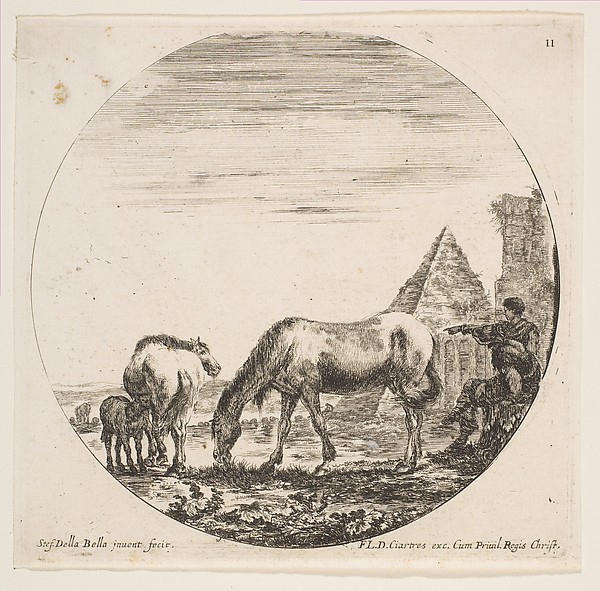
The pyramid of Caius Cestius at right in the background, a horse grazing at center, a foal suckling a mare at left, two shepherds at right, plate 11 from "Roman landscapes and ruins" (Paysages et ruines de Rome)
Stefano della Bella (d. 1664)
ca. 1646 · Etching; fourth state of nine (Talbierska)
Cleared · Public Domain
live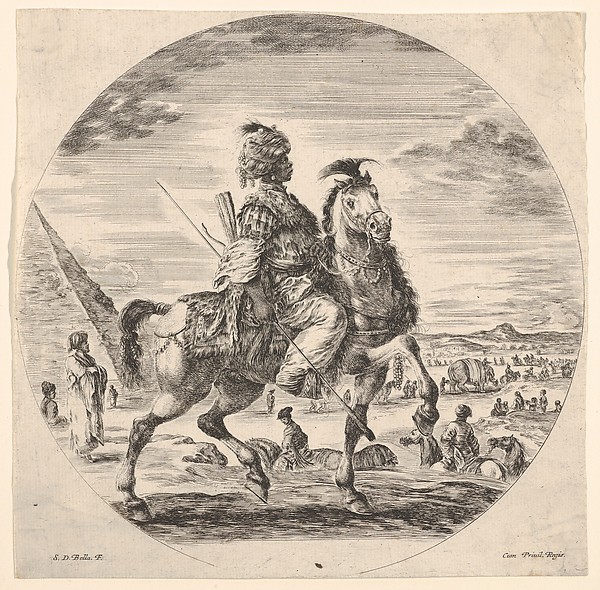
Moorish horseman in profile facing right, in the background a pyramid at left, many figures and an elephant, from "Figures on Horseback" (Cavaliers nègres, polonais et hongrois)
Stefano della Bella (d. 1664)
ca. 1648–53 · Etching; second state of two
Cleared · Public Domain
live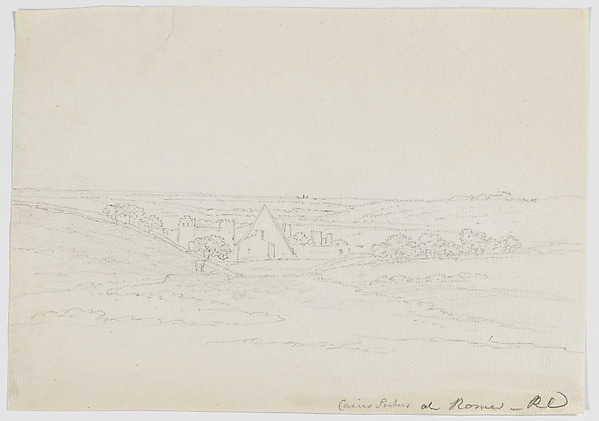
Pyramid of Gaius Cestius, at Rome
Richard Cooper II (d. 1822)
1774–75 · Graphite
Cleared · Public Domain
liveNo open reproduction
The institution withholds the image for this record, which is itself the answer: the picture on their page is not theirs to give away.
Partie de la Piramide de Caius Cestius, Colonne Milliaire, Barque antique de marbre connue sous le nom de la Navicella, Colonne Rostrale, from "Les Plus Beaux Monuments de Rome Ancienne ou Recueil des plus beaux Morceaux de l'Antiquité Romaine qui existent encore"
Jean Barbault (d. 1762)
1761 · Etching
In copyright
liveNo open reproduction
The institution withholds the image for this record, which is itself the answer: the picture on their page is not theirs to give away.
Piramide de Caius Cestius, from "Les Plus Beaux Monuments de Rome Ancienne ou Recueil des plus beaux Morceaux de l'Antiquité Romaine qui existent encore"
Jean Barbault (d. 1762)
1761 · Etching
In copyright
liveNo open reproduction
The institution withholds the image for this record, which is itself the answer: the picture on their page is not theirs to give away.
Recueil de Peintures Antiques trouvées a Rome. Tome Premier-Second.
Pietro Santi Bartoli (d. 1700)
1783, 1787 · Engraving
In copyright
live1. Pin the work
Choose the record and say what you are actually going to do with it. The product re-reads the work live and stores a snapshot, so your docket records what the institution said today.
2. Read the arithmetic
Six weighted factors: the institution's own claim, the creator's term, the publication-age rule, the restrictions in their statement, your use, and whether a credit line is even possible.
3. Seal and export
Record the decision into a SHA-384 chain, then export a dated docket as JSON, CSV or Markdown with the credit line and the seal a colleague can re-verify.