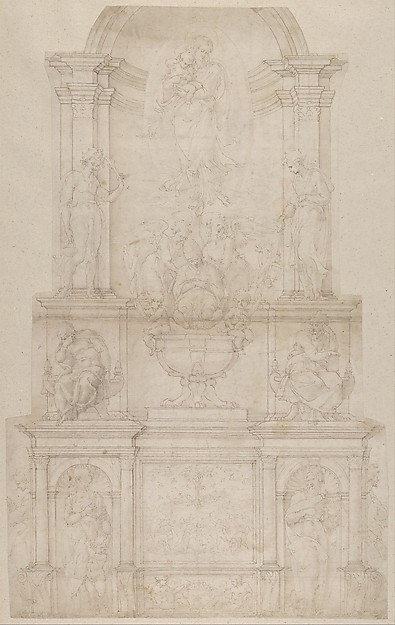
Design for the Tomb of Pope Julius II della Rovere
Michelangelo Buonarroti (d. 1564)
1505–6 · Pen and brown ink, brush and brown wash, over stylus ruling and leadpoint
Cleared · Public Domain
liveThe MetSimilar
Rights clearance desk for images
Museums publish two different things about the same artwork: whether the work is in copyright, and whether their picture of it is. OpenPlate reads both, does the arithmetic on the published term, and shows you the sentence behind every point of the score.
Where this page got its records
578 ms. The Metropolitan Museum of Art, Collection API (Open Access)
394 ms. The Cleveland Museum of Art, Open Access API
2 of 2 providers answered live. 45 matching records exist across the two collections.
Institutions answered newest-first by record, interleaved
Design for the Tomb of Pope Julius II della Rovere
Michelangelo Buonarroti (d. 1564)
1505–6 · Pen and brown ink, brush and brown wash, over stylus ruling and leadpoint
Cleared · Public Domain
live
Studies for the Libyan Sibyl (recto); Studies for the Libyan Sibyl and a small Sketch for a Seated Figure (verso)
Michelangelo Buonarroti (d. 1564)
ca. 1510–11 · Red chalk, with small accents of white chalk on the left shoulder of the figure in the main study (recto); soft black chalk, or less probably charcoal (verso)
Cleared · Public Domain
live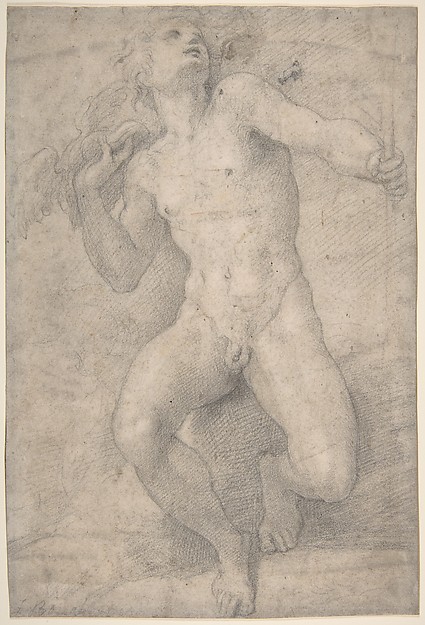
Seated Figure of Mercury
Parmigianino (Girolamo Francesco Maria Mazzola) (d. 1540)
1524–26 · Black chalk
Cleared · Public Domain
live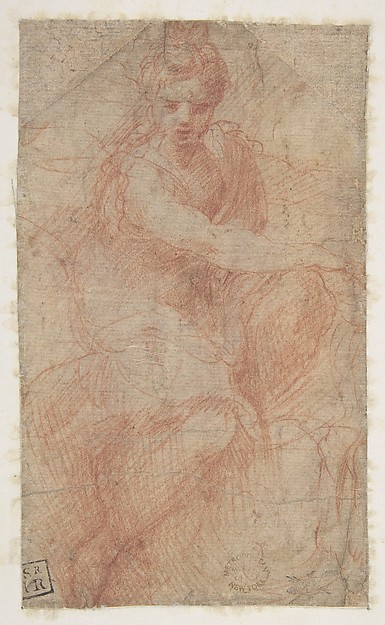
Seated Goddess Diana (recto); Studies of a Nude Male Torso Seen from the Rear, and a leg (verso)
Parmigianino (Girolamo Francesco Maria Mazzola) (d. 1540)
ca. 1522 · Red chalk
Cleared · Public Domain
live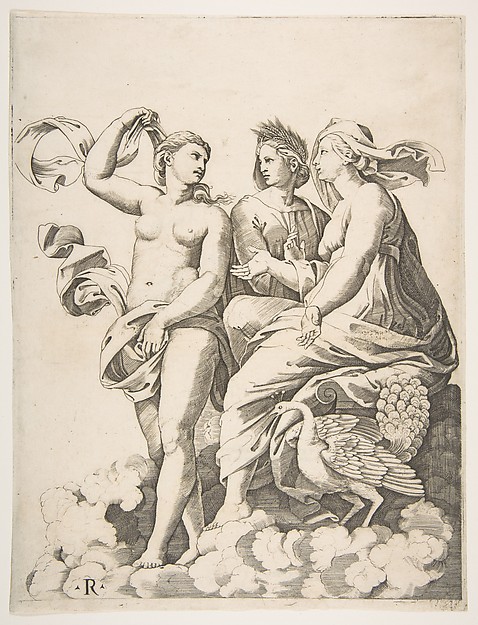
Juno, Ceres, and Psyche in the clouds conversing, Juno seated with a peacock at her feet, Ceres wearing a garland of wheat and Psyche partially naked and holding a cloth
Marco Dente (d. 1527)
ca. 1515–27 · Engraving
Cleared · Public Domain
live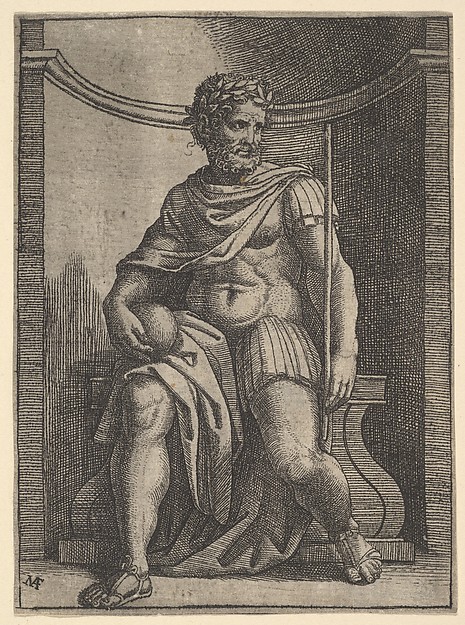
A Roman emperor sitting in a niche holding a globe and sceptre and looking to his left
Marcantonio Raimondi (d. 1534)
ca. 1510–30 · Engraving
Cleared · Public Domain
live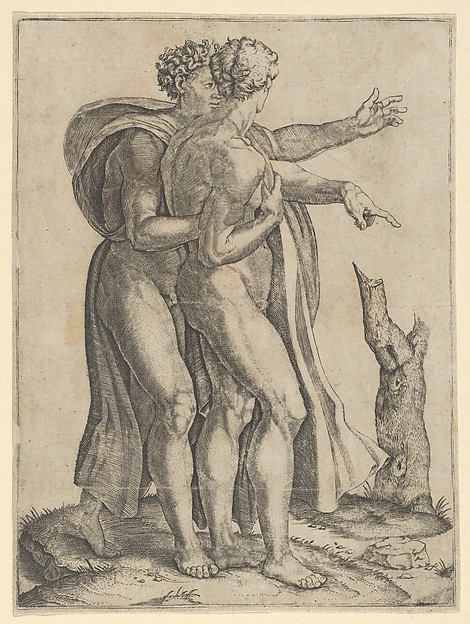
Two naked men, the sons of Noah, standing in profile facing right, both pointing
Marcantonio Raimondi (d. 1534)
ca. 1500–34 · Engraving; only state
Cleared · Public Domain
live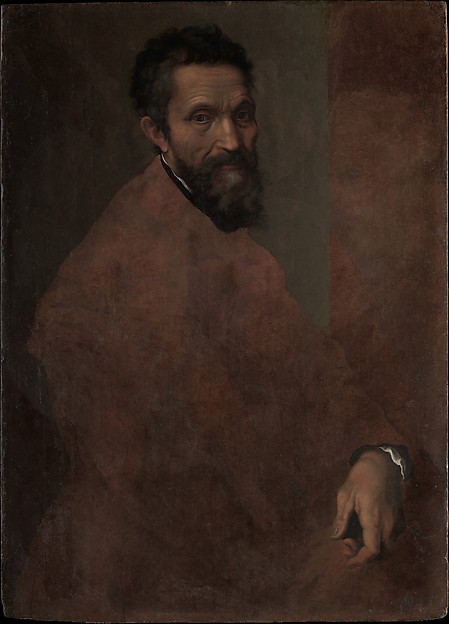
Michelangelo Buonarroti (1475–1564)
Daniele da Volterra (d. 1566)
probably ca. 1545 · Oil on wood
Cleared · Public Domain
live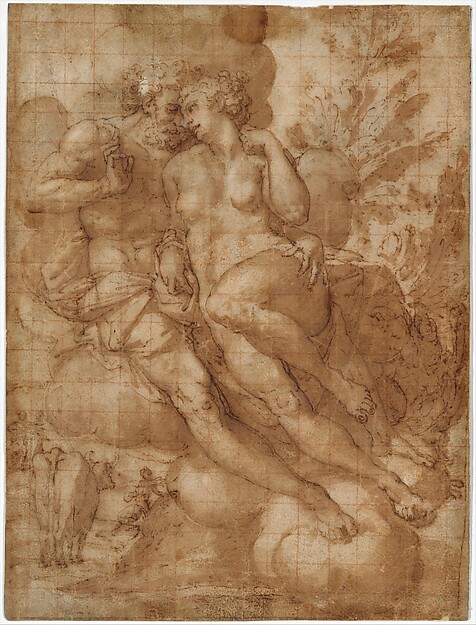
Jupiter and Io (recto); sketch of a male figure stabbing himself in the chest (verso)
Francesco Salviati (Francesco de' Rossi) (d. 1563)
mid-16th century · Pen and brown ink, brush and brown wash, over traces of black chalk; squared in red chalk (recto); pen and gray ink (verso)
Cleared · Public Domain
live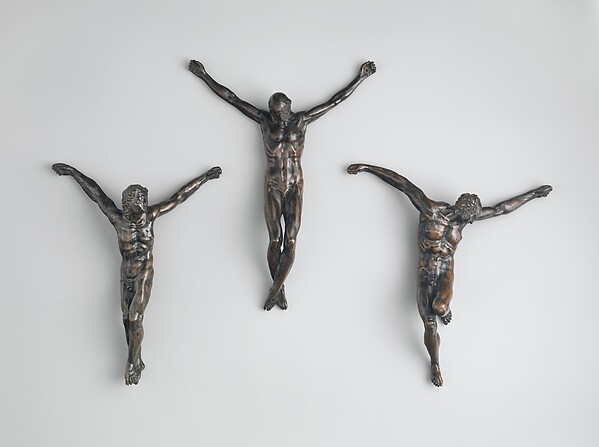
Christ and the Two Thieves Crucified
Michelangelo Buonarroti (d. 1564)
ca. 1560–70 · Bronze
Cleared · Public Domain
live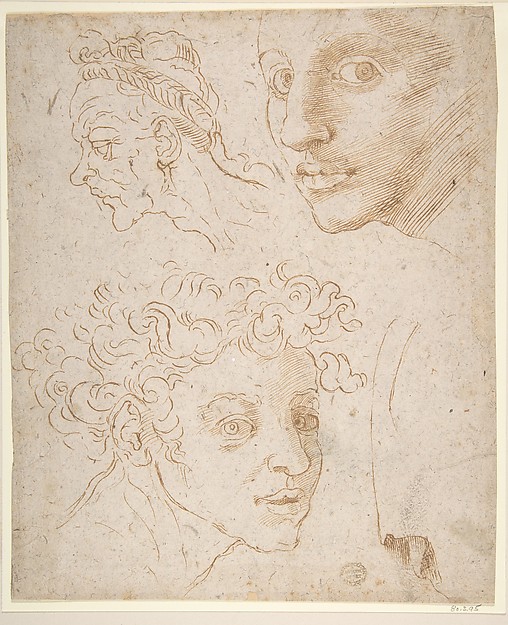
Three Heads after Michelangelo's Frescoes in the Sistine Chapel
Anonymous, Italian, 16th century (d. 1600)
16th century · Pen and brown ink
Cleared · Public Domain
live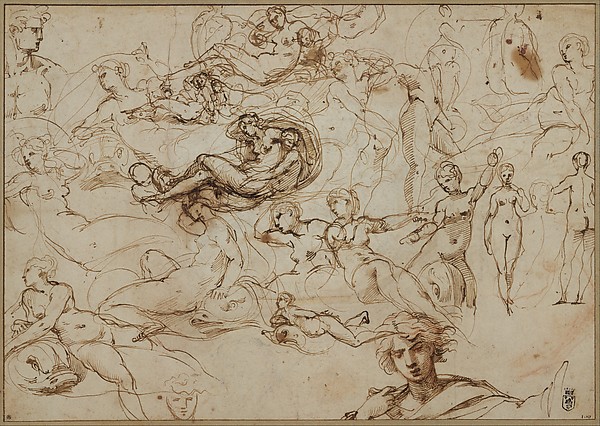
Figure Studies for Various Female and Male Figures (recto); Threes Amors in the Garden of Venus (verso)
Agostino Carracci (d. 1602)
1600–02 · Pen and brown ink, some sketches over red chalk, some faint scribbles in charcoal (recto); pen and brown ink, brush and gray-blue wash (verso)
Cleared · Public Domain
live1. Pin the work
Choose the record and say what you are actually going to do with it. The product re-reads the work live and stores a snapshot, so your docket records what the institution said today.
2. Read the arithmetic
Six weighted factors: the institution's own claim, the creator's term, the publication-age rule, the restrictions in their statement, your use, and whether a credit line is even possible.
3. Seal and export
Record the decision into a SHA-384 chain, then export a dated docket as JSON, CSV or Markdown with the credit line and the seal a colleague can re-verify.