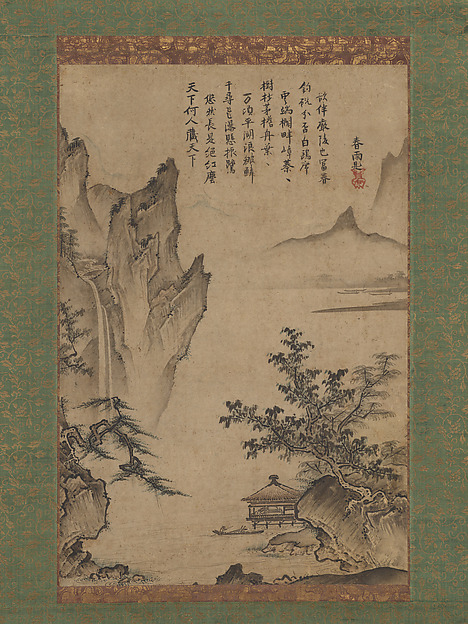
Landscape with Pavilion
Kenkō Shōkei 賢江祥啓 (d. 1523)
1478–80 · Hanging scroll; ink and color on paper
Cleared · Public Domain
liveThe MetSimilar
Rights clearance desk for images
Museums publish two different things about the same artwork: whether the work is in copyright, and whether their picture of it is. OpenPlate reads both, does the arithmetic on the published term, and shows you the sentence behind every point of the score.
Where this page got its records
3238 ms. The Metropolitan Museum of Art, Collection API (Open Access)
284 ms. The Cleveland Museum of Art, Open Access API
2 of 2 providers answered live. 8 matching records exist across the two collections.
Institutions answered newest-first by record, interleaved
Landscape with Pavilion
Kenkō Shōkei 賢江祥啓 (d. 1523)
1478–80 · Hanging scroll; ink and color on paper
Cleared · Public Domain
live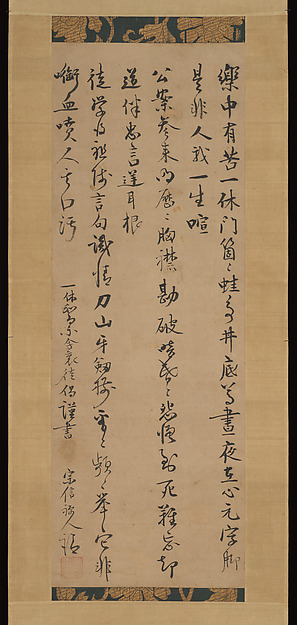
Three Poetic Verses of Teaching by Ikkyū Given to His Disciples
Motsurin Jōtō (Bokusai) (d. 1492)
late 15th century · Hanging scroll; ink on paper
Cleared · Public Domain
live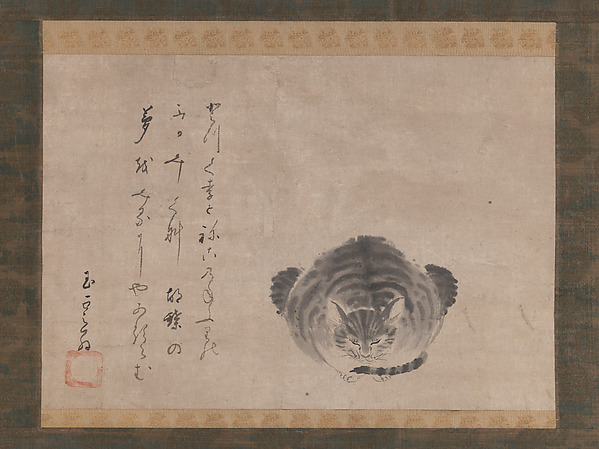
Dreaming Cat
Hōzōbō Shinkai (d. 1688)
mid-17th century · Hanging scroll; ink on paper
Cleared · Public Domain
live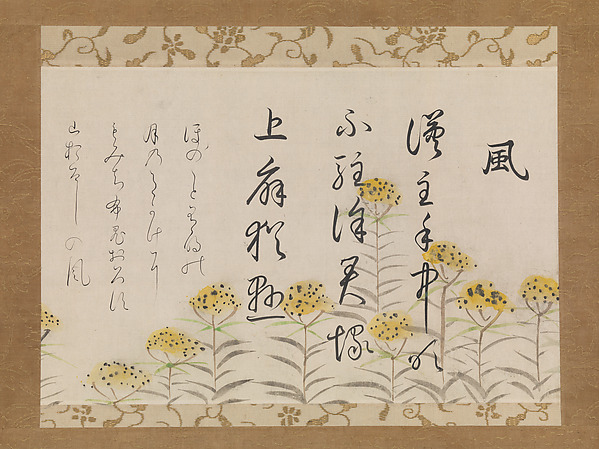
Poems on “Wind” from Japanese and Chinese and Poems to Sing
Horie Yorinao (Tōgen) (d. 1693)
1670 · Hanging scroll; ink and color on paper
Cleared · Public Domain
live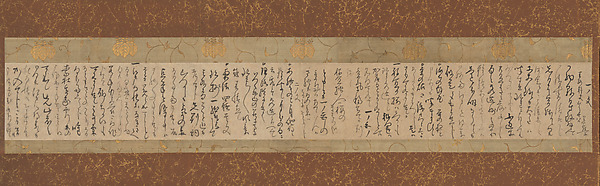
Letter to Yamagishi Hanzan
Matsuo Bashō 松尾芭蕉 (d. 1694)
dated 1685 (Jōkyō 2) · Letter mounted as a hanging scroll: ink on paper
Cleared · Public Domain
live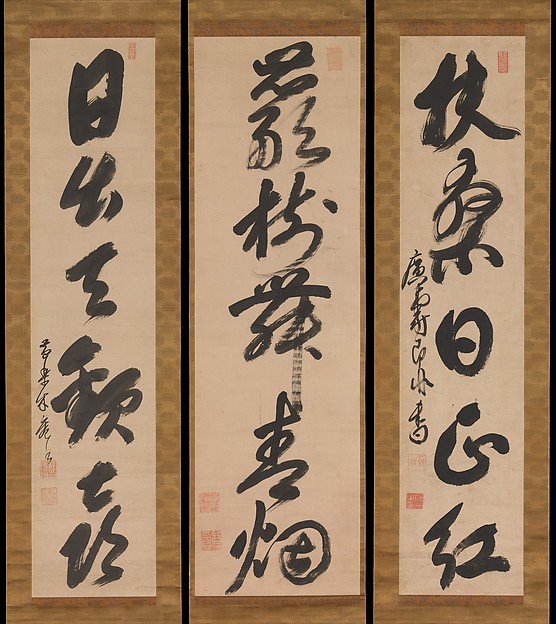
Poetic Phrases
Mu'an Xingtao (Mokuan Shōtō) (d. 1684)
17th century · Set of three hanging scrolls; ink on paper
Cleared · Public Domain
live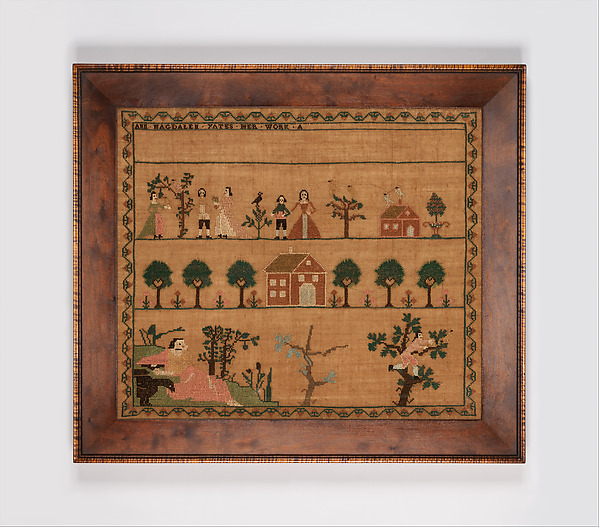
Sampler
Ann Magdalen Yates
ca. 1802 · Silk embroidery on linen
Cleared · Public Domain
live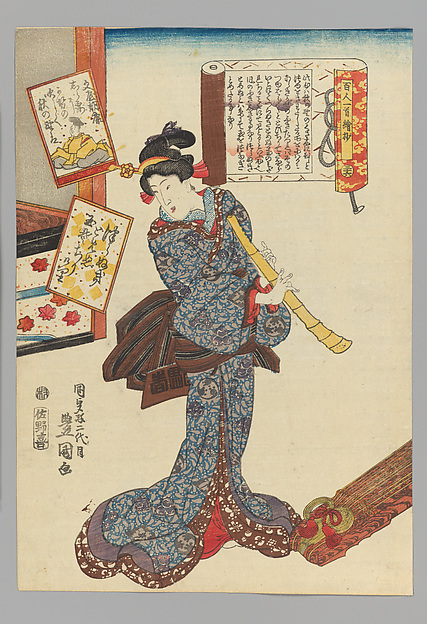
Bun’ya no Asayasu (no. 36), from the series A Pictorial Commentary on One Hundred Poems by One Hundred Poets (Hyakunin isshu eshō: Bun'ya no Asayasu)
Utagawa Kunisada (d. 1864)
ca. 1844 · Woodblock print (nishiki-e); vertical ōban; ink and color on paper
Cleared · Public Domain
live1. Pin the work
Choose the record and say what you are actually going to do with it. The product re-reads the work live and stores a snapshot, so your docket records what the institution said today.
2. Read the arithmetic
Six weighted factors: the institution's own claim, the creator's term, the publication-age rule, the restrictions in their statement, your use, and whether a credit line is even possible.
3. Seal and export
Record the decision into a SHA-384 chain, then export a dated docket as JSON, CSV or Markdown with the credit line and the seal a colleague can re-verify.