
Gemellion (Hand Basin) with a Knight on Horseback
Unrecorded maker
ca. 1250–75 · Champlevé enamel on gilded copper
Cleared · Public Domain
liveThe MetSimilar
Rights clearance desk for images
Museums publish two different things about the same artwork: whether the work is in copyright, and whether their picture of it is. OpenPlate reads both, does the arithmetic on the published term, and shows you the sentence behind every point of the score.
Where this page got its records
171 ms. The Metropolitan Museum of Art, Collection API (Open Access)
374 ms. The Cleveland Museum of Art, Open Access API
2 of 2 providers answered live. 60 matching records exist across the two collections.
Institutions answered newest-first by record, interleaved
Gemellion (Hand Basin) with a Knight on Horseback
Unrecorded maker
ca. 1250–75 · Champlevé enamel on gilded copper
Cleared · Public Domain
live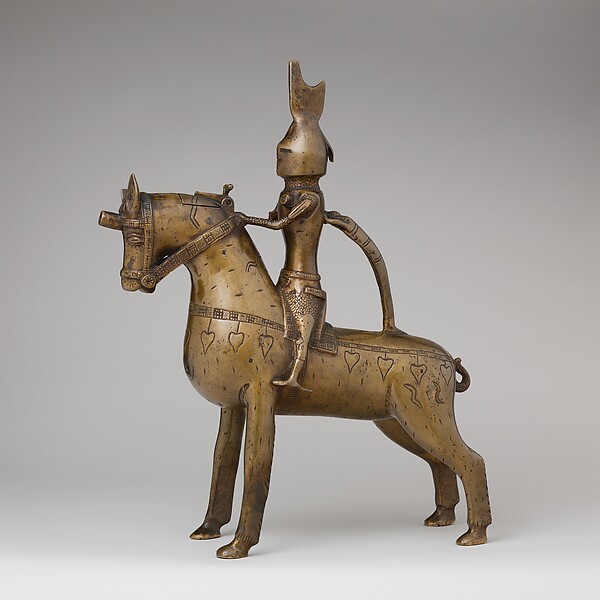
Aquamanile in the Form of a Knight on Horseback
Unrecorded maker
ca. 1350 · Bronze; Quaternary copper alloy with a high content of zinc (approx. 73% copper, approx. 15% zinc, approx. 7% lead, approx. 3% tin) with natural patina, hollow cast; remnants of the clay core and iron armature in the legs
Cleared · Public Domain
live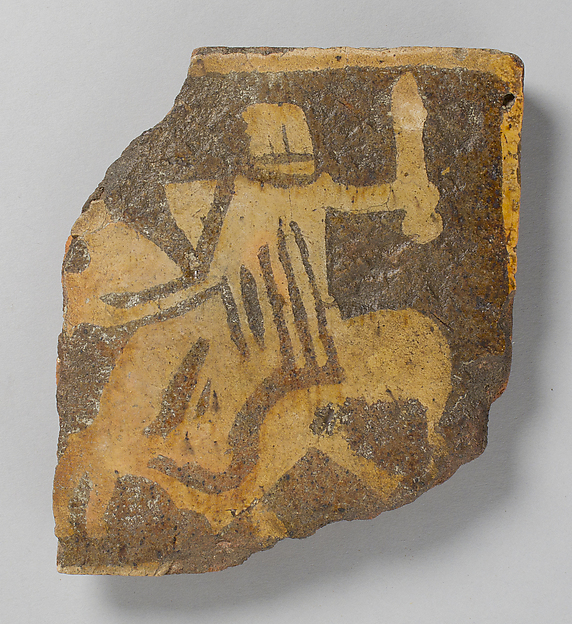
Tile, with helmeted knight on horseback
Unrecorded maker
14th or 15th century · Fired earthenware, with slip decoration and lead glaze
Cleared · Public Domain
live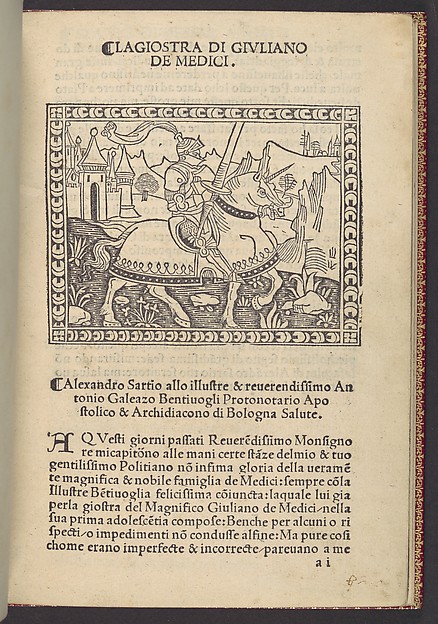
La Giostra di Giuliano de Medici...
Angelo Poliziano (d. 1494)
ca. 1495–1500 · Printed book with woodcut illustrations
Cleared · Public Domain
live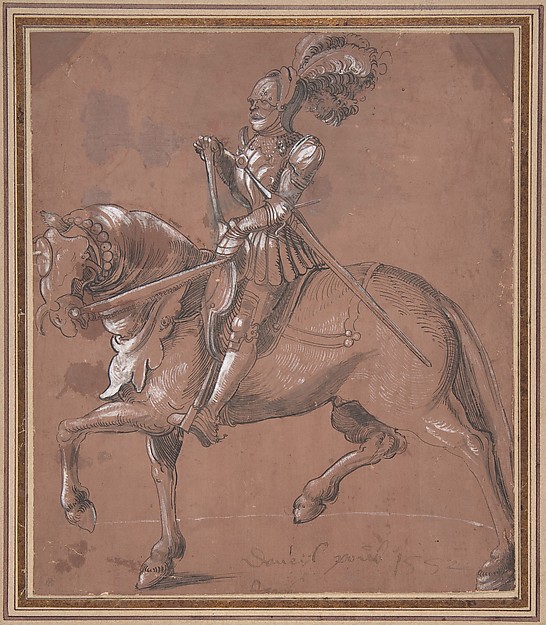
Knight on Horseback
Anonymous, German, 16th century (d. 1600)
ca. 1520 · Pen and black ink, brush and gray wash, with white heightening
Cleared · Public Domain
live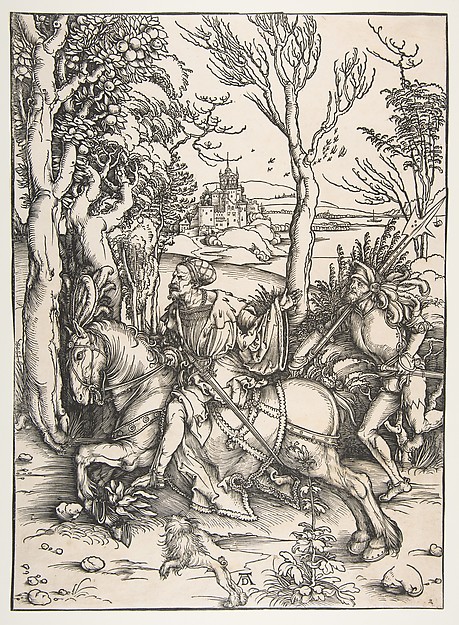
The Knight on the Horseback with Lansquenet
Albrecht Dürer (d. 1528)
n.d. · Woodcut
Cleared · Public Domain
live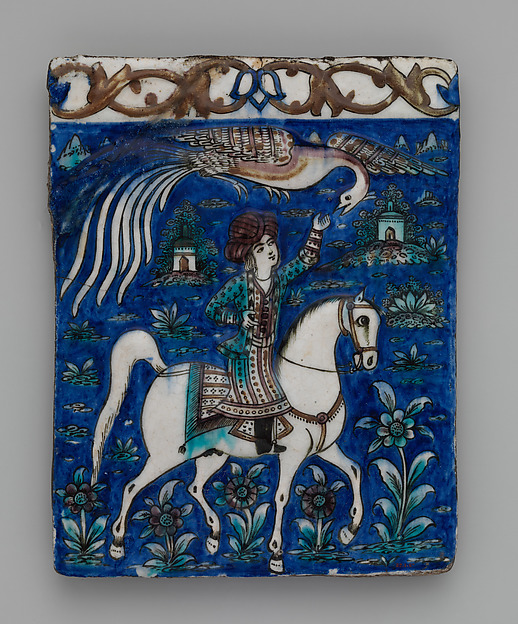
Tile with an Image of a Prince on Horseback
Unrecorded maker
second half 19th century · Stonepaste; molded, polychrome painted under transparent glaze
Cleared · Public Domain
live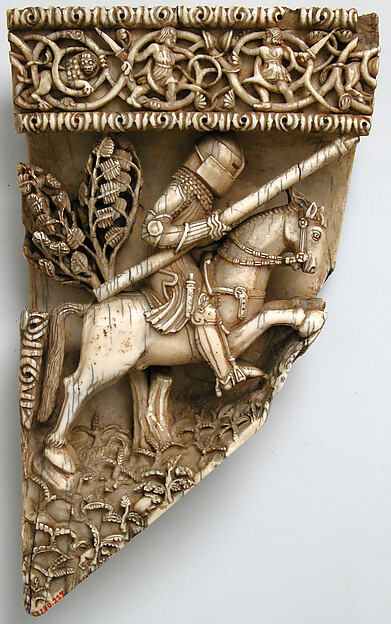
Fragment with Knight on Horseback
Unrecorded maker
19th century · Elephant ivory
Cleared · Public Domain
liveNo open reproduction
The institution withholds the image for this record, which is itself the answer: the picture on their page is not theirs to give away.
Knight On Horseback
Unrecorded maker
13th century · Earthenware
In copyright
liveNo open reproduction
The institution withholds the image for this record, which is itself the answer: the picture on their page is not theirs to give away.
Knight in Armor on Horseback
Edward Vernon Utterson (d. 1856)
1806–7 · Pen lithograph on yellow-ocher aquatint mount
In copyright
liveNo open reproduction
The institution withholds the image for this record, which is itself the answer: the picture on their page is not theirs to give away.
A gentle Knight, from the Faerie Queene, Book I, Canto 1, from "The Portfolio"
George Percy Jacomb-Hood (d. 1937)
December 1880 · Etching
In copyright
live1. Pin the work
Choose the record and say what you are actually going to do with it. The product re-reads the work live and stores a snapshot, so your docket records what the institution said today.
2. Read the arithmetic
Six weighted factors: the institution's own claim, the creator's term, the publication-age rule, the restrictions in their statement, your use, and whether a credit line is even possible.
3. Seal and export
Record the decision into a SHA-384 chain, then export a dated docket as JSON, CSV or Markdown with the credit line and the seal a colleague can re-verify.