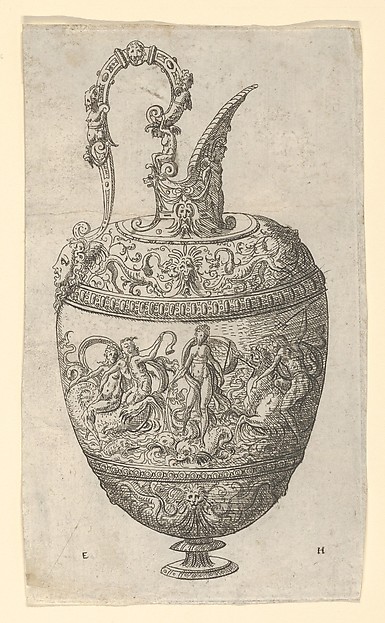
Design for a Ewer
Erasmus Hornick (d. 1583)
1565 · Etching
Cleared · Public Domain
liveThe MetSimilar
Rights clearance desk for images
Museums publish two different things about the same artwork: whether the work is in copyright, and whether their picture of it is. OpenPlate reads both, does the arithmetic on the published term, and shows you the sentence behind every point of the score.
Where this page got its records
650 ms. The Metropolitan Museum of Art, Collection API (Open Access)
281 ms. The Cleveland Museum of Art, Open Access API
2 of 2 providers answered live. 1,306 matching records exist across the two collections.
Institutions answered newest-first by record, interleaved
Design for a Ewer
Erasmus Hornick (d. 1583)
1565 · Etching
Cleared · Public Domain
live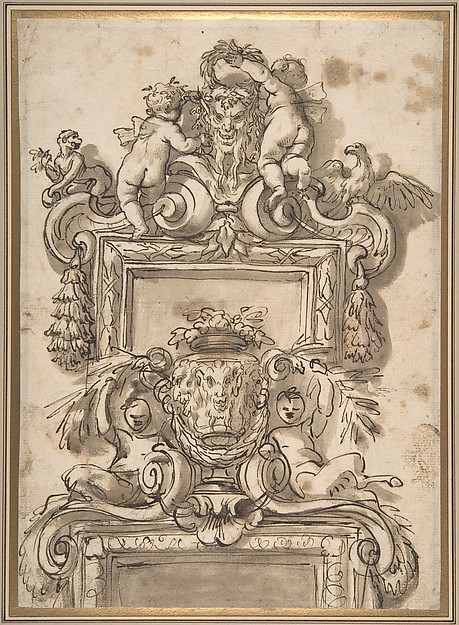
Design for an Overdoor Decoration (recto); Rinceaux (verso)
Gregorio de' Ferrari (d. 1726)
ca. 1670–90 · Pen and brown ink, brush and brown wash, over traces of black chalk (recto); rinceaux in red chalk (verso)
Cleared · Public Domain
live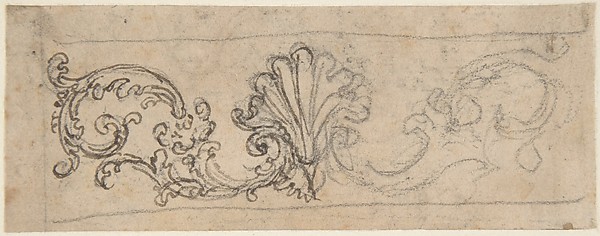
Design for a Frieze Decorated With a Palmette and Tendrils (recto); Two Designs for a Rosette (verso)
Giovanni Battista Foggini (d. 1725)
1672–1725 · Pen and brown ink, over black chalk
Cleared · Public Domain
live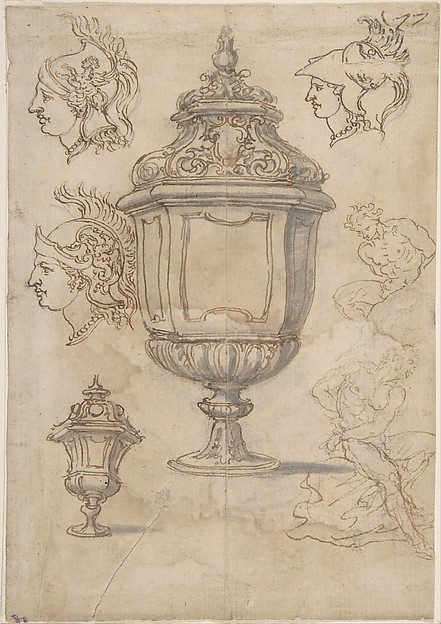
Sheet with sketches and designs for two vases, three classical heads en profil and two slave figures (recto); Design for a Vase and a Nude Male Figure (verso)
Giovanni Battista Foggini (d. 1725)
1672–1725 · Pen and brown ink, brush and gray wash over black chalk (recto); pen and brown ink, brush and gray wash, black chalk (verso)
Cleared · Public Domain
live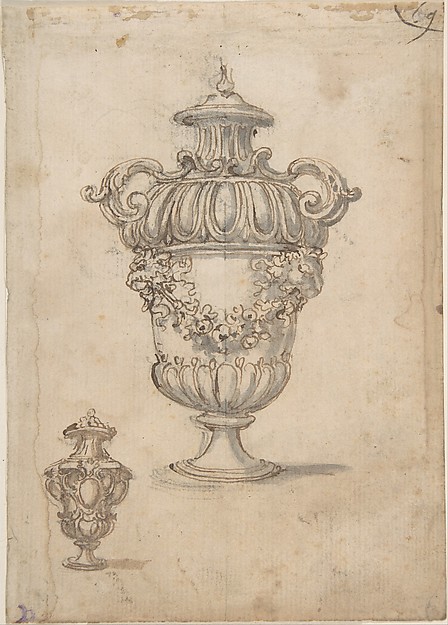
Two Designs for Vases (recto); Design for Candle Stick (?) (verso)
Giovanni Battista Foggini (d. 1725)
1672–1725 · Pen and brown ink, brush and brown and gray wash, over black chalk; traces of a vertical black chalk line through the center of the design (recto); graphite (verso)
Cleared · Public Domain
live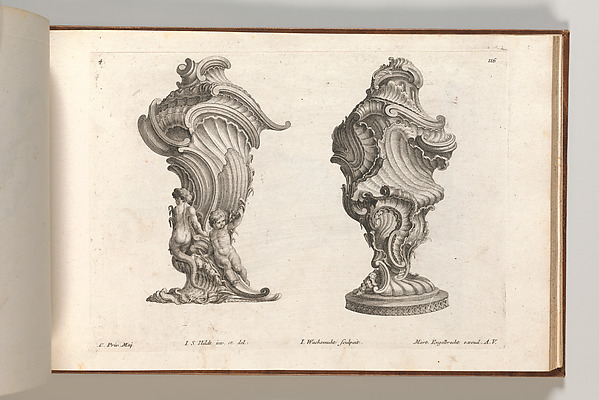
Designs for Two Lidded Vases, plate 4 from "Schöne und auf die neueste Facon inventierte Gefäße und Krüge"
I.S. Hildt
printed ca. 1750–56 · Etching
Cleared · Public Domain
live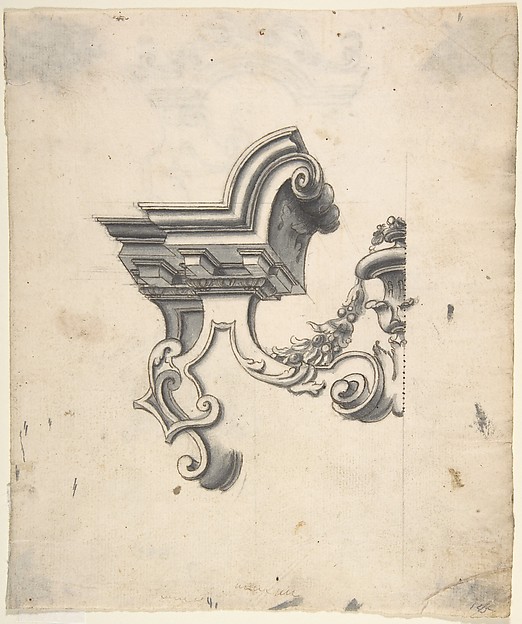
One Half of a Design for an Overdoor (?) (recto); Two Designs for Altars, one for a Capital (?) (verso)
Anonymous, Italian, Piedmontese, 18th century (d. 1800)
1700–1780 · Pen and brown ink, brush and gray wash, over ruled construction in leadpoint or graphite (recto); leadpoint or graphite (verso); some framing outlines
Cleared · Public Domain
live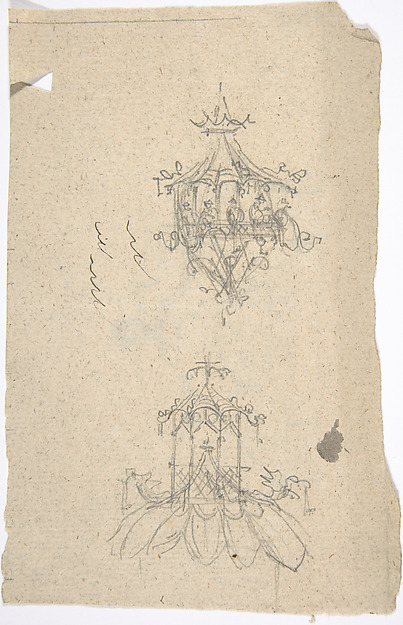
Two Designs for Chinese Lanterns (recto); Design for a Neoclassical Tomb or Monument with Sphinxes (verso)
Anonymous, French, 18th century (d. 1800)
ca. 1768–90 · Graphite
Cleared · Public Domain
live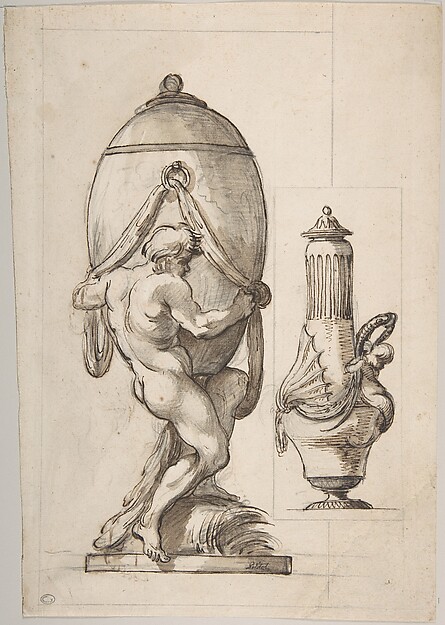
Two Designs for Vases (recto); Variant Design for a Vase (verso)
Ennemond Alexandre Petitot (d. 1801)
1801 · Pen and brown ink, brush and brown wash, over black chalk underdrawing (recto); pen and brown ink (verso)
Cleared · Public Domain
live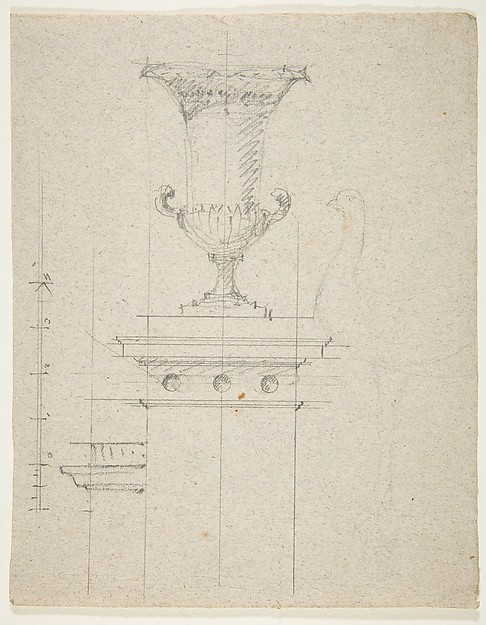
Design for an urn (verso); Designs for two urns (recto)
Anonymous, French, 19th century (d. 1900)
19th century · Black chalk
Cleared · Public Domain
liveNo open reproduction
The institution withholds the image for this record, which is itself the answer: the picture on their page is not theirs to give away.
Design for two Gold Earrings
Anonymous, French, 19th century (d. 1900)
ca. 1870–1900 · Lithograph, ink, gouache and gold pigment
In copyright
liveNo open reproduction
The institution withholds the image for this record, which is itself the answer: the picture on their page is not theirs to give away.
Design for a Bulbous Vase with Abstract Female Figures (recto); Bull statuette (verso)
René Buthaud (d. 1986)
1920–30 · Watercolor over graphite underdrawing, three additional sketches in graphite (recto); gouache, ink and graphite (verso)
In copyright
live1. Pin the work
Choose the record and say what you are actually going to do with it. The product re-reads the work live and stores a snapshot, so your docket records what the institution said today.
2. Read the arithmetic
Six weighted factors: the institution's own claim, the creator's term, the publication-age rule, the restrictions in their statement, your use, and whether a credit line is even possible.
3. Seal and export
Record the decision into a SHA-384 chain, then export a dated docket as JSON, CSV or Markdown with the credit line and the seal a colleague can re-verify.