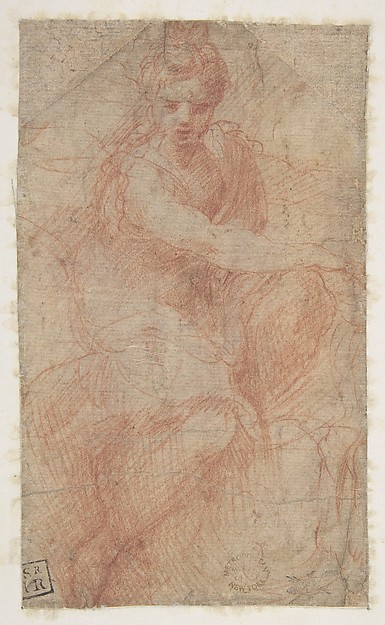
Seated Goddess Diana (recto); Studies of a Nude Male Torso Seen from the Rear, and a leg (verso)
Parmigianino (Girolamo Francesco Maria Mazzola) (d. 1540)
ca. 1522 · Red chalk
Cleared · Public Domain
liveThe MetSimilar
Rights clearance desk for images
Museums publish two different things about the same artwork: whether the work is in copyright, and whether their picture of it is. OpenPlate reads both, does the arithmetic on the published term, and shows you the sentence behind every point of the score.
Where this page got its records
490 ms. The Metropolitan Museum of Art, Collection API (Open Access)
339 ms. The Cleveland Museum of Art, Open Access API
2 of 2 providers answered live. 335 matching records exist across the two collections.
Institutions answered newest-first by record, interleaved
Seated Goddess Diana (recto); Studies of a Nude Male Torso Seen from the Rear, and a leg (verso)
Parmigianino (Girolamo Francesco Maria Mazzola) (d. 1540)
ca. 1522 · Red chalk
Cleared · Public Domain
live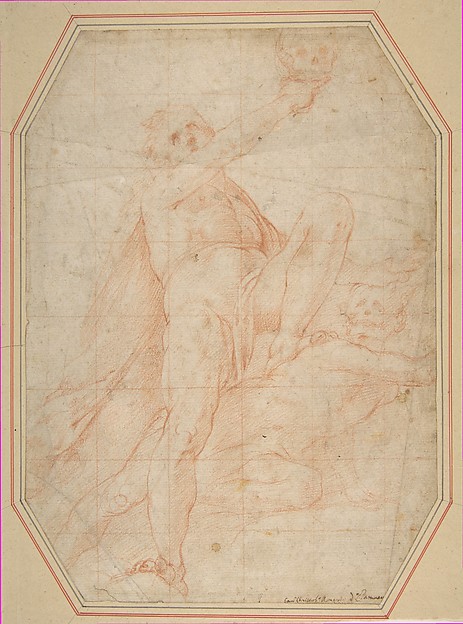
Two Nudes Seen from Below (recto); Male Figure with Upraised Arm (verso)
Pomarancio (Cristoforo Roncalli) (d. 1626)
1580–82 · Red chalk (recto and verso); squared in red chalk
Cleared · Public Domain
live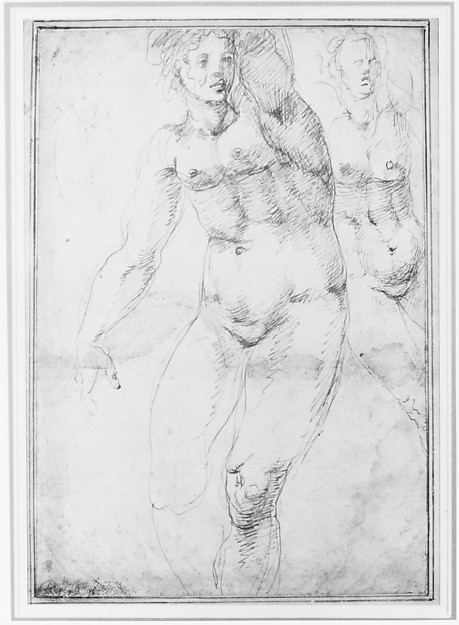
Studies for a Nude Woman Seen from the Front (recto); Four Standing Male Nudes, Venus, and Cupid (verso)
Anonymous, Italian, Florentine, 16th century (d. 1600)
16th century · Pen and brown ink
Cleared · Public Domain
live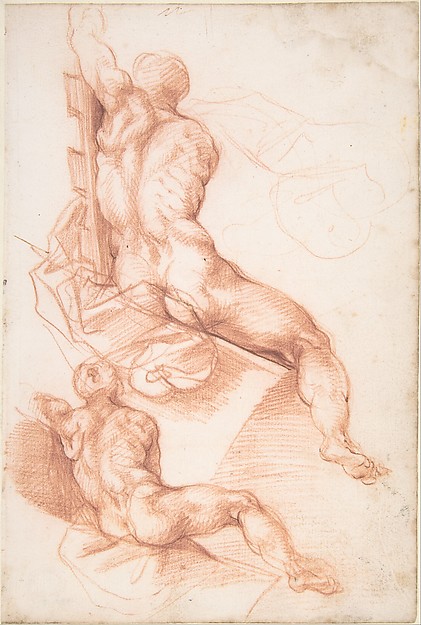
Two Studies of a Seated Male Nude Seen from the Back
Cherubino Alberti (Zaccaria Mattia) (d. 1615)
1596–1602 · Red chalk, with some contours reinforced in pen and brown ink. Upper right corner replaced
Cleared · Public Domain
live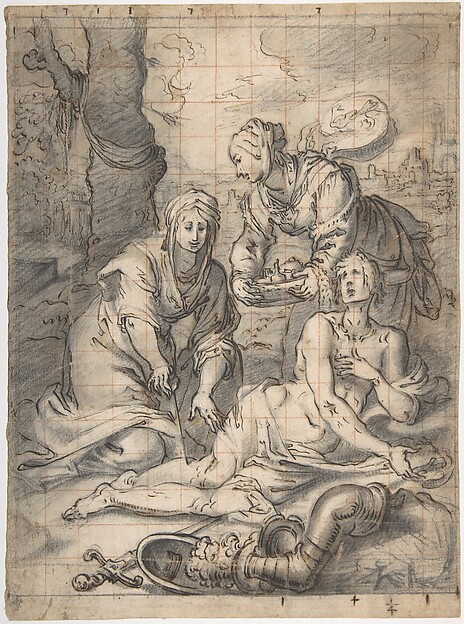
Two Women Annointing the Wounds of Saint Sebastian (recto); Study of a Nude Male Figure (verso)
Giovanni Biliverti (d. 1644)
1585–1644 · Pen and brown ink, brush and brown wash, over black chalk (recto); red chalk (verso); squared in red chalk
Cleared · Public Domain
live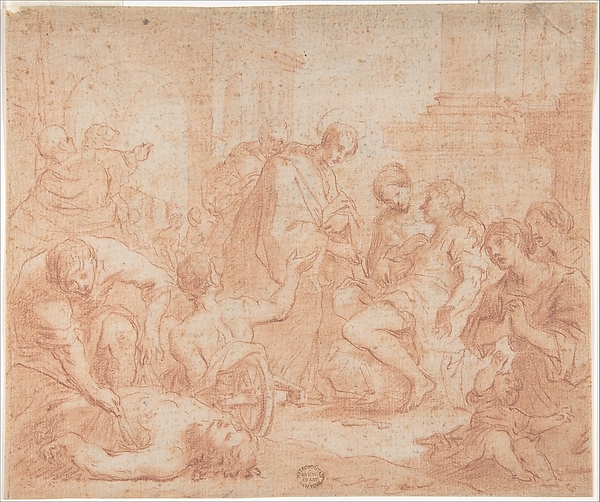
A Saint Healing the Sick (recto); Upper Body of Nude Male with Outstretched Arms, seen from the rear (verso)
Ercole Procaccini The Younger (d. 1680)
17th century · Red chalk on cream paper (recto); black chalk (verso)
Cleared · Public Domain
live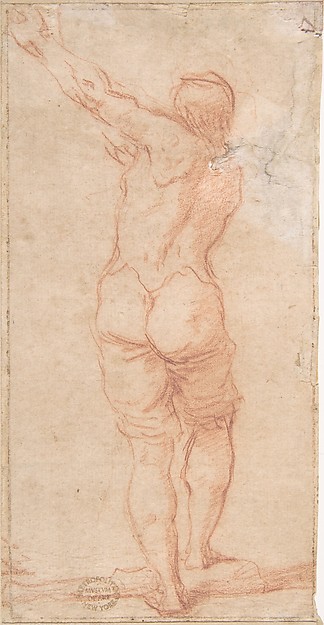
Male Figure with Arms Raised to the Left Seen From the Rear (recto); Male Figures with Arms Raised to the Left (front view of figure on recto) (verso)
Anonymous, Italian, Bolognese, 17th century (d. 1700)
17th century · Red chalk on light brown paper; framing lines in pen and brown ink
Cleared · Public Domain
live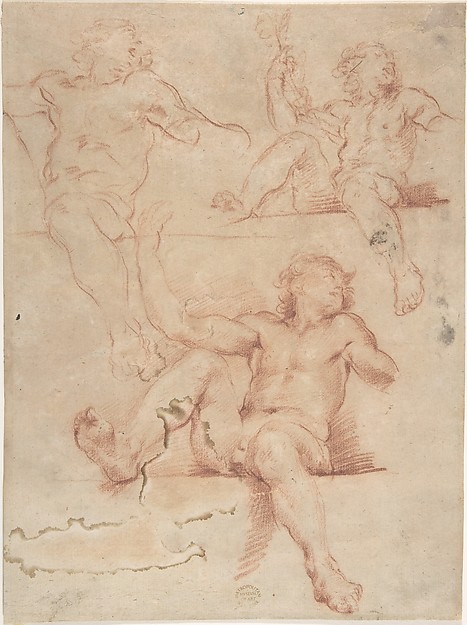
Three Studies of Seated Nude Male with Raised Arm, Seen from Below
Anonymous, Italian, Bolognese, 17th century (d. 1700)
17th century · Red chalk, on light brown paper; partly reworked with red crayon
Cleared · Public Domain
live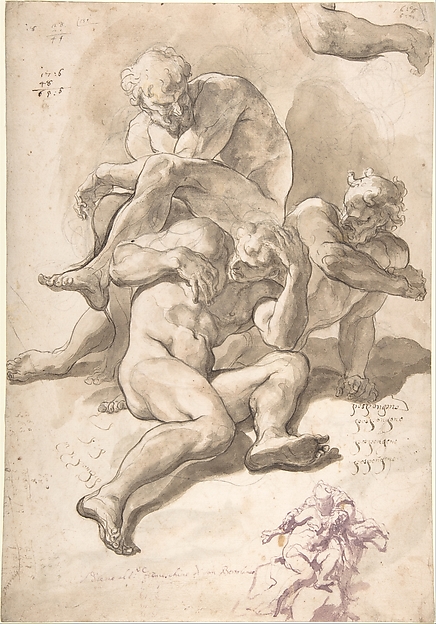
Studies of Three Naked Men, a Right Arm and a Nude Figure Supported by Another (recto); Studies of a Figure with Left Arm Upraised, a Leg, and Putti with Foliage (verso)
Paolo Pagani (d. 1716)
1700–1710 · Pen and brown ink, brush and brown wash, over black chalk (the three struggling figures) (recto); pen and purple ink, brush and purple wash (the two figures at lower right) (recto); pen and brown ink, brush and brown wash, over black chalk (verso)
Cleared · Public Domain
live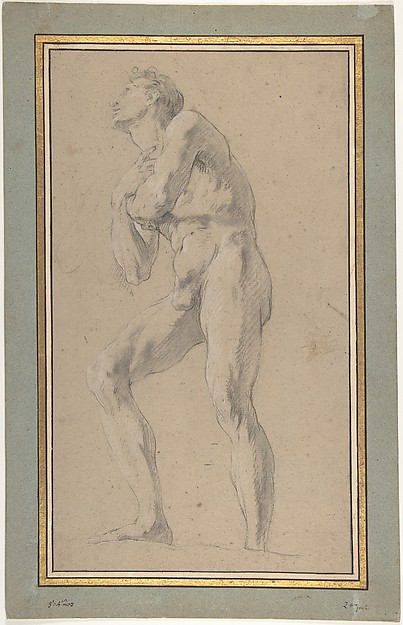
Standing Male Nude Seen from Below
François Le Moyne (d. 1737)
ca. 1730 · Black chalk, stumping, heightened with white, on beige paper. Framing lines in pen and brown ink.
Cleared · Public Domain
live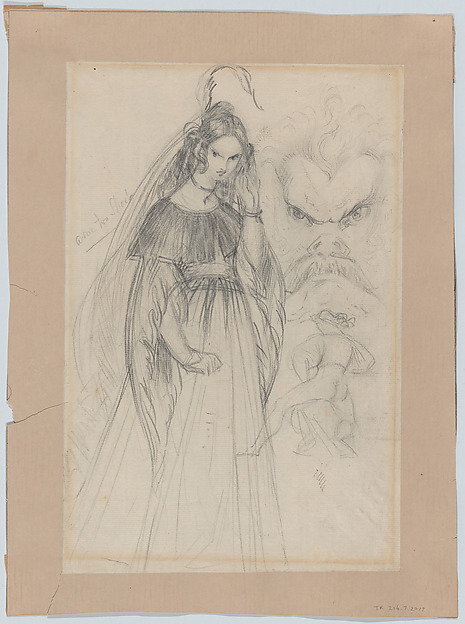
A Femme Fatale, a mask-like male face, and male figure seen from behind (recto). An angel descending stairs (verso)
Theodor Richard Edward von Holst (d. 1844)
1836–44 · Graphite
Cleared · Public Domain
liveNo open reproduction
The institution withholds the image for this record, which is itself the answer: the picture on their page is not theirs to give away.
Studies for Hercules Holding a Club Seen in Frontal View, Male Nude Unsheathing a Sword, and the Movements of Water (recto); Study for Hercules Holding a Club Seen in Rear View (verso)
Leonardo da Vinci (d. 1519)
ca. 1506–8 · Pen and brown ink; soft black chalk or charcoal (recto); soft black chalk or charcoal (verso)
In copyright
live1. Pin the work
Choose the record and say what you are actually going to do with it. The product re-reads the work live and stores a snapshot, so your docket records what the institution said today.
2. Read the arithmetic
Six weighted factors: the institution's own claim, the creator's term, the publication-age rule, the restrictions in their statement, your use, and whether a credit line is even possible.
3. Seal and export
Record the decision into a SHA-384 chain, then export a dated docket as JSON, CSV or Markdown with the credit line and the seal a colleague can re-verify.