Skip to content
OpenPlate

Rights clearance desk for images

A painting can be out of copyright and thephotograph of it can still be protected.

Museums publish two different things about the same artwork: whether the work is in copyright, and whether their picture of it is. OpenPlate reads both, does the arithmetic on the published term, and shows you the sentence behind every point of the score.

Where this page got its records

  • The Metlive

    821 ms. The Metropolitan Museum of Art, Collection API (Open Access)

  • Clevelandlive

    317 ms. The Cleveland Museum of Art, Open Access API

Your defaults

United States, editorial use, 10,000 reach.

Change on the terms page

2 of 2 providers answered live. 2,778 matching records exist across the two collections.

Results for "Two men standing ankle-deep in a body of"10 records

Institutions answered newest-first by record, interleaved

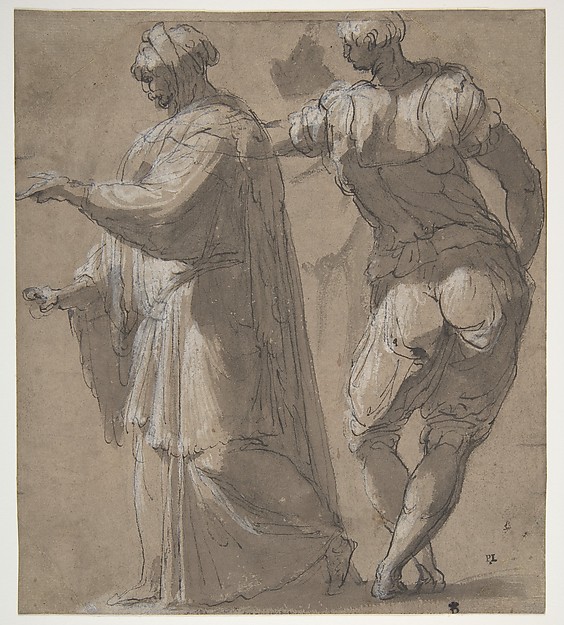
Two Standing Male Figures by Perino del Vaga (Pietro Buonaccorsi), The Metropolitan Museum of Art

Two Standing Male Figures

Perino del Vaga (Pietro Buonaccorsi) (d. 1547)

1501–47 · Pen and dark brown ink, brush and brown wash, highlighted with white gouache, over traces of black chalk, on brownish paper

Cleared · Public Domain

live
The MetSimilar
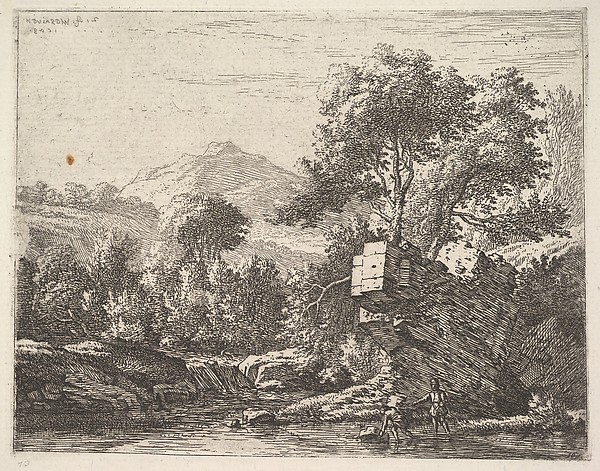
Two men standing ankle-deep in a body of water with a rocky outcrop behind them, to the left a rocky bank, trees and a hilltop beyond by Karel Dujardin, The Metropolitan Museum of Art

Two men standing ankle-deep in a body of water with a rocky outcrop behind them, to the left a rocky bank, trees and a hilltop beyond

Karel Dujardin (d. 1678)

1658 · Etching

Cleared · Public Domain

live
The MetSimilar
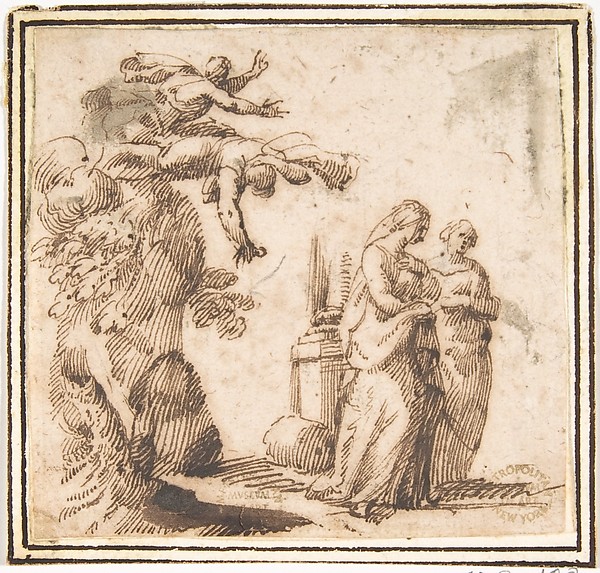
Unidentified Subject (Two Falling Figures and Two Standing Women in a Landscape) by Francesco Allegrini, The Metropolitan Museum of Art

Unidentified Subject (Two Falling Figures and Two Standing Women in a Landscape)

Francesco Allegrini (d. 1679)

1624–63 · Pen and brown ink; framing lines in pen and brown ink on mount

Cleared · Public Domain

live
The MetSimilar
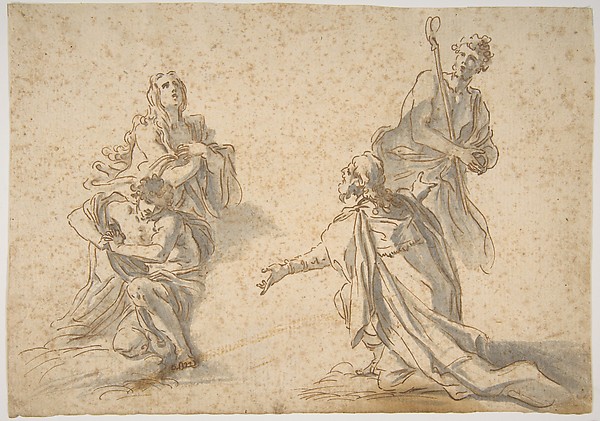
Two Kneeling and Two Standing Figures by Nicola Maria Rossi, The Metropolitan Museum of Art

Two Kneeling and Two Standing Figures

Nicola Maria Rossi (d. 1758)

1690–1758 · Pen, brown ink, gray wash, over black chalk. Scribbled figure studies in pen and black chalk on verso, including a young man and a bishop in a mitre

Cleared · Public Domain

live
The MetSimilar
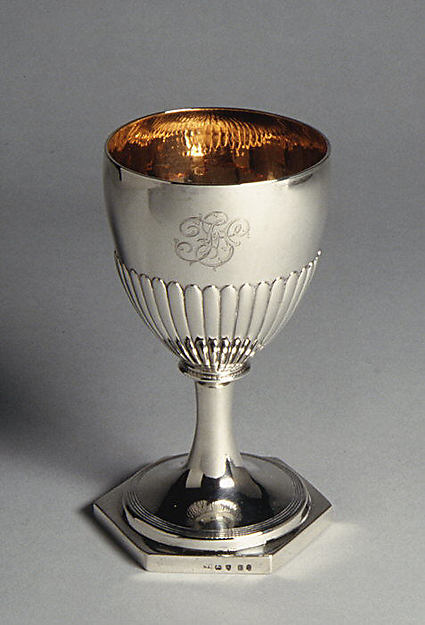
Standing cup by Naphtäli Hart, The Metropolitan Museum of Art

Standing cup

Naphtäli Hart (d. 1834)

1800–1801 · Silver

Cleared · Public Domain

live
The MetSimilar
[Two Young Men in Bow Ties, One Seated Holding a Book, One Standing] by Robert Boning, The Metropolitan Museum of Art

[Two Young Men in Bow Ties, One Seated Holding a Book, One Standing]

Robert Boning (d. 1878)

1850s · Daguerreotype with applied color

Cleared · Public Domain

live
The MetSimilar
[Two Men Standing in Front of Backdrop] by D. A. Douglass, The Metropolitan Museum of Art

[Two Men Standing in Front of Backdrop]

D. A. Douglass

1860s · Albumen silver print

Cleared · Public Domain

live
The MetSimilar
Standing Cup by Karl Theodore Bitter, The Metropolitan Museum of Art

Standing Cup

Karl Theodore Bitter (d. 1915)

ca. 1900 · Gold

Cleared · Public Domain

live
The MetSimilar

No open reproduction

The institution withholds the image for this record, which is itself the answer: the picture on their page is not theirs to give away.

A Standing Man

Anonymous, French (d. 2050)

second half of 18th century · Etching

In copyright

live
The MetSimilar

No open reproduction

The institution withholds the image for this record, which is itself the answer: the picture on their page is not theirs to give away.

Two men standing in front of a display of animal bones

Alfredo Zalce (d. 2003)

1947 · Etching

In copyright

live
The MetSimilar

1. Pin the work

Choose the record and say what you are actually going to do with it. The product re-reads the work live and stores a snapshot, so your docket records what the institution said today.

2. Read the arithmetic

Six weighted factors: the institution's own claim, the creator's term, the publication-age rule, the restrictions in their statement, your use, and whether a credit line is even possible.

3. Seal and export

Record the decision into a SHA-384 chain, then export a dated docket as JSON, CSV or Markdown with the credit line and the seal a colleague can re-verify.