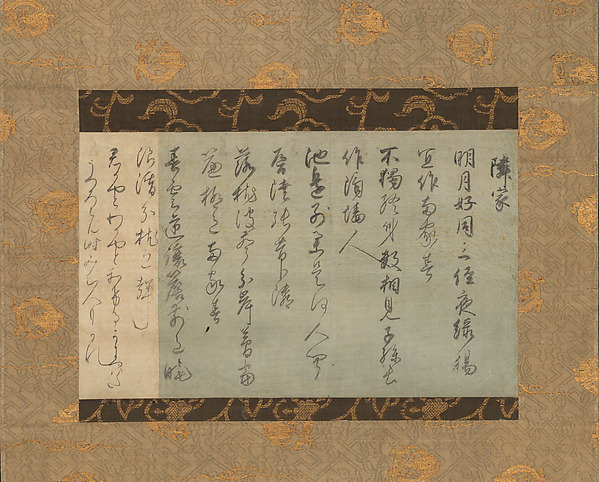
Poems about Neighbors, from Japanese and Chinese Poems to Sing (Wakan rōeishū), one of the “Tatsuta Fragments” (Tatsuta-gire)
Minamoto Ienaga (d. 1234)
13th century · Hanging scroll; ink on decorated paper
Cleared · Public Domain
liveThe MetSimilar
Rights clearance desk for images
Museums publish two different things about the same artwork: whether the work is in copyright, and whether their picture of it is. OpenPlate reads both, does the arithmetic on the published term, and shows you the sentence behind every point of the score.
Where this page got its records
223 ms. The Metropolitan Museum of Art, Collection API (Open Access)
537 ms. The Cleveland Museum of Art, Open Access API
2 of 2 providers answered live. 45 matching records exist across the two collections.
Institutions answered newest-first by record, interleaved
Poems about Neighbors, from Japanese and Chinese Poems to Sing (Wakan rōeishū), one of the “Tatsuta Fragments” (Tatsuta-gire)
Minamoto Ienaga (d. 1234)
13th century · Hanging scroll; ink on decorated paper
Cleared · Public Domain
live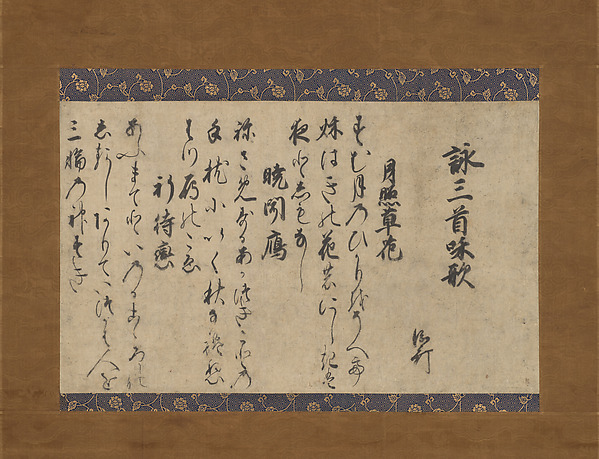
Three Waka Poems
Jōben (d. 1356)
early 14th century · Poetry sheet (waka kaishi) mounted as a hanging scroll; ink on paper
Cleared · Public Domain
live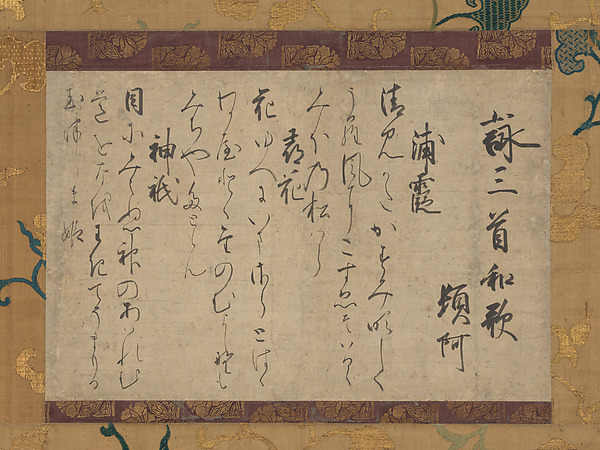
Three Waka Poems
Tonna (Ton’a) (d. 1372)
ca. 1368–69 · Poetry sheet (waka kaishi) mounted as a hanging scroll; ink on paper
Cleared · Public Domain
live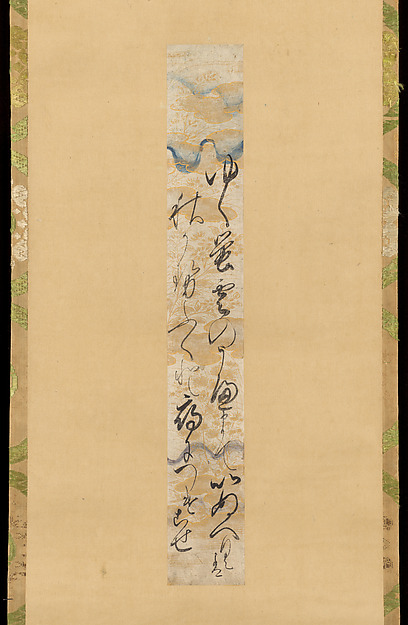
Waka Poem “Dancing Fireflies,” from The Tales of Ise, Chapter 45
Imperial Prince Sanehito (d. 1615)
mid-16th century · Tanzaku mounted as a hanging scroll; ink on gold, silver, and color decorated paper
Cleared · Public Domain
live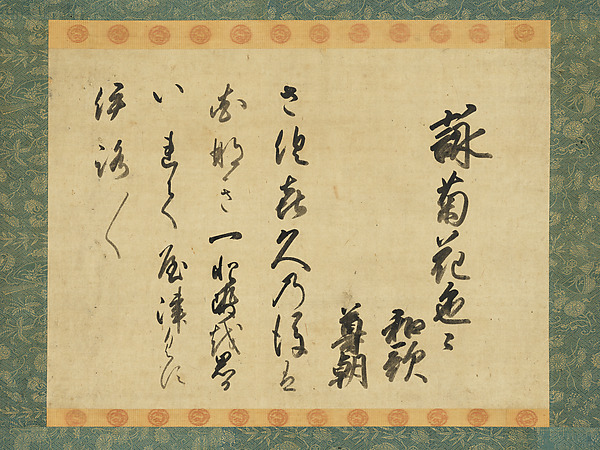
Waka Poem on Chrysanthemums
Shōren’in Sonchō Hosshinnō 青蓮院尊朝法親王 (d. 1597)
late 16th century · Poetry sheet (waka kaishi) mounted as a hanging scroll; ink on paper
Cleared · Public Domain
live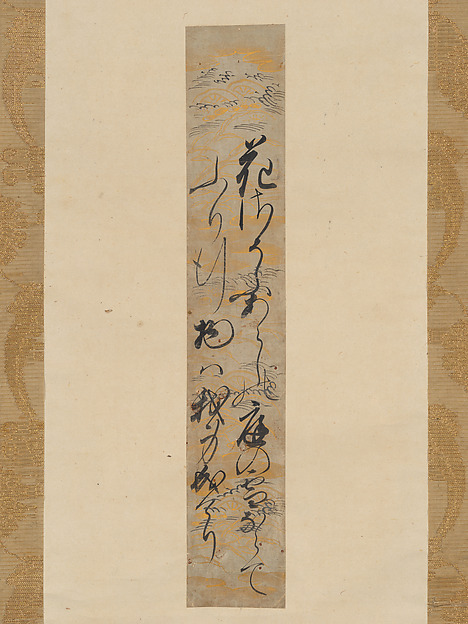
Waka Poem
Emperor Go-Yōzei 後陽成天皇 (d. 1617)
late 16th–early 17th century · Tanzaku mounted as a hanging scroll; ink on gold and silver decorated paper
Cleared · Public Domain
live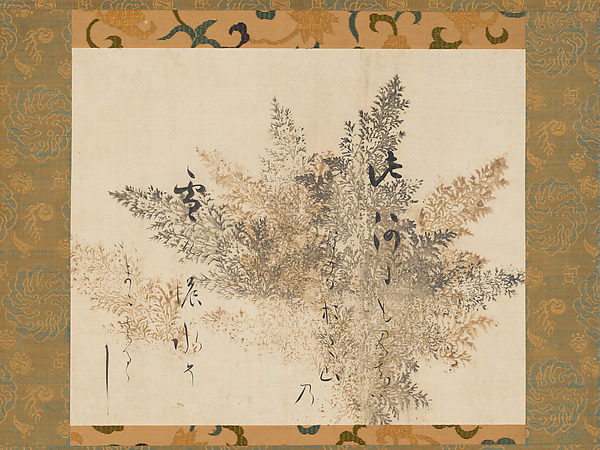
Waka Poem from Collection of Poems Ancient and Modern with a Design of Moss Ferns
Hon'ami Kōetsu (d. 1637)
early 17th century · Section of a handscroll mounted as hanging scroll; ink on paper with decoration printed in gold and silver
Cleared · Public Domain
live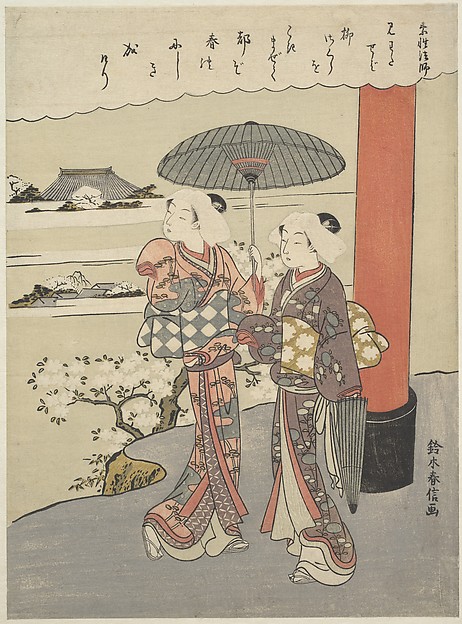
Poem by the Monk Sosei (act. 850-97)
Suzuki Harunobu (d. 1770)
ca. 1767–68 · Woodblock print; ink and color on paper, with embossing (karazuri)
Cleared · Public Domain
live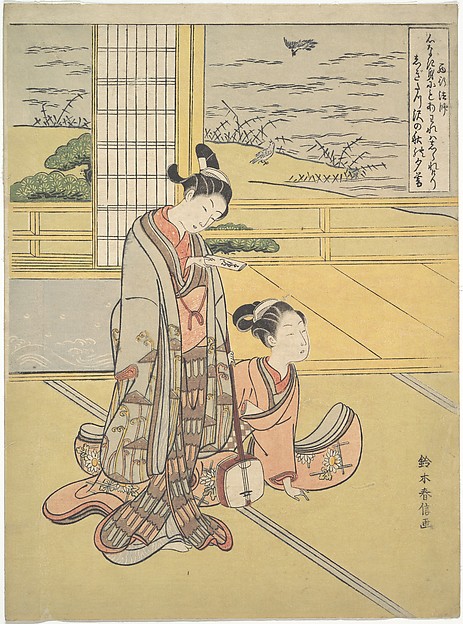
A Young Man and Woman with a Shamisen; Monk Saigyō, from a series alluding to the Three Evening Poems (Sanseki waka)
Suzuki Harunobu (d. 1770)
ca. 1768 · Woodblock print; ink and color on paper
Cleared · Public Domain
live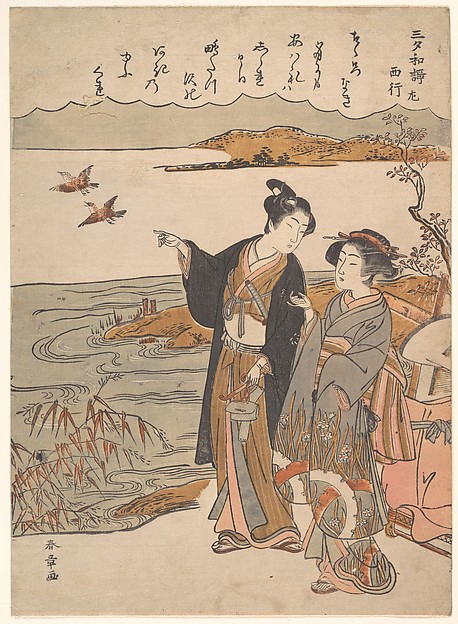
Autumn Evening ( A Poem by Saigyō), from the series Sanseki waka
Katsukawa Shunshō 勝川春章 (d. 1792)
late 18th century · Woodblock print (nishiki-e); ink and color on paper
Cleared · Public Domain
live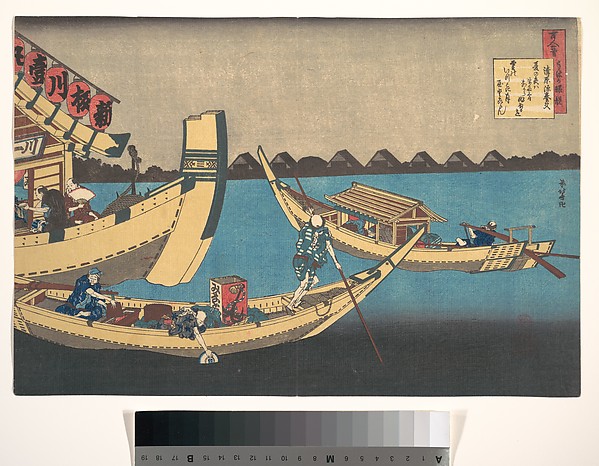
Poem by Kiyohara no Fukayabu, from the series One Hundred Poems Explained by the Nurse (Hyakunin isshu uba ga etoki)
Katsushika Hokusai (d. 1849)
ca. 1835 · Woodblock print; ink and color on paper
Cleared · Public Domain
live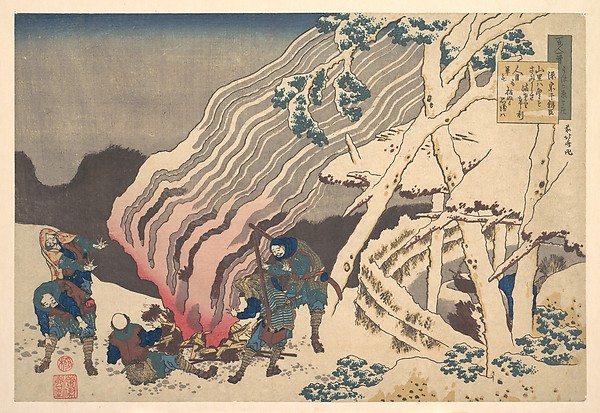
Poem by Minamoto no Muneyuki Ason, from the series One Hundred Poems Explained by the Nurse (Hyakunin isshu uba ga etoki)
Katsushika Hokusai (d. 1849)
ca. 1835 · Woodblock print; ink and color on paper
Cleared · Public Domain
live1. Pin the work
Choose the record and say what you are actually going to do with it. The product re-reads the work live and stores a snapshot, so your docket records what the institution said today.
2. Read the arithmetic
Six weighted factors: the institution's own claim, the creator's term, the publication-age rule, the restrictions in their statement, your use, and whether a credit line is even possible.
3. Seal and export
Record the decision into a SHA-384 chain, then export a dated docket as JSON, CSV or Markdown with the credit line and the seal a colleague can re-verify.